


Page 526 - Textbook of Pathology, 6th Edition
P. 526
510                                                        choroid, exudation and haemorrhage under the retina
                                                                 which may eventually get organised and heal by fibrosis
                                                                 and result in permanent loss of central vision.

                                                               RETINAL DETACHMENT.  Retinal detachment is the
                                                               separation of the neurosensory retina from the retinal
                                                               pigment epithelium. It may occur spontaneously in older
                                                               individuals past 50 years of age, or may be secondary to
                                                               trauma in the region of head and neck. Normally, the rods
                                                               and cones of the photoreceptor layer are interdigitated with
                                                               projections of the retinal pigment epithelium, but the two
                                                               can separate readily in some disease processes. There are 3
                                                               pathogenetic mechanisms of retinal detachment:
                                                               i) Pathologic processes in the vitreous or anterior segment,
                                                               causing traction on the retina.
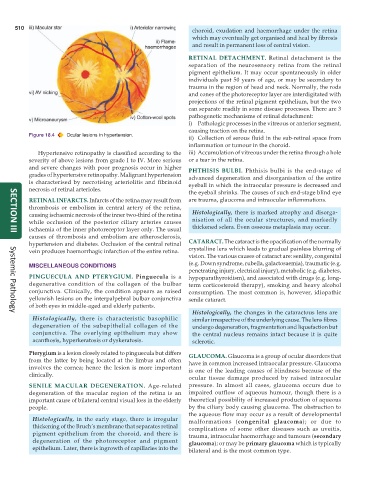
           Figure 18.4  Ocular lesions in hypertension.
                                                               ii) Collection of serous fluid in the sub-retinal space from
                                                               inflammation or tumour in the choroid.
              Hypertensive retinopathy is classified according to the  iii) Accumulation of vitreous under the retina through a hole
           severity of above lesions from grade I to IV. More serious  or a tear in the retina.
           and severe changes with poor prognosis occur in higher  PHTHISIS BULBI.  Phthisis bulbi is the end-stage of
           grades of hypertensive retinopathy. Malignant hypertension  advanced degeneration and disorganisation of the entire
           is characterised by necrotising arteriolitis and fibrinoid  eyeball in which the intraocular pressure is decreased and
           necrosis of retinal arterioles.
                                                               the eyeball shrinks. The causes of such end-stage blind eye
           RETINAL INFARCTS. Infarcts of the retina may result from  are trauma, glaucoma and intraocular inflammations.
           thrombosis or embolism in central artery of the retina,
           causing ischaemic necrosis of the inner two-third of the retina  Histologically, there is marked atrophy and disorga-
           while occlusion of the posterior ciliary arteries causes  nisation of all the ocular structures, and markedly
           ischaemia of the inner photoreceptor layer only. The usual  thickened sclera. Even osseous metaplasia may occur.
     SECTION III
           causes of thrombosis and embolism are atherosclerosis,
           hypertension and diabetes. Occlusion of the central retinal  CATARACT. The cataract is the opacification of the normally
           vein produces haemorrhagic infarction of the entire retina.  crystalline lens which leads to gradual painless blurring of
                                                               vision. The various causes of cataract are: senility, congenital
                                                               (e.g. Down syndrome, rubella, galactosaemia), traumatic (e.g.
           MISCELLANEOUS CONDITIONS
                                                               penetrating injury, electrical injury), metabolic (e.g. diabetes,
           PINGUECULA AND PTERYGIUM.  Pinguecula is a          hypoparathyroidism), and associated with drugs (e.g. long-
           degenerative condition of the collagen of the bulbar  term corticosteroid therapy), smoking and heavy alcohol
           conjunctiva. Clinically, the condition appears as raised  consumption. The most common is, however, idiopathic
           yellowish lesions on the interpalpebral bulbar conjunctiva  senile cataract.
           of both eyes in middle-aged and elderly patients.
                                                                 Histologically, the changes in the cataractous lens are
     Systemic Pathology
            Histologically, there is characteristic basophilic   similar irrespective of the underlying cause. The lens fibres
            degeneration of the subepithelial collagen of the    undergo degeneration, fragmentation and liquefaction but
            conjunctiva. The overlying epithelium may show       the central nucleus remains intact because it is quite
            acanthosis, hyperkeratosis or dyskeratosis.          sclerotic.

           Pterygium is a lesion closely related to pinguecula but differs  GLAUCOMA. Glaucoma is a group of ocular disorders that
           from the latter by being located at the limbus and often  have in common increased intraocular pressure. Glaucoma
           involves the cornea; hence the lesion is more important  is one of the leading causes of blindness because of the
           clinically.
                                                               ocular tissue damage produced by raised intraocular
           SENILE MACULAR DEGENERATION.  Age-related           pressure. In almost all cases, glaucoma occurs due to
           degeneration of the macular region of the retina is an  impaired outflow of aqueous humour, though there is a
           important cause of bilateral central visual loss in the elderly  theoretical possibility of increased production of aqueous
           people.                                             by the ciliary body causing glaucoma. The obstruction to
                                                               the aqueous flow may occur as a result of developmental
            Histologically, in the early stage, there is irregular  malformations (congenital glaucoma); or due to
            thickening of the Bruch’s membrane that separates retinal  complications of some other diseases such as uveitis,
            pigment epithelium from the choroid, and there is  trauma, intraocular haemorrhage and tumours (secondary
            degeneration of the photoreceptor and pigment      glaucoma); or may be primary glaucoma which is typically
            epithelium. Later, there is ingrowth of capillaries into the  bilateral and is the most common type.

