


Page 536 - Textbook of Pathology, 6th Edition
P. 536
520 sarcoma (pseudosarcoma) at the other extreme of
prognosis.
Cervical lymph node metastasis of laryngeal carcinoma
are found in a good proportion of cases at the time of
diagnosis. Death from laryngeal cancer occurs due to local
extension of growth into vital structures like trachea and
carotid artery; other causes are bacterial infection, aspiration
pneumonia, debility and disseminated metastases.
NECK
NORMAL STRUCTURE
The neck is the region from where important structures like
oesophagus, trachea, carotid arteries, great veins and nerve
trunks pass down. Besides, the neck has structures such as
carotid body, sympathetic ganglia, larynx, thyroid,
parathyroids and lymph nodes. Only the tumours and cysts
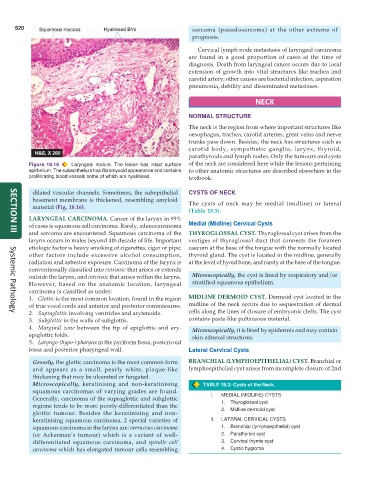
Figure 18.16 Laryngeal nodule. The lesion has intact surface of the neck are considered here while the lesions pertaining
epithelium. The subepithelium has fibromyxoid appearance and contains to other anatomic structures are described elsewhere in the
proliferating blood vessels some of which are hyalinised. textbook.
dilated vascular channels. Sometimes, the subepithelial CYSTS OF NECK
basement membrane is thickened, resembling amyloid The cysts of neck may be medial (midline) or lateral
material (Fig. 18.16).
(Table 18.3).
LARYNGEAL CARCINOMA. Cancer of the larynx in 99%
of cases is squamous cell carcinoma. Rarely, adenocarcinoma Medial (Midline) Cervical Cysts
and sarcoma are encountered. Squamous carcinoma of the THYROGLOSSAL CYST. Thyroglossal cyst arises from the
SECTION III
larynx occurs in males beyond 4th decade of life. Important vestiges of thyroglossal duct that connects the foramen
etiologic factor is heavy smoking of cigarettes, cigar or pipe; caecum at the base of the tongue with the normally located
other factors include excessive alcohol consumption, thyroid gland. The cyst is located in the midline, generally
radiation and asbestos exposure. Carcinoma of the larynx is at the level of hyoid bone, and rarely at the base of the tongue.
conventionally classified into extrinsic that arises or extends
outside the larynx, and intrinsic that arises within the larynx. Microscopically, the cyst is lined by respiratory and/or
However, based on the anatomic location, laryngeal stratified squamous epithelium.
carcinoma is classified as under:
1. Glottic is the most common location, found in the region MIDLINE DERMOID CYST. Dermoid cyst located in the
of true vocal cords and anterior and posterior commissures. midline of the neck occurs due to sequestration of dermal
2. Supraglottic involving ventricles and arytenoids. cells along the lines of closure of embryonic clefts. The cyst
Systemic Pathology
3. Subglottic in the walls of subglottis. contains paste-like pultaceous material.
4. Marginal zone between the tip of epiglottis and ary- Microscopically, it is lined by epidermis and may contain
epiglottic folds. skin adnexal structures.
5. Laryngo-(hypo-) pharynx in the pyriform fossa, postcricoid
fossa and posterior pharyngeal wall. Lateral Cervical Cysts
Grossly, the glottic carcinoma is the most common form BRANCHIAL (LYMPHOEPITHELIAL) CYST. Branchial or
and appears as a small, pearly white, plaque-like lymphoepithelial cyst arises from incomplete closure of 2nd
thickening that may be ulcerated or fungated.
Microscopically, keratinising and non-keratinising TABLE 18.3: Cysts of the Neck.
squamous carcinomas of varying grades are found.
Generally, carcinoma of the supraglottic and subglottic I. MEDIAL (MIDLINE) CYSTS
regions tends to be more poorly-differentiated than the 1. Thyroglossal cyst
glottic tumour. Besides the keratinising and non- 2. Midline dermoid cyst
keratinising squamous carcinoma, 2 special varieties of II. LATERAL CERVICAL CYSTS
squamous carcinoma in the larynx are: verrucous carcinoma 1. Branchial (lymphoepithelial) cyst
(or Ackerman’s tumour) which is a variant of well- 2. Parathyroid cyst
differentiated squamous carcinoma, and spindle cell 3. Cervical thymic cyst
carcinoma which has elongated tumour cells resembling 4. Cystic hygroma

