


Page 540 - Textbook of Pathology, 6th Edition
P. 540
524                                                      is lined by stratified squamous epithelium. The cyst wall
                                                               contains sebaceous glands, sweat glands, hair follicles and
                                                               other mature tissues.

                                                               B. BENIGN TUMOURS
                                                               Different parts of the mouth have a variety of mesodermal
                                                               tissues and keratinising and non-keratinising epithelium.
                                                               Therefore, majority of neoplasms arising from the oral tissues
                                                               are just like their counterparts in other parts of the body.
                                                               Some of the common benign tumours of the mouth are as
                                                               under:
                                                               SQUAMOUS PAPILLOMA. Papilloma can occur anywhere
                                                               in the mouth and has the usual papillary or finger-like
                                                               projections.
                                                                 Microscopically, each papilla is composed of vascularised
                                                                 connective tissue covered by squamous epithelium.
                                                               HAEMANGIOMA. Haemangioma can occur anywhere in
                                                               the mouth; when it occurs on the tongue it may cause
                                                               macroglossia. It is most commonly capillary type, although
                                                               cavernous and mixed types may also occur.
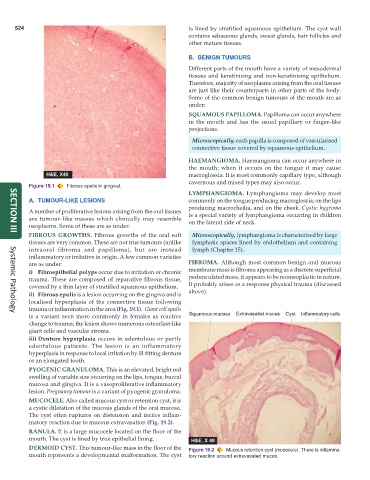
           Figure 19.1  Fibrous epulis in gingival.
                                                               LYMPHANGIOMA. Lymphangioma may develop most
           A. TUMOUR-LIKE LESIONS                              commonly on the tongue producing macroglossia; on the lips
                                                               producing macrocheilia, and on the cheek. Cystic hygroma
           A number of proliferative lesions arising from the oral tissues  is a special variety of lymphangioma occurring in children
           are tumour-like masses which clinically may resemble  on the lateral side of neck.
           neoplasms. Some of these are as under:
           FIBROUS GROWTHS. Fibrous growths of the oral soft     Microscopically, lymphangioma is characterised by large
     SECTION III
           tissues are very common. These are not true tumours (unlike  lymphatic spaces lined by endothelium and containing
           intraoral fibroma and papilloma), but are instead     lymph (Chapter 15).
           inflammatory or irritative in origin. A few common varieties
           are as under:                                       FIBROMA. Although most common benign oral mucous
           i) Fibroepithelial polyps occur due to irritation or chronic  membrane mass is fibroma appearing as a discrete superficial
           trauma. These are composed of reparative fibrous tissue,  pedunculated mass, it appears to be nonneoplastic in nature.
           covered by a thin layer of stratified squamous epithelium.  It probably arises as a response physical trauma (discussed
           ii) Fibrous epulis is a lesion occurring on the gingiva and is  above).
           localised hyperplasia of the connective tissue following
           trauma or inflammation in the area (Fig. 19.1).  Giant cell epulis
     Systemic Pathology
           is a variant seen more commonly in females as reactive
           change to trauma; the lesion shows numerous osteoclast-like
           giant cells and vascular stroma.
           iii) Denture hyperplasia occurs in edentulous or partly
           edentulous patients. The lesion is an inflammatory
           hyperplasia in response to local irritation by ill-fitting denture
           or an elongated tooth.
           PYOGENIC GRANULOMA. This is an elevated, bright red
           swelling of variable size occurring on the lips, tongue, buccal
           mucosa and gingiva. It is a vasoproliferative inflammatory
           lesion. Pregnancy tumour is a variant of pyogenic granuloma.
           MUCOCELE. Also called mucous cyst or retention cyst, it is
           a cystic dilatation of the mucous glands of the oral mucosa.
           The cyst often ruptures on distension and incites inflam-
           matory reaction due to mucous extravasation (Fig. 19.2).
           RANULA. It is a large mucocele located on the floor of the
           mouth. The cyst is lined by true epithelial lining.
           DERMOID CYST. This tumour-like mass in the floor of the  Figure 19.2  Mucous retention cyst (mucocele). There is inflamma-
           mouth represents a developmental malformation. The cyst  tory reaction around extravasated mucus.

