


Page 546 - Textbook of Pathology, 6th Edition
P. 546
530


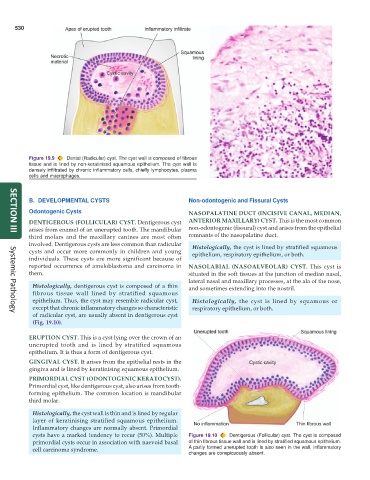
           Figure 19.9  Dental (Radicular) cyst. The cyst wall is composed of fibrous
           tissue and is lined by non-keratinised squamous epithelium. The cyst wall is
           densely infiltrated by chronic inflammatory cells, chiefly lymphocytes, plasma
           cells and macrophages.


           B. DEVELOPMENTAL CYSTS                              Non-odontogenic and Fissural Cysts
           Odontogenic Cysts                                   NASOPALATINE DUCT (INCISIVE CANAL, MEDIAN,
           DENTIGEROUS (FOLLICULAR) CYST. Dentigerous cyst     ANTERIOR MAXILLARY) CYST. This is the most common
           arises from enamel of an unerupted tooth. The mandibular  non-odontogenic (fissural) cyst and arises from the epithelial
     SECTION III
           third molars and the maxillary canines are most often  remnants of the nasopalatine duct.
           involved. Dentigerous cysts are less common than radicular  Histologically, the cyst is lined by stratified squamous
           cysts and occur more commonly in children and young   epithelium, respiratory epithelium, or both.
           individuals. These cysts are more significant because of
           reported occurrence of ameloblastoma and carcinoma in  NASOLABIAL (NASOALVEOLAR) CYST.  This cyst is
           them.                                               situated in the soft tissues at the junction of median nasal,
                                                               lateral nasal and maxillary processes, at the ala of the nose,
            Histologically, dentigerous cyst is composed of a thin  and sometimes extending into the nostril.
            fibrous tissue wall lined by stratified squamous
            epithelium. Thus, the cyst may resemble radicular cyst,  Histologically, the cyst is lined by squamous or
            except that chronic inflammatory changes so characteristic  respiratory epithelium, or both.
            of radicular cyst, are usually absent in dentigerous cyst
     Systemic Pathology
            (Fig. 19.10).

           ERUPTION CYST. This is a cyst lying over the crown of an
           unerupted tooth and is lined by stratified squamous
           epithelium. It is thus a form of dentigerous cyst.
           GINGIVAL CYST. It arises from the epithelial rests in the
           gingiva and is lined by keratinising squamous epithelium.
           PRIMORDIAL CYST (ODONTOGENIC KERATOCYST).
           Primordial cyst, like dentigerous cyst, also arises from tooth-
           forming epithelium. The common location is mandibular
           third molar.
            Histologically, the cyst wall is thin and is lined by regular
            layer of keratinising stratified squamous epithelium.
            Inflammatory changes are normally absent. Primordial
            cysts have a marked tendency to recur (50%). Multiple  Figure 19.10  Dentigerous (Follicular) cyst. The cyst is composed
            primordial cysts occur in association with naevoid basal  of thin fibrous tissue wall and is lined by stratified squamous epithelium.
            cell carcinoma syndrome.                           A partly formed unerupted tooth is also seen in the wall. Inflammatory
                                                               changes are conspicuously absent.

