


Page 553 - Textbook of Pathology, 6th Edition
P. 553
Malignant Mixed Tumour                                                                                   537
           Malignant mixed tumour comprises three distinct
           clinicopathologic entities:
              Carcinoma arising in benign mixed salivary gland tumour
           (carcinoma ex pleomorphic adenoma);
              Carcinosarcoma; and
              Metastasising mixed salivary tumour.
              Carcinoma ex pleomorphic adenoma is more common
           while the other two are rare tumours. Approximately 2 to
           5% of pleomorphic adenomas reveal areas of frank
           malignancy. The slow-growing adenoma may have been
           present for a number of years when suddenly it undergoes
           rapid increase in its size, becomes painful and the individual
           may develop facial palsy. Malignant transformation occurs
           in later age (6th decade) than the usual age for pleomorphic
           adenoma (4th to 6th decades). It may occur in primary
           tumour but more often occurs in its recurrences.
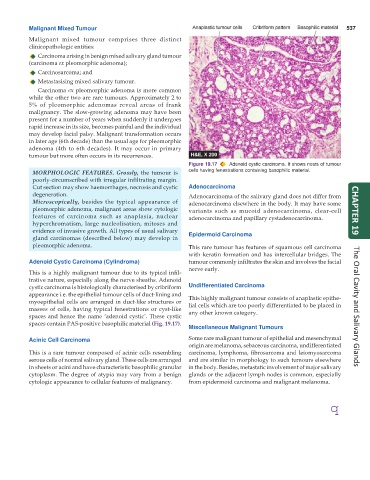
                                                               Figure 19.17  Adenoid cystic carcinoma. It shows nests of tumour
            MORPHOLOGIC FEATURES. Grossly, the tumour is       cells having fenestrations containing basophilic material.
            poorly-circumscribed with irregular infiltrating margin.
            Cut section may show haemorrhages, necrosis and cystic  Adenocarcinoma
            degeneration.                                      Adenocarcinoma of the salivary gland does not differ from
            Microscopically, besides the typical appearance of  adenocarcinoma elsewhere in the body. It may have some
            pleomorphic adenoma, malignant areas show cytologic  variants such as mucoid adenocarcinoma, clear-cell  CHAPTER 19
            features of carcinoma such as anaplasia, nuclear   adenocarcinoma and papillary cystadenocarcinoma.
            hyperchromatism, large nucleolisation, mitoses and
            evidence of invasive growth. All types of usual salivary  Epidermoid Carcinoma
            gland carcinomas (described below) may develop in
            pleomorphic adenoma.                               This rare tumour has features of squamous cell carcinoma
                                                               with keratin formation and has intercellular bridges. The
           Adenoid Cystic Carcinoma (Cylindroma)               tumour commonly infiltrates the skin and involves the facial
                                                               nerve early.
           This is a highly malignant tumour due to its typical infil-
           trative nature, especially along the nerve sheaths. Adenoid
           cystic carcinoma is histologically characterised by cribriform  Undifferentiated Carcinoma
           appearance i.e. the epithelial tumour cells of duct-lining and  This highly malignant tumour consists of anaplastic epithe-
           myoepithelial cells are arranged in duct-like structures or  lial cells which are too poorly differentiated to be placed in
           masses of cells, having typical fenestrations or cyst-like  any other known category.                      The Oral Cavity and Salivary Glands
           spaces and hence the name ‘adenoid cystic’. These cystic
           spaces contain PAS-positive basophilic material (Fig. 19.17).
                                                               Miscellaneous Malignant Tumours
           Acinic Cell Carcinoma                               Some rare malignant tumour of epithelial and mesenchymal
                                                               origin are melanoma, sebaceous carcinoma, undifferentiated
           This is a rare tumour composed of acinic cells resembling  carcinoma, lymphoma, fibrosarcoma and leiomyosarcoma
           serous cells of normal salivary gland. These cells are arranged  and are similar in morphology to such tumours elsewhere
           in sheets or acini and have characteristic basophilic granular  in the body. Besides, metastatic involvement of major salivary
           cytoplasm. The degree of atypia may vary from a benign  glands or the adjacent lymph nodes is common, especially
           cytologic appearance to cellular features of malignancy.  from epidermoid carcinoma and malignant melanoma.


                                                                                                              q

