


Page 562 - Textbook of Pathology, 6th Edition
P. 562
546 Acute Dilatation
Sudden and enormous dilatation of the stomach by gas or
fluids due to paralysis of the gastric musculature may occur
after abdominal operations, generalised peritonitis, and, in
pyloric stenosis.
Gastric Rupture
The stomach may rupture rarely and prove fatal e.g. due to
blunt trauma, external cardiac massage, ingestion of heavy
meal or large quantity of liquid intake like beer.
INFLAMMATORY CONDITIONS
The two important inflammatory conditions of the stomach
are gastritis and peptic ulcer. Rarely, stomach may be involved
in tuberculosis, sarcoidosis and Crohn’s disease.
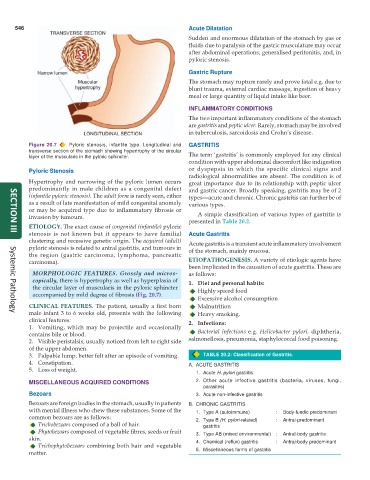
Figure 20.7 Pyloric stenosis, infantile type. Longitudinal and GASTRITIS
transverse section of the stomach showing hypertrophy of the circular The term ‘gastritis’ is commonly employed for any clinical
layer of the muscularis in the pyloric sphincter.
condition with upper abdominal discomfort like indigestion
Pyloric Stenosis or dyspepsia in which the specific clinical signs and
radiological abnormalities are absent. The condition is of
Hypertrophy and narrowing of the pyloric lumen occurs great importance due to its relationship with peptic ulcer
predominantly in male children as a congenital defect and gastric cancer. Broadly speaking, gastritis may be of 2
(infantile pyloric stenosis). The adult form is rarely seen, either types—acute and chronic. Chronic gastritis can further be of
as a result of late manifestation of mild congenital anomaly various types.
or may be acquired type due to inflammatory fibrosis or
invasion by tumours. A simple classification of various types of gastritis is
presented in Table 20.2.
ETIOLOGY. The exact cause of congenital (infantile) pyloric
stenosis is not known but it appears to have familial Acute Gastritis
SECTION III
clustering and recessive genetic origin. The acquired (adult) Acute gastritis is a transient acute inflammatory involvement
pyloric stenosis is related to antral gastritis, and tumours in of the stomach, mainly mucosa.
the region (gastric carcinoma, lymphoma, pancreatic
carcinoma). ETIOPATHOGENESIS. A variety of etiologic agents have
been implicated in the causation of acute gastritis. These are
MORPHOLOGIC FEATURES. Grossly and micros- as follows:
copically, there is hypertrophy as well as hyperplasia of 1. Diet and personal habits:
the circular layer of muscularis in the pyloric sphincter Highly spiced food
accompanied by mild degree of fibrosis (Fig. 20.7).
Excessive alcohol consumption
CLINICAL FEATURES. The patient, usually a first born Malnutrition
male infant 3 to 6 weeks old, presents with the following Heavy smoking.
Systemic Pathology
clinical features: 2. Infections:
1. Vomiting, which may be projectile and occasionally
contains bile or blood. Bacterial infections e.g. Helicobacter pylori, diphtheria,
2. Visible peristalsis, usually noticed from left to right side salmonellosis, pneumonia, staphylococcal food poisoning.
of the upper abdomen.
3. Palpable lump, better felt after an episode of vomiting. TABLE 20.2: Classification of Gastritis.
4. Constipation. A. ACUTE GASTRITIS
5. Loss of weight.
1. Acute H. pylori gastritis
MISCELLANEOUS ACQUIRED CONDITIONS 2. Other acute infective gastritis (bacteria, viruses, fungi,
parasites)
Bezoars 3. Acute non-infective gastritis
Bezoars are foreign bodies in the stomach, usually in patients B. CHRONIC GASTRITIS
with mental illness who chew these substances. Some of the 1. Type A (autoimmune) : Body-fundic predominant
common bezoars are as follows: 2. Type B (H. pylori-related) : Antral-predominant
Trichobezoars composed of a ball of hair. gastritis
Phytobezoars composed of vegetable fibres, seeds or fruit 3. Type AB (mixed environmental) : Antral-body gastritis
skin.
Trichophytobezoars combining both hair and vegetable 4. Chemical (reflux) gastritis : Antral-body predominant
matter. 5. Miscellaneous forms of gastritis

