


Page 567 - Textbook of Pathology, 6th Edition
P. 567
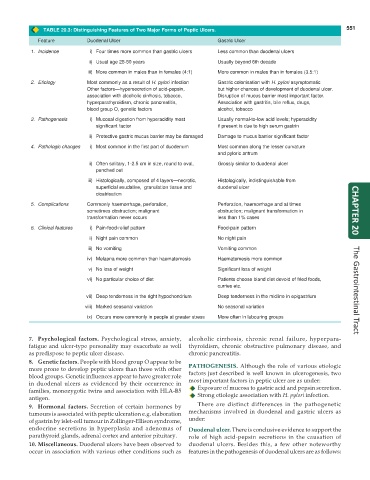
TABLE 20.3: Distinguishing Features of Two Major Forms of Peptic Ulcers. 551
Feature Duodenal Ulcer Gastric Ulcer
1. Incidence i) Four times more common than gastric ulcers Less common than duodenal ulcers
ii) Usual age 25-50 years Usually beyond 6th decade
iii) More common in males than in females (4:1) More common in males than in females (3.5:1)
2. Etiology Most commonly as a result of H. pylori infection Gastric colonisation with H. pylori asymptomatic
Other factors—hypersecretion of acid-pepsin, but higher chances of development of duodenal ulcer.
association with alcoholic cirrhosis, tobacco, Disruption of mucus barrier most important factor.
hyperparathyroidism, chronic pancreatitis, Association with gastritis, bile reflux, drugs,
blood group O, genetic factors alcohol, tobacco
3. Pathogenesis i) Mucosal digestion from hyperacidity most Usually normal-to-low acid levels; hyperacidity
significant factor if present is due to high serum gastrin
ii) Protective gastric mucus barrier may be damaged Damage to mucus barrier significant factor
4. Pathologic changes i) Most common in the first part of duodenum Most common along the lesser curvature
and pyloric antrum
ii) Often solitary, 1-2.5 cm in size, round to oval, Grossly similar to duodenal ulcer
punched out
iii) Histologically, composed of 4 layers—necrotic, Histologically, indistinguishable from
superficial exudative, granulation tissue and duodenal ulcer
cicatrisation
5. Complications Commonly haemorrhage, perforation, Perforation, haemorrhage and at times
sometimes obstruction; malignant obstruction; malignant transformation in CHAPTER 20
transformation never occurs less than 1% cases
6. Clinical features i) Pain-food-relief pattern Food-pain pattern
ii) Night pain common No night pain
iii) No vomiting Vomiting common
iv) Melaena more common than haematemesis Haematemesis more common
v) No loss of weight Significant loss of weight
vi) No particular choice of diet Patients choose bland diet devoid of fried foods,
curries etc. The Gastrointestinal Tract
vii) Deep tenderness in the right hypochondrium Deep tenderness in the midline in epigastrium
viii) Marked seasonal variation No seasonal variation
ix) Occurs more commonly in people at greater stress More often in labouring groups
7. Psychological factors. Psychological stress, anxiety, alcoholic cirrhosis, chronic renal failure, hyperpara-
fatigue and ulcer-type personality may exacerbate as well thyroidism, chronic obstructive pulmonary disease, and
as predispose to peptic ulcer disease. chronic pancreatitis.
8. Genetic factors. People with blood group O appear to be
more prone to develop peptic ulcers than those with other PATHOGENESIS. Although the role of various etiologic
blood groups. Genetic influences appear to have greater role factors just described is well known in ulcerogenesis, two
in duodenal ulcers as evidenced by their occurrence in most important factors in peptic ulcer are as under:
families, monozygotic twins and association with HLA-B5 Exposure of mucosa to gastric acid and pepsin secretion.
antigen. Strong etiologic association with H. pylori infection.
9. Hormonal factors. Secretion of certain hormones by There are distinct differences in the pathogenetic
tumours is associated with peptic ulceration e.g. elaboration mechanisms involved in duodenal and gastric ulcers as
of gastrin by islet-cell tumour in Zollinger-Ellison syndrome, under:
endocrine secretions in hyperplasia and adenomas of Duodenal ulcer. There is conclusive evidence to support the
parathyroid glands, adrenal cortex and anterior pituitary. role of high acid-pepsin secretions in the causation of
10. Miscellaneous. Duodenal ulcers have been observed to duodenal ulcers. Besides this, a few other noteworthy
occur in association with various other conditions such as features in the pathogenesis of duodenal ulcers are as follows:

