


Page 592 - Textbook of Pathology, 6th Edition
P. 592
576     The lesions are relieved by removal of the patient from
           the tropical area and by oral administration of antibiotics
           but gluten-free diet has no role in improvement.

           Whipple’s Disease (Intestinal Lipodystrophy)
           This is an uncommon bacterial disease involving not only
           the intestines but also various other systems such as central
           nervous system, heart, blood vessels, skin, joints, lungs, liver,
           spleen and kidneys. The disease is more common in males
           in 4th to 5th decades of life. Patients may present with
           features of malabsorption or may have atypical presentation
           in the form of migratory polyarthritis, neurological
           disturbances and focal hyperpigmentation of the skin.

            Histologically,  the affected tissues show presence of
            characteristic macrophages containing PAS-positive
            granules and rod-shaped micro-organisms (Whipple’s
            bacilli). These macrophages are predominantly present in
            the lamina propria of the small intestine and mesenteric
            lymph nodes.

              Patients respond very well to oral antibiotic therapy.
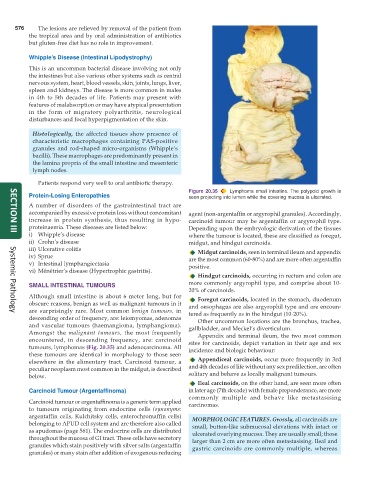
                                                               Figure 20.35  Lymphoma small intestine. The polypoid growth is
           Protein-Losing Enteropathies                        seen projecting into lumen while the covering mucosa is ulcerated.
           A number of disorders of the gastrointestinal tract are
           accompanied by excessive protein loss without concomitant  agent (non-argentaffin or argyrophil granules). Accordingly,
           increase in protein synthesis, thus resulting in hypo-  carcinoid tumour may be argentaffin or argyrophil type.
           proteinaemia. These diseases are listed below:      Depending upon the embryologic derivation of the tissues
           i) Whipple’s disease                                where the tumour is located, these are classified as foregut,
     SECTION III
           ii) Crohn’s disease                                 midgut, and hindgut carcinoids.
           iii) Ulcerative colitis                                Midgut carcinoids, seen in terminal ileum and appendix
           iv) Sprue                                           are the most common (60-80%) and are more often argentaffin
           v) Intestinal lymphangiectasia                      positive.
           vi) Ménétrier’s disease (Hypertrophic gastritis).
                                                                  Hindgut carcinoids, occurring in rectum and colon are
           SMALL INTESTINAL TUMOURS                            more commonly argyrophil type, and comprise about 10-
                                                               20% of carcinoids.
           Although small intestine is about 6 meter long, but for  Foregut carcinoids, located in the stomach, duodenum
           obscure reasons, benign as well as malignant tumours in it  and oesophagus are also argyrophil type and are encoun-
           are surprisingly rare. Most common  benign tumours, in  tered as frequently as in the hindgut (10-20%).
     Systemic Pathology
           descending order of frequency, are: leiomyomas, adenomas  Other uncommon locations are the bronchus, trachea,
           and vascular tumours (haemangioma, lymphangioma).   gallbladder, and Meckel’s diverticulum.
           Amongst the  malignant tumours, the most frequently    Appendix and terminal ileum, the two most common
           encountered, in descending frequency, are: carcinoid  sites for carcinoids, depict variation in their age and sex
           tumours, lymphomas (Fig. 20.35) and adenocarcinoma. All  incidence and biologic behaviour:
           these tumours are identical in morphology to those seen
           elsewhere in the alimentary tract. Carcinoid tumour, a  Appendiceal carcinoids, occur more frequently in 3rd
           peculiar neoplasm most common in the midgut, is described  and 4th decades of life without any sex predilection, are often
           below.                                              solitary and behave as locally malignant tumours.
                                                                  Ileal carcinoids, on the other hand, are seen more often
           Carcinoid Tumour (Argentaffinoma)                   in later age (7th decade) with female preponderance, are more
                                                               commonly multiple and behave like metastasising
           Carcinoid tumour or argentaffinoma is a generic term applied  carcinomas.
           to tumours originating from endocrine cells  (synonyms:
           argentaffin cells, Kulchitsky cells, enterochromaffin cells)  MORPHOLOGIC FEATURES. Grossly, all carcinoids are
           belonging to APUD cell system and are therefore also called  small, button-like submucosal elevations with intact or
           as apudomas (page 561). The endocrine cells are distributed  ulcerated overlying mucosa. They are usually small; those
           throughout the mucosa of GI tract. These cells have secretory  larger than 2 cm are more often metastasising. Ileal and
           granules which stain positively with silver salts (argentaffin  gastric carcinoids are commonly multiple, whereas
           granules) or many stain after addition of exogenous reducing

