


Page 593 - Textbook of Pathology, 6th Edition
P. 593
3. Abdominal pain                                    577
                                                               4. Attacks of dyspnoea due to bronchospasm
                                                               5. Right-sided heart failure due to involvement of tricuspid
                                                               and pulmonary valves and endocardium (page 451).
                                                                  A number of secretory products in a functioning carcinoid
                                                               tumour have been demonstrated:
                                                                 i) 5-Hydroxytryptamine (5-HT, serotonin)
                                                                 ii) 5-Hydroxytryptophan
                                                                iii) 5-Hydroxy-indole acetic acid (5-HIAA)
                                                                iv) Histamine
                                                                 v) Kallikrein
                                                                vi) Bradykinin
                                                                  However, 5-HT and its degradation product, 5-HIAA, are
                                                               particularly significant in the production of  carcinoid
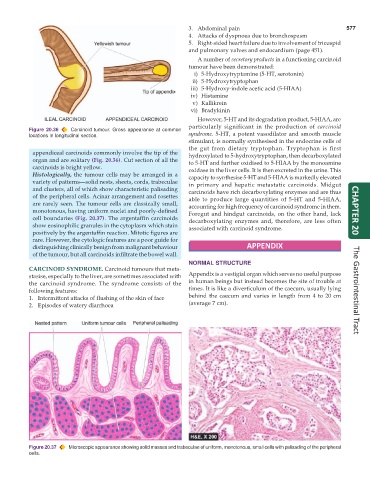
           Figure 20.36  Carcinoid tumour. Gross appearance at common
           locations in longitudinal section.                  syndrome. 5-HT, a potent vasodilator and smooth muscle
                                                               stimulant, is normally synthesised in the endocrine cells of
                                                               the gut from dietary tryptophan. Tryptophan is first
            appendiceal carcinoids commonly involve the tip of the  hydroxylated to 5-hydroxytryptophan, then decarboxylated
            organ and are solitary (Fig. 20.36). Cut section of all the  to 5-HT and further oxidised to 5-HIAA by the monoamine
            carcinoids is bright yellow.                       oxidase in the liver cells. It is then excreted in the urine. This
            Histologically, the tumour cells may be arranged in a  capacity to synthesise 5-HT and 5-HIAA is markedly elevated
            variety of patterns—solid nests, sheets, cords, trabeculae  in primary and hepatic metastatic carcinoids. Midgut
            and clusters, all of which show characteristic palisading  carcinoids have rich decarboxylating enzymes and are thus
            of the peripheral cells. Acinar arrangement and rosettes  able to produce large quantities of 5-HT and 5-HIAA,
            are rarely seen. The tumour cells are classically small,  accounting for high frequency of carcinoid syndrome in them.
            monotonous, having uniform nuclei and poorly-defined  Foregut and hindgut carcinoids, on the other hand, lack  CHAPTER 20
            cell boundaries (Fig. 20.37). The argentaffin carcinoids  decarboxylating enzymes and, therefore, are less often
            show eosinophilic granules in the cytoplasm which stain  associated with carcinoid syndrome.
            positively by the argentaffin reaction. Mitotic figures are
            rare. However, the cytologic features are a poor guide for
            distinguishing clinically benign from malignant behaviour              APPENDIX
            of the tumour, but all carcinoids infiltrate the bowel wall.
                                                               NORMAL STRUCTURE
           CARCINOID SYNDROME. Carcinoid tumours that meta-
           stasise, especially to the liver, are sometimes associated with  Appendix is a vestigial organ which serves no useful purpose
           the carcinoid syndrome. The syndrome consists of the  in human beings but instead becomes the site of trouble at
           following features:                                 times. It is like a diverticulum of the caecum, usually lying  The Gastrointestinal Tract
           1. Intermittent attacks of flushing of the skin of face  behind the caecum and varies in length from 4 to 20 cm
           2. Episodes of watery diarrhoea                     (average 7 cm).


           Figure 20.37  Microscopic appearance showing solid masses and trabeculae of uniform, monotonous, small cells with palisading of the peripheral
           cells.

