


Page 598 - Textbook of Pathology, 6th Edition
P. 598
582 rectosigmoid. They are called ‘hyperplastic’ because there is
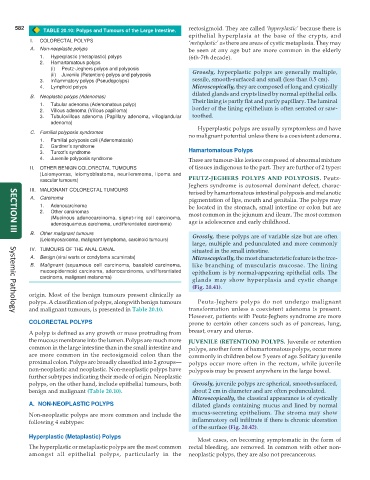
TABLE 20.10: Polyps and Tumours of the Large Intestine.
epithelial hyperplasia at the base of the crypts, and
I. COLORECTAL POLYPS ‘metaplastic’ as there are areas of cystic metaplasia. They may
A. Non-neoplastic polyps be seen at any age but are more common in the elderly
1. Hyperplastic (metaplastic) polyps (6th-7th decade).
2. Hamartomatous polyps
(i) Peutz-Jeghers polyps and polyposis Grossly, hyperplastic polyps are generally multiple,
(ii) Juvenile (Retention) polyps and polyposis
3. Inflammatory polyps (Pseudopolyps) sessile, smooth-surfaced and small (less than 0.5 cm).
4. Lymphoid polyps Microscopically, they are composed of long and cystically
dilated glands and crypts lined by normal epithelial cells.
B. Neoplastic polyps (Adenomas)
Their lining is partly flat and partly papillary. The luminal
1. Tubular adenoma (Adenomatous polyp) border of the lining epithelium is often serrated or saw-
2. Villous adenoma (Villous papilloma)
3. Tubulovillous adenoma (Papillary adenoma, villoglandular toothed.
adenoma)
Hyperplastic polyps are usually symptomless and have
C. Familial polyposis syndromes
no malignant potential unless there is a coexistent adenoma.
1. Familial polyposis coli (Adenomatosis)
2. Gardner’s syndrome
3. Turcot’s syndrome Hamartomatous Polyps
4. Juvenile polyposis syndrome These are tumour-like lesions composed of abnormal mixture
II. OTHER BENIGN COLORECTAL TUMOURS of tissues indigenous to the part. They are further of 2 types:
(Leiomyomas, leiomyoblastoma, neurilemmoma, lipoma and PEUTZ-JEGHERS POLYPS AND POLYPOSIS. Peutz-
vascular tumours)
Jeghers syndrome is autosomal dominant defect, charac-
III. MALIGNANT COLORECTAL TUMOURS
terised by hamartomatous intestinal polyposis and melanotic
A. Carcinoma pigmentation of lips, mouth and genitalia. The polyps may
1. Adenocarcinoma be located in the stomach, small intestine or colon but are
2. Other carcinomas most common in the jejunum and ileum. The most common
(Mucinous adenocarcinoma, signet-ring cell carcinoma, age is adolescence and early childhood.
adenosquamous carcinoma, undifferentiated carcinoma)
B. Other malignant tumours Grossly, these polyps are of variable size but are often
SECTION III
(Leiomyosarcoma, malignant lymphoma, carcinoid tumours)
large, multiple and pedunculated and more commonly
IV. TUMOURS OF THE ANAL CANAL situated in the small intestine.
A. Benign (viral warts or condyloma acuminata) Microscopically, the most characteristic feature is the tree-
B. Malignant (squamous cell carcinoma, basaloid carcinoma, like branching of muscularis mucosae. The lining
mucoepidermoid carcinoma, adenocarcinoma, undifferentiated epithelium is by normal-appearing epithelial cells. The
carcinoma, malignant melanoma)
glands may show hyperplasia and cystic change
(Fig. 20.41).
origin. Most of the benign tumours present clinically as
polyps. A classification of polyps, alongwith benign tumours Peutz-Jeghers polyps do not undergo malignant
and malignant tumours, is presented in Table 20.10. transformation unless a coexistent adenoma is present.
However, patients with Peutz-Jeghers syndrome are more
Systemic Pathology
COLORECTAL POLYPS prone to certain other cancers such as of pancreas, lung,
A polyp is defined as any growth or mass protruding from breast, ovary and uterus.
the mucous membrane into the lumen. Polyps are much more JUVENILE (RETENTION) POLYPS. Juvenile or retention
common in the large intestine than in the small intestine and polyps, another form of hamartomatous polyps, occur more
are more common in the rectosigmoid colon than the commonly in children below 5 years of age. Solitary juvenile
proximal colon. Polyps are broadly classified into 2 groups— polyps occur more often in the rectum, while juvenile
non-neoplastic and neoplastic. Non-neoplastic polyps have polyposis may be present anywhere in the large bowel.
further subtypes indicating their mode of origin. Neoplastic
polyps, on the other hand, include epithelial tumours, both Grossly, juvenile polyps are spherical, smooth-surfaced,
benign and malignant (Table 20.10). about 2 cm in diameter and are often pedunculated.
Microscopically, the classical appearance is of cystically
A. NON-NEOPLASTIC POLYPS dilated glands containing mucus and lined by normal
Non-neoplastic polyps are more common and include the mucus-secreting epithelium. The stroma may show
following 4 subtypes: inflammatory cell infiltrate if there is chronic ulceration
of the surface (Fig. 20.42).
Hyperplastic (Metaplastic) Polyps
Most cases, on becoming symptomatic in the form of
The hyperplastic or metaplastic polyps are the most common rectal bleeding, are removed. In common with other non-
amongst all epithelial polyps, particularly in the neoplastic polyps, they are also not precancerous.

