


Page 599 - Textbook of Pathology, 6th Edition
P. 599
583


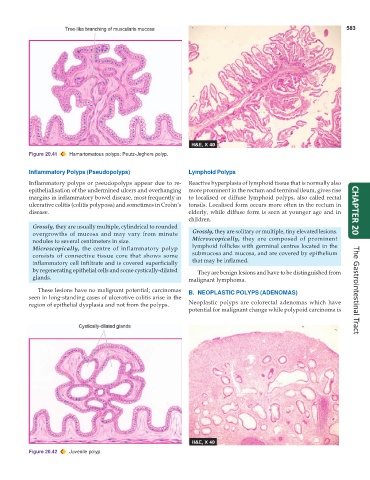
           Figure 20.41  Hamartomatous polyps: Peutz-Jeghers polyp.


           Inflammatory Polyps (Pseudopolyps)                  Lymphoid Polyps
           Inflammatory polyps or pseudopolyps appear due to re-  Reactive hyperplasia of lymphoid tissue that is normally also
           epithelialisation of the undermined ulcers and overhanging  more prominent in the rectum and terminal ileum, gives rise
           margins in inflammatory bowel disease, most frequently in  to localised or diffuse lymphoid polyps, also called rectal
           ulcerative colitis (colitis polyposa) and sometimes in Crohn’s  tonsils. Localised form occurs more often in the rectum in
           disease.                                            elderly, while diffuse form is seen at younger age and in  CHAPTER 20
                                                               children.
            Grossly, they are usually multiple, cylindrical to rounded
            overgrowths of mucosa and may vary from minute       Grossly, they are solitary or multiple, tiny elevated lesions.
            nodules to several centimeters in size.              Microscopically, they are composed of prominent
            Microscopically, the centre of inflammatory polyp    lymphoid follicles with germinal centres located in the
            consists of connective tissue core that shows some   submucosa and mucosa, and are covered by epithelium
            inflammatory cell infiltrate and is covered superficially  that may be inflamed.
            by regenerating epithelial cells and some cystically-dilated  They are benign lesions and have to be distinguished from
            glands.                                            malignant lymphoma.

              These lesions have no malignant potential; carcinomas  B. NEOPLASTIC POLYPS (ADENOMAS)                  The Gastrointestinal Tract
           seen in long-standing cases of ulcerative colitis arise in the
           region of epithelial dysplasia and not from the polyps.  Neoplastic polyps are colorectal adenomas which have
                                                               potential for malignant change while polypoid carcinoma is


           Figure 20.42  Juvenile polyp.

