


Page 604 - Textbook of Pathology, 6th Edition
P. 604
588


     SECTION III


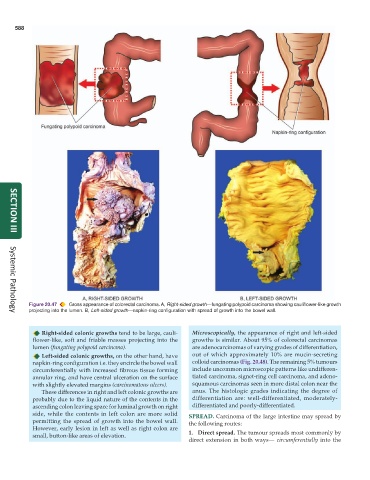
           Figure 20.47  Gross appearance of colorectal carcinoma. A, Right-sided growth—fungating polypoid carcinoma showing cauliflower-like growth
           projecting into the lumen. B, Left-sided growth—napkin-ring configuration with spread of growth into the bowel wall.
     Systemic Pathology

               Right-sided colonic growths tend to be large, cauli-  Microscopically, the appearance of right and left-sided
            flower-like, soft and friable masses projecting into the  growths is similar. About 95% of colorectal carcinomas
            lumen (fungating polypoid carcinoma).                are adenocarcinomas of varying grades of differentiation,
               Left-sided colonic growths, on the other hand, have  out of which approximately 10% are mucin-secreting
            napkin-ring configuration i.e. they encircle the bowel wall  colloid carcinomas (Fig. 20.48). The remaining 5% tumours
            circumferentially with increased fibrous tissue forming  include uncommon microscopic patterns like undifferen-
            annular ring, and have central ulceration on the surface  tiated carcinoma, signet-ring cell carcinoma, and adeno-
            with slightly elevated margins (carcinomatous ulcers).  squamous carcinomas seen in more distal colon near the
               These differences in right and left colonic growths are  anus. The histologic grades indicating the degree of
            probably due to the liquid nature of the contents in the  differentiation are: well-differentiated, moderately-
            ascending colon leaving space for luminal growth on right  differentiated and poorly-differentiated.
            side, while the contents in left colon are more solid  SPREAD. Carcinoma of the large intestine may spread by
            permitting the spread of growth into the bowel wall.  the following routes:
            However, early lesion in left as well as right colon are
            small, button-like areas of elevation.             1. Direct spread. The tumour spreads most commonly by
                                                               direct extension in both ways—  circumferentially into the

