


Page 614 - Textbook of Pathology, 6th Edition
P. 614
598
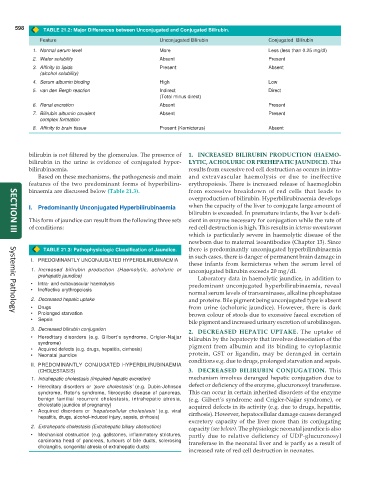
TABLE 21.2: Major Differences between Unconjugated and Conjugated Bilirubin.
Feature Unconjugated Bilirubin Conjugated Bilirubin
1. Normal serum level More Less (less than 0.25 mg/dl)
2. Water solubility Absent Present
3. Affinity to lipids Present Absent
(alcohol solubility)
4. Serum albumin binding High Low
5. van den Bergh reaction Indirect Direct
(Total minus direct)
6. Renal excretion Absent Present
7. Bilirubin albumin covalent Absent Present
complex formation
8. Affinity to brain tissue Present (Kernicterus) Absent
bilirubin is not filtered by the glomerulus. The presence of 1. INCREASED BILIRUBIN PRODUCTION (HAEMO-
bilirubin in the urine is evidence of conjugated hyper- LYTIC, ACHOLURIC OR PREHEPATIC JAUNDICE). This
bilirubinaemia. results from excessive red cell destruction as occurs in intra-
Based on these mechanisms, the pathogenesis and main and extravascular haemolysis or due to ineffective
features of the two predominant forms of hyperbiliru- erythropoiesis. There is increased release of haemoglobin
binaemia are discussed below (Table 21.3). from excessive breakdown of red cells that leads to
overproduction of bilirubin. Hyperbilirubinaemia develops
I. Predominantly Unconjugated Hyperbilirubinaemia when the capacity of the liver to conjugate large amount of
bilirubin is exceeded. In premature infants, the liver is defi-
This form of jaundice can result from the following three sets cient in enzyme necessary for conjugation while the rate of
of conditions: red cell destruction is high. This results in icterus neonatorum
which is particularly severe in haemolytic disease of the
SECTION III
newborn due to maternal isoantibodies (Chapter 13). Since
TABLE 21.3: Pathophysiologic Classification of Jaundice. there is predominantly unconjugated hyperbilirubinaemia
in such cases, there is danger of permanent brain damage in
I. PREDOMINANTLY UNCONJUGATED HYPERBILIRUBINAEMIA
these infants from kernicterus when the serum level of
1. Increased bilirubin production (Haemolytic, acholuric or unconjugated bilirubin exceeds 20 mg/dl.
prehepatic jaundice) Laboratory data in haemolytic jaundice, in addition to
• Intra- and extravascular haemolysis predominant unconjugated hyperbilirubinaemia, reveal
• Ineffective erythropoiesis
normal serum levels of transaminases, alkaline phosphatase
2. Decreased hepatic uptake and proteins. Bile pigment being unconjugated type is absent
• Drugs from urine (acholuric jaundice). However, there is dark
• Prolonged starvation brown colour of stools due to excessive faecal excretion of
Systemic Pathology
• Sepsis bile pigment and increased urinary excretion of urobilinogen.
3. Decreased bilirubin conjugation 2. DECREASED HEPATIC UPTAKE. The uptake of
• Hereditary disorders (e.g. Gilbert’s syndrome, Crigler-Najjar bilirubin by the hepatocyte that involves dissociation of the
syndrome)
• Acquired defects (e.g. drugs, hepatitis, cirrhosis) pigment from albumin and its binding to cytoplasmic
• Neonatal jaundice protein, GST or ligandin, may be deranged in certain
conditions e.g. due to drugs, prolonged starvation and sepsis.
II. PREDOMINANTLY CONJUGATED HYPERBILIRUBINAEMIA
(CHOLESTASIS) 3. DECREASED BILIRUBIN CONJUGATION. This
1. Intrahepatic cholestasis (Impaired hepatic excretion) mechanism involves deranged hepatic conjugation due to
• Hereditary disorders or ‘pure cholestasis’ (e.g. Dubin-Johnson defect or deficiency of the enzyme, glucuronosyl transferase.
syndrome, Rotor’s syndrome, fibrocystic disease of pancreas, This can occur in certain inherited disorders of the enzyme
benign familial recurrent cholestasis, intrahepatic atresia, (e.g. Gilbert’s syndrome and Crigler-Najjar syndrome), or
cholestatic jaundice of pregnancy) acquired defects in its activity (e.g. due to drugs, hepatitis,
• Acquired disorders or ‘hepatocellular cholestasis’ (e.g. viral cirrhosis). However, hepatocellular damage causes deranged
hepatitis, drugs, alcohol-induced injury, sepsis, cirrhosis)
excretory capacity of the liver more than its conjugating
2. Extrahepatic cholestasis (Extrahepatic biliary obstruction) capacity (see below). The physiologic neonatal jaundice is also
• Mechanical obstruction (e.g. gallstones, inflammatory strictures, partly due to relative deficiency of UDP-glucuronosyl
carcinoma head of pancreas, tumours of bile ducts, sclerosing transferase in the neonatal liver and is partly as a result of
cholangitis, congenital atresia of extrahepatic ducts)
increased rate of red cell destruction in neonates.

