


Page 630 - Textbook of Pathology, 6th Edition
P. 630
614                                                      3. Hepatitis D. Hepatitis D infection can also be prevented
                                                               by hepatitis B vaccine.
                                                               4. Hepatitis C. Currently, hepatitis C vaccine has yet not
                                                               been feasible though antibodies to HCV envelope have been
                                                               developed.
                                                               5. Hepatitis E. It is not certain whether immune globulin
                                                               (like for HAV) prevents hepatitis E infection or not but a
                                                               vaccine against HEV is yet to be developed.

                                                               OTHER INFECTIONS AND INFESTATIONS
                                                               Apart from viral hepatitis, the liver is affected by infections
                                                               with bacteria, spirochaetes and fungi and is involved in some
                                                               parasitic infestations. Some common examples of such
                                                               conditions are described below.
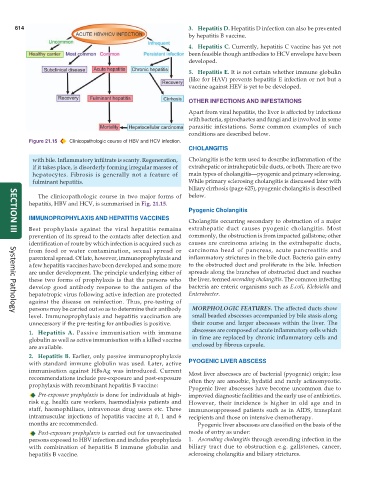
           Figure 21.15  Clinicopathologic course of HBV and HCV infection.
                                                               CHOLANGITIS
            with bile. Inflammatory infiltrate is scanty. Regeneration,  Cholangitis is the term used to describe inflammation of the
            if it takes place, is disorderly forming irregular masses of  extrahepatic or intrahepatic bile ducts, or both. There are two
            hepatocytes. Fibrosis is generally not a feature of  main types of cholangitis—pyogenic and primary sclerosing.
            fulminant hepatitis.                               While primary sclerosing cholangitis is discussed later with
                                                               biliary cirrhosis (page 625), pyogenic cholangitis is described
              The clinicopathologic course in two major forms of  below.
           hepatitis, HBV and HCV, is summarised in Fig. 21.15.
                                                               Pyogenic Cholangitis
           IMMUNOPROPHYLAXIS AND HEPATITIS VACCINES
                                                               Cholangitis occurring secondary to obstruction of a major
           Best prophylaxis against the viral hepatitis remains  extrahepatic duct causes pyogenic cholangitis. Most
           prevention of its spread to the contacts after detection and  commonly, the obstruction is from impacted gallstone; other
     SECTION III
           identification of route by which infection is acquired such as  causes are carcinoma arising in the extrahepatic ducts,
           from food or water contamination, sexual spread or  carcinoma head of pancreas, acute pancreatitis and
           parenteral spread. Of late, however, immunoprophylaxis and  inflammatory strictures in the bile duct. Bacteria gain entry
           a few hepatitis vaccines have been developed and some more  to the obstructed duct and proliferate in the bile. Infection
           are under development. The principle underlying either of  spreads along the branches of obstructed duct and reaches
           these two forms of prophylaxis is that the persons who  the liver, termed ascending cholangitis. The common infecting
           develop good antibody response to the antigen of the  bacteria are enteric organisms such as E.coli, Klebsiella and
           hepatotropic virus following active infection are protected  Enterobacter.
           against the disease on reinfection. Thus, pre-testing of
           persons may be carried out so as to determine their antibody  MORPHOLOGIC FEATURES. The affected ducts show
     Systemic Pathology
           level. Immunoprophylaxis and hepatitis vaccination are  small beaded abscesses accompanied by bile stasis along
           unnecessary if the pre-testing for antibodies is positive.  their course and larger abscesses within the liver. The
           1. Hepatitis A.  Passive immunisation with immune     abscesses are composed of acute inflammatory cells which
           globulin as well as active immunisation with a killed vaccine  in time are replaced by chronic inflammatory cells and
           are available.                                        enclosed by fibrous capsule.
           2. Hepatitis B. Earlier, only passive immunoprophylaxis
           with standard immune globulin was used. Later, active  PYOGENIC LIVER ABSCESS
           immunisation against HBsAg was introduced. Current  Most liver abscesses are of bacterial (pyogenic) origin; less
           recommendations include pre-exposure and post-exposure  often they are amoebic, hydatid and rarely actinomycotic.
           prophylaxis with recombinant hepatitis B vaccine:
                                                               Pyogenic liver abscesses have become uncommon due to
              Pre-exposure prophylaxis is done for individuals at high-  improved diagnostic facilities and the early use of antibiotics.
           risk e.g. health care workers, haemodialysis patients and  However, their incidence is higher in old age and in
           staff, haemophiliacs, intravenous drug users etc. Three  immunosuppressed patients such as in AIDS, transplant
           intramuscular injections of hepatitis vaccine at 0, 1 and 6  recipients and those on intensive chemotherapy.
           months are recommended.                                Pyogenic liver abscesses are classified on the basis of the
              Post-exposure prophylaxis is carried out for unvaccinated  mode of entry as under:
           persons exposed to HBV infection and includes prophylaxis  1. Ascending cholangitis through ascending infection in the
           with combination of hepatitis B immune globulin and  biliary tract due to obstruction e.g. gallstones, cancer,
           hepatitis B vaccine.                                sclerosing cholangitis and biliary strictures.

