


Page 631 - Textbook of Pathology, 6th Edition
P. 631
by the spread of Entamoeba histolytica from intestinal lesions.  615
                                                               The trophozoite form of amoebae in the colon invade the
                                                               colonic mucosa forming flask-shaped ulcers from where they
                                                               are carried to the liver in the portal venous system (page
                                                               188) . Amoebae multiply and block small intrahepatic portal
                                                               radicles resulting in infarction necrosis of the adjacent liver
                                                               parenchyma.
                                                                  The patients, generally from tropical and subtropical
                                                               countries, may give history of amoebic dysentery in the past.
                                                               Cysts of E. histolytica in stools are present in only 15% of
                                                               patients of hepatic amoebiasis. Intermittent low-grade fever,
                                                               pain and tenderness in the liver area are common presenting
                                                               features. A positive haemagglutination test is quite sensitive
                                                               and useful for diagnosis of amoebic liver abscess.
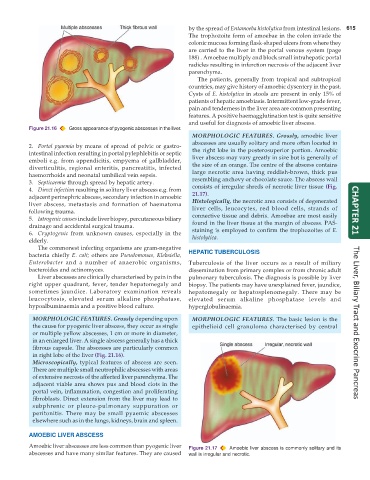
           Figure 21.16  Gross appearance of pyogenic abscesses in the liver.
                                                                 MORPHOLOGIC FEATURES. Grossly, amoebic liver
                                                                 abscesses are usually solitary and more often located in
           2. Portal pyaemia by means of spread of pelvic or gastro-
           intestinal infection resulting in portal pylephlebitis or septic  the right lobe in the posterosuperior portion. Amoebic
           emboli e.g. from appendicitis, empyema of gallbladder,  liver abscess may vary greatly in size but is generally of
           diverticulitis, regional enteritis, pancreatitis, infected  the size of an orange. The centre of the abscess contains
           haemorrhoids and neonatal umbilical vein sepsis.      large necrotic area having reddish-brown, thick pus
           3. Septicaemia through spread by hepatic artery.      resembling anchovy or chocolate sauce. The abscess wall
           4. Direct infection resulting in solitary liver abscess e.g. from  consists of irregular shreds of necrotic liver tissue (Fig.
           adjacent perinephric abscess, secondary infection in amoebic  21.17).
           liver abscess, metastasis and formation of haematoma  Histologically, the necrotic area consists of degenerated
           following trauma.                                     liver cells, leucocytes, red blood cells, strands of  CHAPTER 21
           5. Iatrogenic causes include liver biopsy, percutaneous biliary  connective tissue and debris. Amoebae are most easily
           drainage and accidental surgical trauma.              found in the liver tissue at the margin of abscess. PAS-
           6. Cryptogenic from unknown causes, especially in the  staining is employed to confirm the trophozoites of E.
           elderly.                                              histolytica.
              The commonest infecting organisms are gram-negative
           bacteria chiefly  E. coli; others are  Pseudomonas, Klebsiella,  HEPATIC TUBERCULOSIS
           Enterobacter and a number of anaerobic organisms,   Tuberculosis of the liver occurs as a result of miliary
           bacteroides and actinomyces.                        dissemination from primary complex or from chronic adult
              Liver abscesses are clinically characterised by pain in the  pulmonary tuberculosis. The diagnosis is possible by liver
           right upper quadrant, fever, tender hepatomegaly and  biopsy. The patients may have unexplained fever, jaundice,
           sometimes jaundice. Laboratory examination reveals  hepatomegaly or hepatosplenomegaly. There may be
           leucocytosis, elevated serum alkaline phosphatase,  elevated serum alkaline phosphatase levels and
           hypoalbuminaemia and a positive blood culture.      hyperglobulinaemia.

            MORPHOLOGIC FEATURES. Grossly depending upon         MORPHOLOGIC FEATURES. The basic lesion is the
            the cause for pyogenic liver abscess, they occur as single  epithelioid cell granuloma characterised by central  The Liver, Biliary Tract and Exocrine Pancreas
            or multiple yellow abscesses, 1 cm or more in diameter,
            in an enlarged liver. A single abscess generally has a thick
            fibrous capsule. The abscesses are particularly common
            in right lobe of the liver (Fig. 21.16).
            Microscopically, typical features of abscess are seen.
            There are multiple small neutrophilic abscesses with areas
            of extensive necrosis of the affected liver parenchyma. The
            adjacent viable area shows pus and blood clots in the
            portal vein, inflammation, congestion and proliferating
            fibroblasts. Direct extension from the liver may lead to
            subphrenic or pleuro-pulmonary suppuration or
            peritonitis. There may be small pyaemic abscesses
            elsewhere such as in the lungs, kidneys, brain and spleen.

           AMOEBIC LIVER ABSCESS
           Amoebic liver abscesses are less common than pyogenic liver  Figure 21.17  Amoebic liver abscess is commonly solitary and its
           abscesses and have many similar features. They are caused  wall is irregular and necrotic.

