


Page 632 - Textbook of Pathology, 6th Edition
P. 632
616                                                      HYDATID DISEASE (ECHINOCOCCOSIS)
                                                               Hydatid disease occurs as a result of infection by the larval
                                                               cyst stage of the tapeworm, Echinococcus granulosus. The dog
                                                               is the common definite host, while man, sheep and cattle
                                                               are the intermediate hosts. The dog is infected by eating the
                                                               viscera of sheep containing hydatid cysts. The infected faeces
                                                               of the dog contaminate grass and farmland from where the
                                                               ova are ingested by sheep, pigs and man. Thus, man can
                                                               acquire infection by handling dogs as well as by eating conta-
                                                               minated vegetables. The ova ingested by man are liberated
                                                               from the chitinous wall by gastric juice and pass through
                                                               the intestinal mucosa from where they are carried to the liver
                                                               by portal venous system. These are trapped in the hepatic
                                                               sinusoids where they eventually develop into hydatid cyst.
                                                               About 70% of hydatid cysts develop in the liver which acts
                                                               as the first filter for ova. However, ova which pass through
                                                               the liver enter the right side of the heart and are caught in
                                                               the pulmonary capillary bed and form pulmonary hydatid
                                                               cysts. Some ova which enter the systemic circulation give
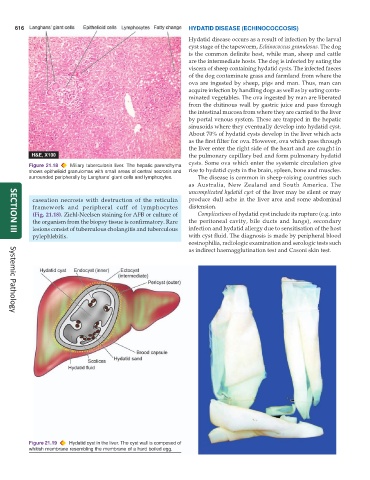
           Figure 21.18  Miliary tuberculosis liver. The hepatic parenchyma
           shows epithelioid granulomas with small areas of central necrosis and  rise to hydatid cysts in the brain, spleen, bone and muscles.
           surrounded peripherally by Langhans’ giant cells and lymphocytes.  The disease is common in sheep-raising countries such
                                                               as Australia, New Zealand and South America. The
                                                               uncomplicated hydatid cyst of the liver may be silent or may
            caseation necrosis with destruction of the reticulin  produce dull ache in the liver area and some abdominal
            framework and peripheral cuff of lymphocytes       distension.
            (Fig. 21.18). Ziehl-Neelsen staining for AFB or culture of  Complications of hydatid cyst include its rupture (e.g. into
            the organism from the biopsy tissue is confirmatory. Rare  the peritoneal cavity, bile ducts and lungs), secondary
            lesions consist of tuberculous cholangitis and tuberculous  infection and hydatid allergy due to sensitisation of the host
            pylephlebitis.                                     with cyst fluid. The diagnosis is made by peripheral blood
     SECTION III
                                                               eosinophilia, radiologic examination and serologic tests such
                                                               as indirect haemagglutination test and Casoni skin test.


     Systemic Pathology


           Figure 21.19  Hydatid cyst in the liver. The cyst wall is composed of
           whitish membrane resembling the membrane of a hard boiled egg.

