


Page 635 - Textbook of Pathology, 6th Edition
P. 635
B. ETIOLOGIC CLASSIFICATION. Based on the etiologic 619
TABLE 21.8: Classification of Cirrhosis.
agent for cirrhosis, various categories of cirrhosis are
A. Morphologic B. Etiologic
described as given in Table 21.8.
I. Micronodular 1. Alcoholic cirrhosis
(nodules less than 3 mm) (the most common, 60-70%) SPECIFIC TYPES OF CIRRHOSIS
II. Macronodular 2. Post-necrotic cirrhosis (10%)
(nodules more than 3 mm) 3. Biliary cirrhosis (5-10%) Alcoholic Liver Disease and Cirrhosis
III. Mixed 4. Pigment cirrhosis in
haemochromatosis (5%) Alcoholic liver disease is the term used to describe the
5. Cirrhosis in Wilson’s disease spectrum of liver injury associated with acute and chronic
6. Cirrhosis in α-1-antitrypsin alcoholism. There are three sequential stages in alcoholic liver
deficiency disease: alcoholic steatosis (fatty liver), alcoholic hepatitis and
7. Cardiac cirrhosis alcoholic cirrhosis.
8. Indian childhood cirrhosis (ICC) Before discussing the features of alcoholic liver disease
9. Cirrhosis in autoimmune hepatitis and cirrhosis, a brief outline of ethanol metabolism is
10. Cirrhosis in non-alcoholic outlined below and is discussed earlier in Chapter 9 (page
steatohepatitis 239).
11. Miscellaneous forms of
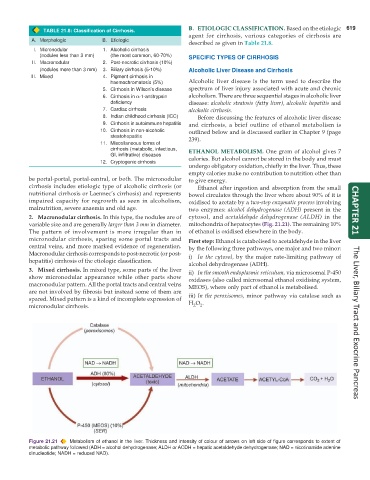
cirrhosis (metabolic, infectious, ETHANOL METABOLISM. One gram of alcohol gives 7
GI, infiltrative) diseases calories. But alcohol cannot be stored in the body and must
12. Cryptogenic cirrhosis
undergo obligatory oxidation, chiefly in the liver. Thus, these
empty calories make no contribution to nutrition other than
be portal-portal, portal-central, or both. The micronodular to give energy.
cirrhosis includes etiologic type of alcoholic cirrhosis (or Ethanol after ingestion and absorption from the small
nutritional cirrhosis or Laennec’s cirrhosis) and represents bowel circulates through the liver where about 90% of it is
impaired capacity for regrowth as seen in alcoholism, oxidised to acetate by a two-step enzymatic process involving
malnutrition, severe anaemia and old age. two enzymes: alcohol dehydrogenase (ADH) present in the CHAPTER 21
2. Macronodular cirrhosis. In this type, the nodules are of cytosol, and acetaldehyde dehydrogenase (ALDH) in the
variable size and are generally larger than 3 mm in diameter. mitochondria of hepatocytes (Fig. 21.21). The remaining 10%
The pattern of involvement is more irregular than in of ethanol is oxidised elsewhere in the body.
micronodular cirrhosis, sparing some portal tracts and First step: Ethanol is catabolised to acetaldehyde in the liver
central veins, and more marked evidence of regeneration. by the following three pathways, one major and two minor:
Macronodular cirrhosis corresponds to post-necrotic (or post- i) In the cytosol, by the major rate-limiting pathway of
hepatitis) cirrhosis of the etiologic classification.
alcohol dehydrogenase (ADH).
3. Mixed cirrhosis. In mixed type, some parts of the liver ii) In the smooth endoplasmic reticulum, via microsomal P-450
show micronodular appearance while other parts show oxidases (also called microsomal ethanol oxidising system,
macronodular pattern. All the portal tracts and central veins MEOS), where only part of ethanol is metabolised.
are not involved by fibrosis but instead some of them are
spared. Mixed pattern is a kind of incomplete expression of iii) In the peroxisomes, minor pathway via catalase such as
2
2
micronodular cirrhosis. H O . The Liver, Biliary Tract and Exocrine Pancreas
Figure 21.21 Metabolism of ethanol in the liver. Thickness and intensity of colour of arrows on left side of figure corresponds to extent of
metabolic pathway followed (ADH = alcohol dehydrogenase; ALDH or ACDH = hepatic acetaldehyde dehydrogenase; NAD = nicotinamide adenine
dinucleotide; NADH = reduced NAD).

