


Page 246 - English Class 9
P. 246
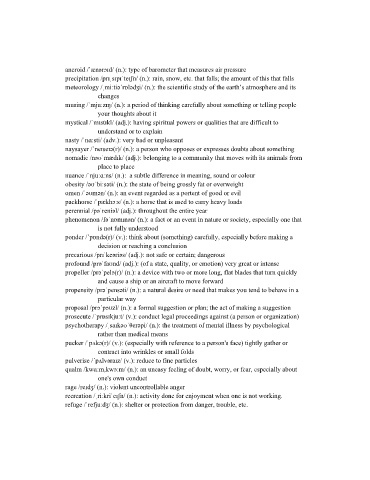
aneroid /ˈænərɔɪd/ (n.): type of barometer that measures air pressure
                       precipitation /prɪˌsɪpɪˈteɪʃn/ (n.): rain, snow, etc. that falls; the amount of this that falls
                       meteorology /ˌmiːtiəˈrɒlədʒi/ (n.): the scientific study of the earth’s atmosphere and its
                                 changes
                       musing /ˈmjuːzɪŋ/ (n.): a period of thinking carefully about something or telling people
                                 your thoughts about it
                       mystical /ˈmɪstɪkl/ (adj.): having spiritual powers or qualities that are difficult to
                                 understand or to explain
                       nasty /ˈnɑːsti/ (adv.): very bad or unpleasant
                       naysayer /ˈneɪseɪə(r)/ (n.): a person who opposes or expresses doubts about something
                       nomadic /nəʊˈmædɪk/ (adj.): belonging to a community that moves with its animals from
                                 place to place
                       nuance /ˈnjuːɑːns/ (n.):  a subtle difference in meaning, sound or colour
                       obesity /əʊˈbiːsəti/ (n.): the state of being grossly fat or overweight
                       omen /ˈəʊmən/ (n.): an event regarded as a portent of good or evil
                       packhorse /ˈpækhɔːs/ (n.): a horse that is used to carry heavy loads
                       perennial /pəˈreniəl/ (adj.): throughout the entire year
                       phenomenon /fəˈnɒmɪnən/ (n.): a fact or an event in nature or society, especially one that
                                 is not fully understood
                       ponder /ˈpɒndə(r)/ (v.): think about (something) carefully, especially before making a
                                 decision or reaching a conclusion
                       precarious /prɪˈkeəriəs/ (adj.): not safe or certain; dangerous
                       profound /prəˈfaʊnd/ (adj.): (of a state, quality, or emotion) very great or intense
                       propeller /prəˈpelə(r)/ (n.): a device with two or more long, flat blades that turn quickly
                                 and cause a ship or an aircraft to move forward
                       propensity /prəˈpensəti/ (n.): a natural desire or need that makes you tend to behave in a
                                 particular way
                       proposal /prəˈpəʊzl/ (n.): a formal suggestion or plan; the act of making a suggestion
                       prosecute /ˈprɒsɪkjuːt/ (v.): conduct legal proceedings against (a person or organization)
                       psychotherapy /ˌsaɪkəʊˈθerəpi/ (n.): the treatment of mental illness by psychological
                                 rather than medical means
                       pucker /ˈpʌkə(r)/ (v.): (especially with reference to a person's face) tightly gather or
                                 contract into wrinkles or small folds
                       pulverise /ˈpʌlvəraɪz/ (v.): reduce to fine particles
                       qualm /kwɑːm,kwɔːm/ (n.): an uneasy feeling of doubt, worry, or fear, especially about
                                 one's own conduct
                       rage /reɪdʒ/ (n.): violent uncontrollable anger
                       recreation /ˌriːkriˈeɪʃn/ (n.): activity done for enjoyment when one is not working.
                       refuge /ˈrefjuːdʒ/ (n.): shelter or protection from danger, trouble, etc.

