


Page 44 - MTW NOVEMBER 2021 - Digital Magazine_Neat
P. 44
TECH INNOVATION


           Super effectiveness is Required for


           MACHINING SUPERALLOYS


                uperalloys - metal alloys, which   Exceptional high-temperature   the ISO S group application. Depending on
                reflect their complex alloyed struc-  strength and corrosion resistance are the   the prevailing element, superalloys are di-
           Sture, have become one of the main   undeniable advantages of superalloys.   vided into three types: iron (Fe), nickel (Ni)
           engineering materials for a long time. They   However, there are two sides to the coin:   and cobalt (Co) based alloys. Machinability
           feature extremely high elevated tem-  superalloys are not only highly priced,   drops in the specified order; from the iron-
           perature strength, and therefore often are   but their machinability is poor, which can   based alloys, which can be compared with
           referred to as high-temperature superal-  pose challenges to manufacturing.  The   austenitic stainless steel, to cobalt-based
           loys (HTSA) or heat-resistant superalloys   specific cutting force that characterizes   alloys that represent the most hard-to-cut
           (HRSA). The history of superalloys started   the resistance of the material to chip   materials in the group.
           with the development of gas-turbine   removal and defines the mechanical   Increasing efficiency of machining
           engines that required reliable materials for   load on a cutting tool is high for   superalloys has become the focus
           high operating temperature ranges.  As a   superalloys. Although the main difficulty   of various scientific research and
           result of intensive research and progress   is heat, superalloys have poor thermal   technological improvements. Their result
           in metallurgy, modern superalloys (SA)   conductivity. Elemental and loose chips,   was a significant advance in producing SA
           provide a long service life for working   which are generally generated when   components. Manufacturing has effectively
           temperatures more than 1000°C.     machining superalloys, do not provide   embraced new machining strategies and
             Understandably, the largest superalloy   adequate heat dissipation from the cutting   innovative methods of cutting coolant
           consumers today are aero- and marine   zone. A tendency to work hardening   supply, such as high-pressure cooling
           engine producers (Fig. 1). Superalloys are   makes the situation worse.  (HPC), minimum quantity lubrication
           also very common in the medical industry,   The manufacturer deals with various   (MQL) and even cryogenic cooling has
           which effectively use them for prosthetic   SA workpieces: cast, wrought, sintered,   successfully been introduced. This has
           implants in orthopedic surgery. In addition,   etc. The workpiece fabrication methods   taken the productivity of machining
           superalloys have become widespread   also have an impact on machinability.   superalloys to a new level. However, like
           in power generation and the oil and gas   For example, abrasiveness of forged   in the case of titanium alloys, the key
           industries as crucial materials for essential   workpieces higher that cast ones   element for improving the productivity of
           parts of various devices.          substantially lower in comparison with   SA machining is a cutting tool that directly
                                              sintered workpieces.               removes material layers from a workpiece
                                                Consequently, a cutting tool is under   that produces chips. A cutting tool features
                                              significant thermal and mechanical load,   the tool material and its geometry, which
                                              which dramatically reduces tool life.   determines the tool’s triumph or its failure.
                                              Therefore, in machining superalloys, the   Today, coated cemented carbides
                                              cutting speed directly connected with   are the most common materials for
                                              the heat generation during chip removal   cutting tools for machining superalloys.
                                              is considerably lower when compared   The development of a carbide grade, in
                                              to other common engineering materials   which strength and wear resistance will
                                              such as steel or cast iron. The direct   be mutually complemented is a tricky
                                              result of the cutting speed limitation is   process that requires an appropriate
                                              poor productivity. Hence, overcoming   carbide substrate, coating composition,
                                              machining difficulties and increasing   and coating method. To the amazement of
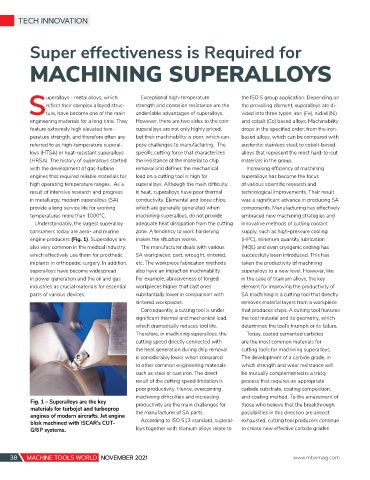
           Fig. 1 – Superalloys are the key   productivity are the main challenges for   those who believe that the breakthrough
           materials for turbojet and turboprop
           engines of modern aircrafts. Jet engine   the manufacturer of SA parts.  possibilities in this direction are almost
           blisk machined with ISCAR’s CUT-     According to ISO 513 standard, superal-  exhausted, cutting tool producers continue
           GRIP systems.                      loys together with titanium alloys relate to   to create new effective carbide grades.


     38     MACHINE TOOLS WORLD NOVEMBER 2021                                                     www.mtwmag.com

