


Page 835 - Hematology_ Basic Principles and Practice ( PDFDrive )
P. 835
Chapter 51  Congenital Disorders of Lymphocyte Function  721


                             Activated                                      BAFF
                              T cell                                       (60-mer)
                                                                                               T cell,
                             ↑IL-4, IL-10                         APRIL                        B cell,
                                                      Syndecan-2                    BAFF       or DC


                                                                                            CD70
                           ICOS            Ag


                                               CD81  CD21
                                       Igβ
                               ICOS-L    Igα             HSPG      TACI     BAFF-R    BCMA     CD27
                                                 CD19
                                                                 Activated B  Naive B   PC


                                        Differentiation
                                      Survival-apoptosis          Survival  Survival  Survival
                                                                  Inhibition
                                                                 Ig production
                                                                TI-2 responses
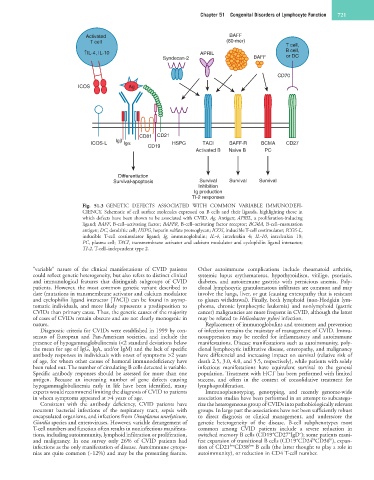
                            Fig.  51.3  GENETIC  DEFECTS  ASSOCIATED  WITH  COMMON  VARIABLE  IMMUNODEFI-
                            CIENCY. Schematic of cell surface molecules expressed on B cells and their ligands, highlighting those in
                            which defects have been shown to be associated with CVID. Ag, Antigen; APRIL, a proliferation-inducing
                            ligand; BAFF, B-cell–activating factor; BAFFR, B-cell–activating factor receptor; BCMA, B-cell–maturation
                            antigen; DC, dendritic cell; HSPG, heparin sulfate proteoglycan; ICOS, inducible T-cell costimulator; ICOS-L,
                            inducible  T-cell  costimulator  ligand;  Ig,  immunoglobulin;  IL-4,  interleukin  4;  IL-10,  interleukin  10;
                            PC, plasma cell; TACI, transmembrane activator and calcium modulator and cyclophilin ligand interactor;
                            TI-2, T-cell–independent type 2.


            “variable”  nature  of  the  clinical  manifestations  of  CVID  patients   Other  autoimmune  complications  include  rheumatoid  arthritis,
            could reflect genetic heterogeneity, but also refers to distinct clinical   systemic  lupus  erythematosus,  hypothyroidism,  vitiligo,  psoriasis,
            and  immunological  features  that  distinguish  subgroups  of  CVID   diabetes,  and  autoimmune  gastritis  with  pernicious  anemia.  Poly-
            patients.  However,  the  most  common  genetic  variant  described  to   clonal lymphocytic granulomatous infiltrates are common and may
            date (mutations in transmembrane activator and calcium modulator   involve the lungs, liver, or gut (causing enteropathy that is resistant
            and cyclophilin ligand interactor [TACI]) can be found in asymp-  to gluten withdrawal). Finally, both lymphoid (non-Hodgkin lym-
            tomatic individuals, and more likely represents a predisposition to   phoma,  chronic  lymphocytic  leukemia)  and  nonlymphoid  (gastric
            CVIDs than primary cause. Thus, the genetic causes of the majority   cancer) malignancies are more frequent in CVID, although the latter
            of cases of CVIDs remain obscure and are not clearly monogenic in   may be related to Helicobacter pylori infection.
            nature.                                                 Replacement of immunoglobulins and treatment and prevention
              Diagnostic criteria for CVIDs were established in 1999 by con-  of infection remains the mainstay of management of CVID. Immu-
            sensus  of  European  and  Pan-American  societies,  and  include  the   nosuppression  may  be  needed  for  inflammatory  and  autoimmune
            presence of hypogammaglobulinemia (<2 standard deviations below   manifestations. Disease manifestations such as autoimmunity, poly-
            the mean for age of IgG, IgA, and/or IgM) and the lack of specific   clonal lymphocytic infiltrative disease, enteropathy, and malignancy
            antibody responses in individuals with onset of symptoms >2 years   have differential and increasing impact on survival (relative risk of
            of age, for whom other causes of humoral immunodeficiency have   death 2.5, 3.0, 4.0, and 5.5, respectively), while patients with solely
            been ruled out. The number of circulating B cells detected is variable.   infectious  manifestations  have  equivalent  survival  to  the  general
            Specific  antibody  responses  should  be  assessed  for  more  than  one   population. Treatment with HCT has been performed with limited
            antigen.  Because  an  increasing  number  of  gene  defects  causing   success,  and  often  in  the  context  of  consolidative  treatment  for
            hypogammaglobulinemia  early  in  life  have  been  identified,  many   lymphoproliferation.
            experts would recommend limiting the diagnosis of CVID to patients   Immunophenotyping,  genotyping,  and  recently  genome-wide
            in whom symptoms appeared at >4 years of age.         association studies have been performed in an attempt to subcatego-
              Consistent  with  the  antibody  deficiency,  CVID  patients  have   rize the heterogeneous group of CVIDs into pathobiologically relevant
            recurrent  bacterial  infections  of  the  respiratory  tract,  sepsis  with   groups. In large part the associations have not been sufficiently robust
            encapsulated organisms, and infections from Ureaplasma uraelyticum,   to  direct  diagnosis  or  clinical  management,  and  underscore  the
            Giardia species and enteroviruses. However, variable derangement of   genetic  heterogeneity  of  the  disease.  B-cell  subphenotypes  most
            T-cell numbers and function often results in noninfectious manifesta-  common  among  CVID  patients  include  a  severe  reduction  in
                                                                                          +
                                                                                               +
                                                                                                   –
            tions, including autoimmunity, lymphoid infiltration or proliferation,   switched memory B cells (CD19 CD27 IgD ); some patients mani-
                                                                                                  +
                                                                                                       hi
                                                                                                             hi
            and  malignancy.  In  one  survey  only  26%  of  CVID  patients  had   fest expansion of transitional B cells (CD19 CD24 CD38 ), expan-
                                                                            low
                                                                                  low
            infections as the only manifestation of disease. Autoimmune cytope-  sion of CD21 CD38  B cells (the latter thought to play a role in
            nias are quite common (~12%) and may be the presenting feature.   autoimmunity), or reduction in CD4 T-cell number.

