


Page 1493 - Williams Hematology ( PDFDrive )
P. 1493
1468           Part X:  Malignant Myeloid Diseases                                                                                                   Chapter 89:  Chronic Myelogenous Leukemia and Related Disorders             1469


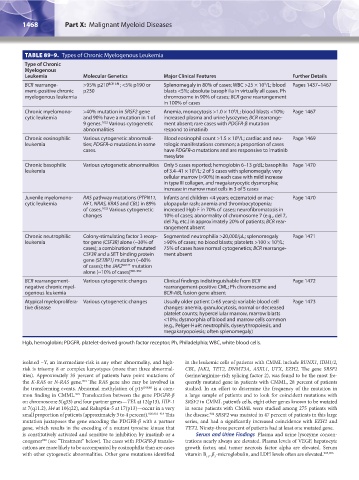
                TABLE 89–9.  Types of Chronic Myelogenous Leukemia
                Type of Chronic
                Myelogenous
                Leukemia            Molecular Genetics         Major Clinical Features                    Further Details
                BCR rearrange-      >95% p210 BCR-ABL ; <5% p190 or   Splenomegaly in 80% of cases; WBC >25 × 10 /L; blood   Pages 1437–1467
                                                                                                 9
                ment-positive chronic   p230                   blasts <5%; absolute basophilia in virtually all cases. Ph
                myelogenous leukemia                           chromosome in 90% of cases; BCR gene rearrangement
                                                               in 100% of cases
                Chronic myelomono-  >40% mutation in SRSF2 gene   Anemia, monocytosis >1.0 × 10 /L; blood blasts <10%;   Page 1467
                                                                                      9
                cytic leukemia      and 90% have a mutation in 1 of   increased plasma and urine lysozyme; BCR rearrange-
                                    9 genes. 1032  Various cytogenetic   ment absent; rare cases with PDGFR-β mutation
                                    abnormalities              respond to imatinib
                Chronic eosinophilic   Various cytogenetic abnormali-  Blood eosinophil count >1.5 × 10 /L; cardiac and neu-  Page 1469
                                                                                        9
                leukemia            ties; PDGFR-α mutations in some   rologic manifestations common; a proportion of cases
                                    cases.                     have PDGFR-α mutations and are responsive to imatinib
                                                               mesylate
                Chronic basophilic   Various cytogenetic abnormalities Only 5 cases reported; hemoglobin 6–13 g/dL; basophilia  Page 1470
                leukemia                                       of 3.4–41 × 10 /L; 2 of 5 cases with splenomegaly; very
                                                                         9
                                                               cellular marrow (>90%) in each case with mild increase
                                                               in type III collagen, and megakaryocytic dysmorphia;
                                                               increase in marrow mast cells in 3 of 5 cases
                Juvenile myelomono-  RAS pathway mutations (PTPN11,   Infants and children <4 years; eczematoid or mac-  Page 1470
                cytic leukemia      NF1, NRAS, KRAS and CBL) in 89%   ulopapular rash; anemia and thrombocytopenia;
                                    of cases. 1033  Various cytogenetic   increased Hgb F in 70% of cases; neurofibromatosis in
                                    changes                    10% of cases; abnormality of chromosome 7 (e.g., del 7,
                                                               del 7q, etc.) in approximately 20% of patients; BCR rear-
                                                               rangement absent
                Chronic neutrophilic   Colony-stimulating factor 3 recep-  Segmented neutrophilia >20,000/μL; splenomegaly   Page 1471
                leukemia            tor gene (CSF3R) alone (~30% of   >90% of cases; no blood blasts; platelets >100 × 10 /L;
                                                                                                     9
                                    cases); a combination of mutated   75% of cases have normal cytogenetics; BCR rearrange-
                                    CSF3R and a SET binding protein   ment absent
                                    gene (SETBP1) mutation (~60%
                                    of cases); the JAK2 V617F  mutation
                                    alone (~10% of cases) 990–992
                BCR rearrangement-   Various cytogenetic changes  Clinical findings indistinguishable from BCR    Page 1472
                negative chronic myel-                         rearrangement-positive CML; Ph chromosome and
                ogenous leukemia                               BCR-ABL fusion gene absent
                Atypical myeloprolifera- Various cytogenetic changes  Usually older patient (>65 years); variable blood cell   Page 1473
                tive disease                                   changes: anemia, granulocytosis, normal or decreased
                                                               platelet counts; hypercellular marrow, marrow blasts
                                                               <10%; dysmorphia of blood and marrow cells common
                                                               (e.g., Pelger-Huët neutrophils, dyserythropoiesis, and
                                                               megakaryopoiesis; often splenomegaly)
               Hgb, hemoglobin; PDGFR, platelet-derived growth factor receptor; Ph, Philadelphia; WBC, white blood cells.


               isolated −Y, an intermediate-risk is any other abnormality, and high-  in the leukemic cells of patients with CMML include RUNX1, IDH1/2,
               risk is trisomy 8 or complex karyotypes (more than three abnormal-  CBL,  JAK2,  TET2,  DNMT3A,  ASXL1,  UTX,  EZH2. The gene  SRSF2
               ities). Approximately 35 percent of patients have point mutations of   (serine/arginine-rich splicing factor 2), was found to be the most fre-
               the K-RAS or N-RAS gene.  The RAS gene also may be involved in   quently mutated gene in patients with CMML, 28 percent of patients
                                   904
               the transforming events. Abnormal methylation of p15 INK4B  is a com-  studied. In an effort to determine the frequency of the mutation in
               mon finding in CMML.  Translocation between the gene PDGFR-β   a large sample of patients and to look for coincident mutations with
                                 915
               on chromosome 5(q33) and four partner genes—TEL at 12(p13), HIP-1   SRSF2 in CMML patient’s cells, eight other genes known to be mutated
               at 7(q11.2), H4 at 10(q22), and Rabaptin-5 at 17(p13)—occur in a very   in some patients with CMML were studied among 275 patients with
               small proportion of patients (approximately 3 to 4 percent). 905,916–919  This   the disease.  SRSF2 was mutated in 47 percent of patients in this large
                                                                              904
               mutation juxtaposes the gene encoding the PDGFR-β with a partner   series, and had a significantly increased coincidence with EZH2 and
               gene, which results in the encoding of a mutant tyrosine kinase that   TET2. Ninety-three percent of patients had at least one mutated gene.
               is constitutively activated and sensitive to inhibition by imatinib or a   Serum and Urine Findings  Plasma and urine lysozyme concen-
               congener  (see “Treatment” below). The cases with PDGFR-β translo-  trations nearly always are elevated. Plasma levels of VEGF, hepatocyte
                      920
               cations are more likely to be accompanied by eosinophilia than are cases   growth factor, and tumor necrosis factor alpha are elevated. Serum
               with other cytogenetic abnormalities. Other gene mutations identified   vitamin B , β -microglobulin, and LDH levels often are elevated. 905,906
                                                                             12  2


          Kaushansky_chapter 89_p1437-1490.indd   1468                                                                  9/18/15   3:42 PM

