


Page 27 - Williams Hematology ( PDFDrive )
P. 27
4              Part I:  Clinical Evaluation of the Patient                                                                                   Chapter 1:  Initial Approach to the Patient: History and Physical Examination           5


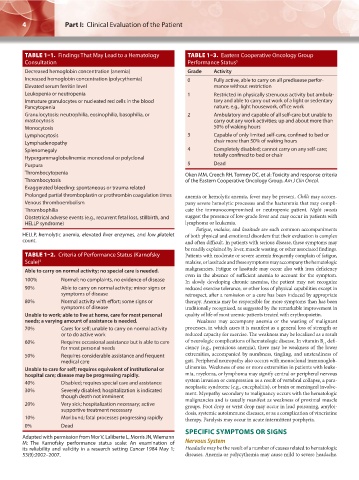
                TABLE 1–1.  Findings That May Lead to a Hematology     TABLE 1–3.  Eastern Cooperative Oncology Group
                Consultation                                           Performance Status 5
                Decreased hemoglobin concentration (anemia)            Grade    Activity
                Increased hemoglobin concentration (polycythemia)      0        Fully active, able to carry on all predisease perfor-
                Elevated serum ferritin level                                   mance without restriction
                Leukopenia or neutropenia                              1        Restricted in physically strenuous activity but ambula-
                Immature granulocytes or nucleated red cells in the blood       tory and able to carry out work of a light or sedentary
                Pancytopenia                                                    nature, e.g., light housework, office work
                Granulocytosis: neutrophilia, eosinophilia, basophilia, or   2  Ambulatory and capable of all self-care but unable to
                mastocytosis                                                    carry out any work activities; up and about more than
                Monocytosis                                                     50% of waking hours
                Lymphocytosis                                          3        Capable of only limited self-care, confined to bed or
                Lymphadenopathy                                                 chair more than 50% of waking hours
                Splenomegaly                                           4        Completely disabled; cannot carry on any self-care;
                Hypergammaglobulinemia: monoclonal or polyclonal                totally confined to bed or chair
                Purpura                                                5        Dead
                Thrombocytopenia                                      Oken MM, Creech RH, Tormey DC, et al: Toxicity and response criteria
                Thrombocytosis                                        of the Eastern Cooperative Oncology Group. Am J Clin Oncol.
                Exaggerated bleeding: spontaneous or trauma related
                Prolonged partial thromboplastin or prothrombin coagulation times   anemia or hemolytic anemia, fever may be present. Chills may accom-
                Venous thromboembolism                                pany severe hemolytic processes and the bacteremia that may compli-
                Thrombophilia                                         cate the immunocompromised or neutropenic patient.  Night sweats
                Obstetrical adverse events (e.g., recurrent fetal loss, stillbirth, and   suggest the presence of low-grade fever and may occur in patients with
                HELLP syndrome)                                       lymphoma or leukemia.
                                                                          Fatigue, malaise, and lassitude are such common accompaniments
               HELLP, hemolytic anemia, elevated liver enzymes, and low platelet   of both physical and emotional disorders that their evaluation is complex
               count.                                                 and often difficult. In patients with serious disease, these symptoms may
                                                                      be readily explained by fever, muscle wasting, or other associated findings.
                TABLE 1–2.  Criteria of Performance Status (Karnofsky   Patients with moderate or severe anemia frequently complain of fatigue,
                Scale) 4                                              malaise, or lassitude and these symptoms may accompany the hematologic
                Able to carry on normal activity; no special care is needed.  malignancies. Fatigue or lassitude may occur also with iron deficiency
                                                                      even in the absence of sufficient anemia to account for the symptom.
                100%        Normal; no complaints, no evidence of disease  In slowly developing chronic anemias, the patient may not recognize
                90%         Able to carry on normal activity; minor signs or   reduced exercise tolerance, or other loss of physical capabilities except in
                            symptoms of disease                       retrospect, after a remission or a cure has been induced by appropriate
                80%         Normal activity with effort; some signs or    therapy. Anemia may be responsible for more symptoms than has been
                            symptoms of disease                       traditionally recognized, as suggested by the remarkable improvement in
                Unable to work; able to live at home, care for most personal   quality of life of most uremic patients treated with erythropoietin.
                needs; a varying amount of assistance is needed.          Weakness may  accompany anemia or the wasting  of malignant
                70%         Cares for self; unable to carry on normal activity   processes, in which cases it is manifest as a general loss of strength or
                            or to do active work                      reduced capacity for exercise. The weakness may be localized as a result
                60%         Requires occasional assistance but is able to care   of neurologic complications of hematologic disease. In vitamin B  defi-
                                                                                                                    12
                            for most personal needs                   ciency (e.g., pernicious anemia), there may be weakness of the lower
                50%         Requires considerable assistance and frequent   extremities, accompanied by numbness, tingling, and unsteadiness of
                            medical care                              gait. Peripheral neuropathy also occurs with monoclonal immunoglob-
                Unable to care for self; requires equivalent of institutional or   ulinemias. Weakness of one or more extremities in patients with leuke-
                hospital care; disease may be progressing rapidly.    mia, myeloma, or lymphoma may signify central or peripheral nervous
                40%         Disabled; requires special care and assistance  system invasion or compression as a result of vertebral collapse, a para-
                                                                      neoplastic syndrome (e.g., encephalitis), or brain or meningeal involve-
                30%         Severely disabled; hospitalization is indicated   ment. Myopathy secondary to malignancy occurs with the hematologic
                            though death not imminent                 malignancies and is usually manifest as weakness of proximal muscle
                20%         Very sick; hospitalization necessary; active    groups. Foot drop or wrist drop may occur in lead poisoning, amyloi-
                            supportive treatment necessary            dosis, systemic autoimmune diseases, or as a complication of vincristine
                10%         Moribund; fatal processes progressing rapidly  therapy. Paralysis may occur in acute intermittent porphyria.
                0%          Dead
                                                                      SPECIFIC SYMPTOMS OR SIGNS
               Adapted with permission from Mor V, Laliberte L, Morris JN, Wiemann
               M:  The  Karnofsky  performance  status  scale:  An  examination  of   Nervous System
               its reliability and validity in a research setting Cancer 1984 May 1;   Headache may be the result of a number of causes related to hematologic
               53(9):2002–2007.                                       diseases. Anemia or polycythemia may cause mild to severe headache.


          Kaushansky_chapter 01_p0001-0010.indd   4                                                                     17/09/15   5:32 pm

