


Page 1045 - Clinical Immunology_ Principles and Practice ( PDFDrive )
P. 1045
1008         Part seven  Organ-Specific Inflammatory Disease


                               $                      %                   &

                                  1RUPDO GXRGHQXP    &HOLDF GLVHDVH  GXRGHQXP   &HOLDF GLVHDVH  &'  VWDLQ


                               '                      (                   )

                                 &URKQ¶V GLVHDVH  FRORQ   8OFHUDWLYH FROLWLV  &9,' HQWHURSDWK\
                                                                                GXRGHQXP
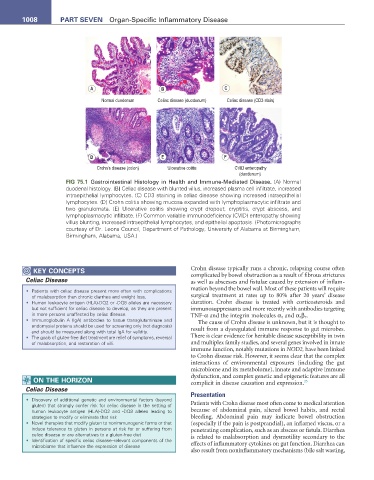
                       FIG 75.1  Gastrointestinal Histology in Health and Immune-Mediated Disease. (A) Normal
                       duodenal histology. (B) Celiac disease with blunted villus, increased plasma cell infiltrate, increased
                       intraepithelial lymphocytes. (C) CD3 staining in celiac disease showing increased intraepithelial
                       lymphocytes. (D) Crohn colitis showing mucosa expanded with lymphoplasmacytic infiltrate and
                       two granulomata. (E) Ulcerative colitis showing crypt dropout, cryptitis, crypt abscess, and
                       lymphoplasmacytic infiltrate. (F) Common variable immunodeficiency (CVID) enteropathy showing
                       villus blunting, increased intraepithelial lymphocytes, and epithelial apoptosis. (Photomicrographs
                       courtesy of Dr. Leona Council, Department of Pathology, University of Alabama at Birmingham,
                       Birmingham, Alabama, USA.)


            KeY COnCePts                                       Crohn disease typically runs a chronic, relapsing course often
         Celiac Disease                                        complicated by bowel obstruction as a result of fibrous strictures
                                                               as well as abscesses and fistulae caused by extension of inflam-
          •  Patients with celiac disease present more often with complications   mation beyond the bowel wall. Most of these patients will require
           of malabsorption than chronic diarrhea and weight loss.  surgical treatment at rates up to 80% after 20 years’ disease
          •  Human leukocyte antigen (HLA)-DQ2 or -DQ8 alleles are necessary   duration. Crohn disease is treated with corticosteroids and
           but not sufficient for celiac disease to develop, as they are present   immunosuppressants and more recently with antibodies targeting
           in more persons unaffected by celiac disease.       TNF-α and the integrin molecules α 4  and α 4 β 7 .
          •  Immunoglobulin A (IgA) antibodies to tissue transglutaminase and   The cause of Crohn disease is unknown, but it is thought to
           endomysial proteins should be used for screening only (not diagnosis)   result from a dysregulated immune response to gut microbes.
           and should be measured along with total IgA for validity.
          •  The goals of gluten-free diet treatment are relief of symptoms, reversal   There is clear evidence for heritable disease susceptibility in twin
           of malabsorption, and restoration of villi.         and multiplex family studies, and several genes involved in innate
                                                               immune function, notably mutations in NOD2, have been linked
                                                               to Crohn disease risk. However, it seems clear that the complex
                                                               interactions of environmental exposures (including the gut
                                                               microbiome and its metabolome), innate and adaptive immune
            On tHe HOrIZOn                                     dysfunction, and complex genetic and epigenetic features are all
                                                                                                    25
                                                               complicit in disease causation and expression.
         Celiac Disease
                                                               Presentation
          •  Discovery of additional genetic and environmental factors (beyond
           gluten) that strongly confer risk for celiac disease in the setting of   Patients with Crohn disease most often come to medical attention
           human leukocyte antigen (HLA)-DQ2 and -DQ8 alleles leading to   because of abdominal pain, altered bowel habits, and rectal
           strategies to modify or eliminate that risk         bleeding.  Abdominal pain may indicate bowel obstruction
          •  Novel therapies that modify gluten to nonimmunogenic forms or that   (especially if the pain is postprandial), an inflamed viscus, or a
           induce tolerance to gluten in persons at risk for or suffering from   penetrating complication, such as an abscess or fistula. Diarrhea
           celiac disease or are alternatives to a gluten-free diet  is related to malabsorption and dysmotility secondary to the
          •  Identification of specific celiac disease–relevant components of the
           microbiome that influence the expression of disease  effects of inflammatory cytokines on gut function. Diarrhea can
                                                               also result from noninflammatory mechanisms (bile salt wasting,

