


Page 45 - DnD_BasicRules_2018
P. 45
Chapter 5: Equipment


            The marketplace of a large city teems with buyers     With one gold piece, a character can buy a bedroll, 50
            and sellers of many sorts: dwarf smiths and elf woodcarv-  feet of good rope, or a goat. A skilled (but not exceptional)
            ers, halfling farmers and gnome jewelers, not to mention   artisan can earn one gold piece a day. The gold piece is
            humans of every shape, size, and color drawn from a   the standard unit of measure for wealth, even if the coin
            spectrum of nations and cultures. In the largest cities,   itself is not commonly used. When merchants discuss
            almost anything imaginable is offered for sale, from ex-  deals that involve goods or services worth hundreds or
            otic spices and luxurious clothing to wicker baskets and   thousands of gold pieces, the transactions don’t usually
            practical swords.                                  involve the exchange of individual coins. Rather, the gold
              For an adventurer, the availability of armor, weapons,   piece is a standard measure of value, and the actual ex-
            backpacks, rope, and similar goods is of paramount   change is in gold bars, letters of credit, or valuable goods.
            importance, since proper equipment can mean the differ-    One gold piece is worth ten silver pieces, the most
            ence between life and death in a dungeon or the untamed   prevalent coin among commoners. A silver piece buys
            wilds. This chapter details the mundane and exotic mer-  a laborer’s work for half a day, a flask of lamp oil, or a
            chandise that adventurers commonly find useful in the face   night’s rest in a poor inn.
            of the threats that the worlds of D&D present.       One silver piece is worth ten copper pieces, which are
                                                               common among laborers and beggars. A single copper
            Starting Equipment                                 piece buys a candle, a torch, or a piece of chalk.
                                                                 In addition, unusual coins made of other precious met-
            When you create your character, you receive equipment
                                                               als sometimes appear in treasure hoards. The electrum
            based on a combination of your class and background.
                                                               piece (ep) and the platinum piece (pp) originate from
            Alternatively, you can start with a number of gold pieces
                                                               fallen empires and lost kingdoms, and they sometimes
            based on your class and spend them on items from the
                                                               arouse suspicion and skepticism when used in transac-
            lists in this chapter. See the Starting Wealth by Class ta-
                                                               tions. An electrum piece is worth five silver pieces, and a
            ble to determine how much gold you have to spend.
                                                               platinum piece is worth ten gold pieces.
              You decide how your character came by this starting
                                                                 A standard coin weighs about a third of an ounce,
            equipment. It might have been an inheritance, or goods
                                                               so fifty coins weigh a pound.
            that the character purchased during his or her upbringing.
            You might have been equipped with a weapon, armor, and
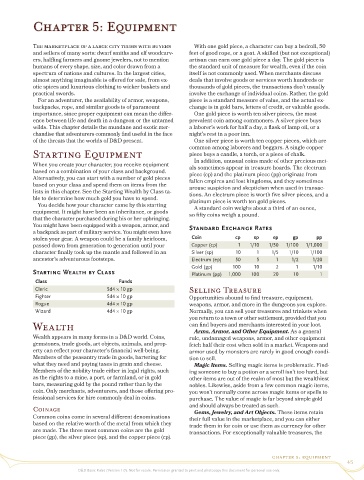
                                                               Standard Exchange Rates
            a backpack as part of military service. You might even have
                                                                Coin          cp    sp    ep     gp     pp
            stolen your gear. A weapon could be a family heirloom,
            passed down from generation to generation until your   Copper (cp)  1  1/10  1/50  1/100  1/1,000
            character finally took up the mantle and followed in an   Silver (sp)  10  1  1/5  1/10   1/100
            ancestor’s adventurous footsteps.                   Electrum (ep)  50    5     1    1/2    1/20
                                                                Gold (gp)    100    10     2      1    1/10
            Starting Wealth by Class                            Platinum (pp)  1,000  100  20    10      1
             Class                      Funds
             Cleric                 5d4 × 10 gp                Selling Treasure
             Fighter                5d4 × 10 gp                Opportunities abound to find treasure, equipment,
             Rogue                  4d4 × 10 gp                weapons, armor, and more in the dungeons you explore.
             Wizard                 4d4 × 10 gp                Normally, you can sell your treasures and trinkets when
                                                               you return to a town or other settlement, provided that you
            Wealth                                             can find buyers and merchants interested in your loot.
                                                                 Arms, Armor, and Other Equipment. As a general
            Wealth appears in many forms in a D&D world. Coins,   rule, undamaged weapons, armor, and other equipment
            gemstones, trade goods, art objects, animals, and prop-  fetch half their cost when sold in a market. Weapons and
            erty can reflect your character’s financial well-being.   armor used by monsters are rarely in good enough condi-
            Members of the peasantry trade in goods, bartering for   tion to sell.
            what they need and paying taxes in grain and cheese.     Magic Items. Selling magic items is problematic. Find-
            Members of the nobility trade either in legal rights, such   ing someone to buy a potion or a scroll isn’t too hard, but
            as the rights to a mine, a port, or farmland, or in gold   other items are out of the realm of most but the wealthiest
            bars, measuring gold by the pound rather than by the   nobles. Likewise, aside from a few common magic items,
            coin. Only merchants, adventurers, and those offering pro-  you won’t normally come across magic items or spells to
            fessional services for hire commonly deal in coins.  purchase. The value of magic is far beyond simple gold
            Coinage                                            and should always be treated as such.
                                                                 Gems, Jewelry, and Art Objects. These items retain
            Common coins come in several different denominations
                                                               their full value in the marketplace, and you can either
            based on the relative worth of the metal from which they
                                                               trade them in for coin or use them as currency for other
            are made. The three most common coins are the gold
                                                               transactions. For exceptionally valuable treasures, the
            piece (gp), the silver piece (sp), and the copper piece (cp).
                                                                                          Chapter 5: Equipment
                                                                                                                  45
                                                                                                                  45
                           D&D Basic Rules (Version 1.0). Not for resale. Permission granted to print and photocopy this document for personal use only.

