


Page 73 - 2019_TOH_booklet_rev01 final
P. 73
Fire occurrence in
fire that may be ignited from burning embers or other ignition sources.
North Central Washington
Mulches used around the landscape are valuable because they conserve
u Plant single trees that are pruned at least 10’ from the ground.
moisture and help reduce weed growth. Organic mulches, such as bark, are
Fire occurrence in
Mulches
Landscape Zone 2: 5-30 feet. In this zone, the goal is to prevent any spread of a
u Plant single shrubs. Keep well groomed.
often used. However, firebrands from a wildland fire can ignite dry bark mulch,
On average, wildland fires occur in Chelan and Douglas counties between every
Mulches
Fire occurrence in
fire that may be ignited from burning embers or other ignition sources.
Landscape Zone 2: 5-30 feet. In this zone, the goal is to prevent any spread of a
u Clean up dead fuels.
conveying the fire to a building. Consider using less- combustible types of
six and 30 years. Wildland fire has been a part of the North Central Washington
North Central Washington
fire that may be ignited from burning embers or other ignition sources.
u Eliminate continuous ground fuel and ladder fuels.
Mulches used around the landscape are valuable because they conserve
mulch such as gravel or decorative rock, or a combination of wood bark mulch
ecosystem since the retreat of the Continental glaciers more than 10,000 year
North Central Washington
u Plant single trees that are pruned at least 10’ from the ground.
moisture and help reduce weed growth. Organic mulches, such as bark, are
Mulches used around the landscape are valuable because they conserve
surrounded by decorative rock mulch. Do not use wood or bark mulches within
ago. Wildland fire is an essential part of the environment in this area. Fire serves
u Plant single trees that are pruned at least 10’ from the ground.
u Plant single shrubs. Keep well groomed.
moisture and help reduce weed growth. Organic mulches, such as bark, are
often used. However, firebrands from a wildland fire can ignite dry bark mulch,
On average, wildland fires occur in Chelan and Douglas counties between every
Landscape Zone 3: 30-100+ feet. In this zone, the goal is to reduce the heat
5 feet of the house. Instead, consider colored rock, rock cinders, pavers, or other
as a key component in maintaining a healthy and productive ecosystem. To
u Plant single shrubs. Keep well groomed.
u Clean up dead fuels.
often used. However, firebrands from a wildland fire can ignite dry bark mulch,
conveying the fire to a building. Consider using less- combustible types of
On average, wildland fires occur in Chelan and Douglas counties between every
six and 30 years. Wildland fire has been a part of the North Central Washington
generated by a fire (intensity) as it gets closer to a structure.
non-combustible, inorganic materials.
reduce fire damage in the fire-prone wildland urban interface of North Central
u Clean up dead fuels.
u Eliminate continuous ground fuel and ladder fuels.
conveying the fire to a building. Consider using less- combustible types of
mulch such as gravel or decorative rock, or a combination of wood bark mulch
six and 30 years. Wildland fire has been a part of the North Central Washington
ecosystem since the retreat of the Continental glaciers more than 10,000 year
Washington, home owners can site buildings, use appropriate construction
u Eliminate continuous ground fuel and ladder fuels.
mulch such as gravel or decorative rock, or a combination of wood bark mulch
ecosystem since the retreat of the Continental glaciers more than 10,000 year
surrounded by decorative rock mulch. Do not use wood or bark mulches within
ago. Wildland fire is an essential part of the environment in this area. Fire serves
u Maintain well-spaced trees with crowns well separated.
materials, and select fire-resistant plants to minimize losses. Wildland fire will
Landscape Zone 3: 30-100+ feet. In this zone, the goal is to reduce the heat
surrounded by decorative rock mulch. Do not use wood or bark mulches within
Maintenance
ago. Wildland fire is an essential part of the environment in this area. Fire serves
5 feet of the house. Instead, consider colored rock, rock cinders, pavers, or other
as a key component in maintaining a healthy and productive ecosystem. To
u Eliminate ladder fuels.
Landscape Zone 3: 30-100+ feet. In this zone, the goal is to reduce the heat
always burn in North Central Washington but that does not mean homes have
generated by a fire (intensity) as it gets closer to a structure.
5 feet of the house. Instead, consider colored rock, rock cinders, pavers, or other
as a key component in maintaining a healthy and productive ecosystem. To
non-combustible, inorganic materials.
reduce fire damage in the fire-prone wildland urban interface of North Central
u Minimize ground/surface fuels.
generated by a fire (intensity) as it gets closer to a structure.
non-combustible, inorganic materials.
to be lost to wildland fires. There are many actions a home owner can take to live
reduce fire damage in the fire-prone wildland urban interface of North Central
Washington, home owners can site buildings, use appropriate construction
Maintenance is absolutely essential to a fire-resistant landscape. Plants listed
u Keep shrubs pruned, thinned, and well-spaced.
u Maintain well-spaced trees with crowns well separated.
Washington, home owners can site buildings, use appropriate construction
safely in a fire prone environment.
materials, and select fire-resistant plants to minimize losses. Wildland fire will
Maintenance
u Maintain well-spaced trees with crowns well separated.
as fire-resistant, if allowed to grow unchecked and poorly maintained, can
u Eliminate ladder fuels.
materials, and select fire-resistant plants to minimize losses. Wildland fire will
Maintenance
always burn in North Central Washington but that does not mean homes have
u Eliminate ladder fuels.
become fire hazards. Practice, “if it is brown trim it down”. Proper maintenance of
always burn in North Central Washington but that does not mean homes have
u Minimize ground/surface fuels.
to be lost to wildland fires. There are many actions a home owner can take to live
Defensible Space
u Minimize ground/surface fuels.
Maintenance is absolutely essential to a fire-resistant landscape. Plants listed
to be lost to wildland fires. There are many actions a home owner can take to live
landscaping is crucial and cannot be ignored.
u Keep shrubs pruned, thinned, and well-spaced.
safely in a fire prone environment.
Maintenance is absolutely essential to a fire-resistant landscape. Plants listed
u Keep shrubs pruned, thinned, and well-spaced.
Remember: “Lean, clean, and green” are the essentials to a fire-resistant
as fire-resistant, if allowed to grow unchecked and poorly maintained, can
safely in a fire prone environment.
as fire-resistant, if allowed to grow unchecked and poorly maintained, can
become fire hazards. Practice, “if it is brown trim it down”. Proper maintenance of
Sometimes wildland plants can occur as an uninter-
Not only are steep slopes often considered high
landscape.
The most important person in preventing a structure from burning in a wildland
STEP THREE: IS THERE A CONTINUOUS
become fire hazards. Practice, “if it is brown trim it down”. Proper maintenance of
Defensible Space
wildfire areas, they are also highly erodable. When
rupted layer of vegetation as opposed to being patchy or
landscaping is crucial and cannot be ignored.
DENSE COVER OF SHRUBS OR TREES PRESENT
Defensible Space
fire is the property owner. Home owners, not fire departments, have the
widely spaced individual plants. The more continuous
removing shrubs and trees from steep slopes, keep soil
landscaping is crucial and cannot be ignored.
Remember: “Lean, clean, and green” are the essentials to a fire-resistant
WITHIN THE RECOMMENDED DEFENSIBLE SPACE
and dense the vegetation, the greater the wildfire threat.
disturbance to a minimum. Also, it may be necessary to
responsibility to take action before a fire ever happens. Actions taken before
Remember: “Lean, clean, and green” are the essentials to a fire-resistant
Maintenance practices for
If this situation is present within your defensible space
AREA?
replace flammable vegetation with other plant materials
Sometimes wildland plants can occur as an uninter-
Not only are steep slopes often considered high
landscape.
The most important person in preventing a structure from burning in a wildland
STEP THREE: IS THERE A CONTINUOUS
to prevent excessive soil erosion.
area, you should “break-it-up” by providing a separation
Not only are steep slopes often considered high
Sometimes wildland plants can occur as an uninter-
the fire often determine the final outcome. Creating defensible space around a
landscape.
wildfire areas, they are also highly erodable. When
The most important person in preventing a structure from burning in a wildland
STEP THREE: IS THERE A CONTINUOUS
DENSE COVER OF SHRUBS OR TREES PRESENT
rupted layer of vegetation as opposed to being patchy or
between plants or small groups of plants.
widely spaced individual plants. The more continuous
removing shrubs and trees from steep slopes, keep soil
fire is the property owner. Home owners, not fire departments, have the
DENSE COVER OF SHRUBS OR TREES PRESENT
widely spaced individual plants. The more continuous
removing shrubs and trees from steep slopes, keep soil
fire is the property owner. Home owners, not fire departments, have the
WITHIN THE RECOMMENDED DEFENSIBLE SPACE
home is one of the most important and effective steps one can take to protect Landscape Zone 2: 5-30 feet. In this zone, the goal is to prevent any spread of a Mulches rupted layer of vegetation as opposed to being patchy or wildfire areas, they are also highly erodable. When
and dense the vegetation, the greater the wildfire threat.
disturbance to a minimum. Also, it may be necessary to
WITHIN THE RECOMMENDED DEFENSIBLE SPACE
responsibility to take action before a fire ever happens. Actions taken before
disturbance to a minimum. Also, it may be necessary to
and dense the vegetation, the greater the wildfire threat.
If this situation is present within your defensible space
AREA?
replace flammable vegetation with other plant materials
Continuous, dense
responsibility to take action before a fire ever happens. Actions taken before
families, firefighters and homes from catastrophic wildfire. Defensible space is AREA? Maintenance practices for
Maintenance practices for
2019 BNCW & Sangster Motors Hom
replace flammable vegetation with other plant materials
area, you should “break-it-up” by providing a separatione Tour & Remodeling Expo
If this situation is present within your defensible space
to prevent excessive soil erosion.
uninterrupted
the fire often determine the final outcome. Creating defensible space around a
to prevent excessive soil erosion.
area, you should “break-it-up” by providing a separation
the fire often determine the final outcome. Creating defensible space around a
between plants or small groups of plants.
the area between a structure and an oncoming wildfire (or between a burning fire-resistant landscapes vegetation
between plants or small groups of plants.
home is one of the most important and effective steps one can take to protect
home is one of the most important and effective steps one can take to protect
The primary objective of landscape maintenance is esthetics and to reduce the
Continuous, dense
structure and wildland vegetation) where nearby vegetation has been modified grass, fallen leaves, wood shake roofs, leaf- or needle-filled • Thinning Continuous, dense
families, firefighters and homes from catastrophic wildfire. Defensible space is
uninterrupted
families, firefighters and homes from catastrophic wildfire. Defensible space is
uninterrupted
spread and intensity of a threatening wildland fire.
fire-resistant landscapes vegetation
to reduce a wildfire’s intensity and ability to spread. Having a defensible space gutters, a new fire easily can start. Home owners can take fire-resistant landscapes vegetation
the area between a structure and an oncoming wildfire (or between a burning
• Spacing
the area between a structure and an oncoming wildfire (or between a burning
The primary objective of landscape maintenance is esthetics and to reduce the
not only protects homes, it also helps protect those who are defending homes by action to reduce the ignition potential on and immediately • Raking • Pruning to remove ladder fuels
structure and wildland vegetation) where nearby vegetation has been modified
• Washing dead debris out of plants
The primary objective of landscape maintenance is esthetics and to reduce the
structure and wildland vegetation) where nearby vegetation has been modified
Patchy vegetation
to reduce a wildfire’s intensity and ability to spread. Having a defensible space
spread and intensity of a threatening wildland fire.
providing safe ingress and egress. adjacent to the home to combat incoming firebrands. spread and intensity of a threatening wildland fire. or widely spaced
• Thinning
• Spacing
to reduce a wildfire’s intensity and ability to spread. Having a defensible space
• Weeding
individual plants.
not only protects homes, it also helps protect those who are defending homes by Building Materials • Raking • Washing dead debris out of plants • Pruning to remove ladder fuels
• Pruning to remove ladder fuels
not only protects homes, it also helps protect those who are defending homes by
• Mowing/Weed Eatingplants Weeding
•
Patchy vegetation
• Washing dead debris out of
Patchy vegetation
or widely spaced
providing safe ingress and egress. STEP THREE: IS THERE A CONTINUOUS The home design, location, construction materials, and • Thinning • Using only inor or widely spaced
• Spacing
providing safe ingress and egress.
• Spacing ganic mulch
• Mowing/Weed Eating
• Thinning
Not only are steep slopes often considered high
Sometimes wildland plants can occur as an uninter-
individual plants.
• Using only inorganic mulch close to structures
individual plants.
wildfire areas, they are also highly erodable. When
rupted layer of vegetation as opposed to being patchy or
• Raking
• Weeding
• Weeding
• Watering
DENSE COVER OF SHRUBS OR TREES PRESENT access all influence its survivability during a wildland fire. • Raking close to structures
widely spaced individual plants. The more continuous
removing shrubs and trees from steep slopes, keep soil
• Watering
• Using only inorganic mulch
Sometimes wildland plants can occur as an uninter- • Mowing/Weed Eating
Sometimes wildland plants can occur as an uninter-
Not only are steep slopes often considered high
•
• Using only inorganic mulch
WITHIN THE RECOMMENDED DEFENSIBLE SPACE The most exposed portion of your home is the roof. A Class Mowing/Weed Eating Recommended Separation
Not only are steep slopes often considered high
• Cleaning roofs and gutters
and dense the vegetation, the greater the wildfire threat.
disturbance to a minimum. Also, it may be necessary to
STEP THREE: IS THERE A CONTINUOUS
STEP THREE: IS THERE A CONTINUOUS
wildfire areas, they are also highly erodable. When
• Cleaning roofs and guttersDistances for Shrubs and
rupted layer of vegetation as opposed to being patchy or
ponds and plants AREA? DENSE COVER OF SHRUBS OR TREES PRESENT widely spaced individual plants. The more continuous removing shrubs and trees from steep slopes, keep soil close to structures
wildfire areas, they are also highly erodable. When
rupted layer of vegetation as opposed to being patchy or
close to structures
If this situation is present within your defensible space
replace flammable vegetation with other plant materials
widely spaced individual plants. The more continuous • Watering
A roofing offers fire resistance and greatly improves the • Watering
DENSE COVER OF SHRUBS OR TREES PRESENT
• Cleaning up and properly disposing of yard waste
removing shrubs and trees from steep slopes, keep soil
to prevent excessive soil erosion.
area, you should “break-it-up” by providing a separation
Recommended Separation
patio patio shrubs and landscaping ponds and plants Firebrands (Sparks or Embers) and dense the vegetation, the greater the wildfire threat. • • Cleaning roofs and gutters Small Conifers
Recommended Separation
WITHIN THE RECOMMENDED DEFENSIBLE SPACE
• Cleaning up and properly disposing of yard waste
disturbance to a minimum. Also, it may be necessary to
WITHIN THE RECOMMENDED DEFENSIBLE SPACE
disturbance to a minimum. Also, it may be necessary to
and dense the vegetation, the greater the wildfire threat.
likelihood of the structure surviving a wildland fire. The use Cleaning roofs and gutters
Firebrands (Sparks or Embers)
Firebrands (Sparks or Embers)
between plants or small groups of plants.
Distances for Shrubs and
AREA?
Distances for Shrubs and
replace flammable vegetation with other plant materials
If this situation is present within your defensible space
If this situation is present within your defensible space
replace flammable vegetation with other plant materials For areas with dense brush and small conifer trees,
AREA?
After
Before deck patio patio deck ponds and plants patio patio Wildfire threatens homes in three ways: direct contact by flames, radiated heat, • Removing dead fuels the recommended separation distance
Replace the drawing on page 5 with this drawing.
• Removing dead fuels
of fire-resistant building materials such as cement board • Cleaning up and properly disposing of yard waste
area, you should “break-it-up” by providing a separation
to prevent excessive soil erosion.
Small Conifers
Small Conifers
to prevent excessive soil erosion.
area, you should “break-it-up” by providing a separation • Cleaning up and properly disposing of yard waste is dependant
Continuous, dense
between plants or small groups of plants.
between plants or small groups of plants.
• Removing dead fuels
upon shrub height and steepness of slope. Specific
siding, dual-pane windows, boxed in eaves, and metal • Removing dead fuels
For areas with dense brush and small conifer trees,
uninterrupted
• Separating shrubs horizontally so they are no closer
For areas with dense brush and small conifer trees,
Before Before deck deck After After deck deck and firebrands (burning embers). More homes burn due to firebrands than • Separating shrubs horizontally so they are no closer than twice their height
gravel
Wildfire threatens homes in three ways: direct contact by flames, radiated heat,
Replace the drawing on page 5 with this drawing.
shrubs and landscaping
Replace the drawing on page 5 with this drawing.
•
recommendations are presented below.
Wildfire threatens homes in three ways: direct contact by flames, radiated heat, Separating plants vertically so the space between the top of a shrub and
shrubs and landscaping
the recommended separation distance is dependant
the recommended separation distance is dependant
vegetation
(no plants)
Continuous, dense
Continuous, dense
• • Separating shrubs horizontally so they are no closer than twice their height
than twice their height
due t screen (1/8” or less) covering vents reduces the probability Separating shrubs horizontally so they are no closer than twice their height
gravelo any other cause. When fire conditions are right, firebrands can be lofted
upon shrub height and steepness of slope. Specific
upon shrub height and steepness of slope. Specific
and firebrands (burning embers). More homes burn due to firebrands than
uninterrupted
uninterrupted
gravel gravel and firebrands (burning embers). More homes burn due to firebrands than the lower branches of a tree are at least three times the height of the shrub
recommendations are presented below.w.
recommendations are presented belo
of ignition of one’s home. Make sure decks and fencing are Separating plants vertically so the space between the top of a shrub and
vegetation
• Separating plants vertically so the space between the
vegetation
high into the air and transported more than a mile from the main fire. Firebrands
(no plants) (no plants) (no plants) In broad leaf evergreen section the font size varies. It needs to be consistent. • • Separating plants vertically so the space between the top of a shrub and
due to any other cause. When fire conditions are right, firebrands can be lofted
due to any other cause. When fire conditions are right, firebrands can be lofted
• Practicing “Lean, Clean and Green” maintenance at least 30 feet around
the lower branches of a tree are at least three times the height of the shrub
top of a shrub and the lower branches of a tree are at
gravel gravel in good repair and free of clutter and debris. Remember, the lower branches of a tree are at least three times the height of the shrub
In broad leaf evergreen section the font size varies. It needs to be consistent.
In broad leaf evergreen section the font size varies. It needs to be consistent.
high into the air and transported more than a mile from the main fire. Firebrands
high into the air and transported more than a mile from the main fire. Firebrands
plants and landscaping (no plants) (no plants) also can be carried by wind and fire whirls. If firebrands land in easily ignitable
Starting on page 33
if it is attached to your house, it is part of your house!
• Practicing “Lean, Clean and Green” maintenance at least 30 feet around
• Practicing “Lean, Clean and Green” maintenance at least 30 feet around
materials such as dried grass, fallen leaves, wood shake roofs, leaf- or needle-filled the structure
also can be carried by wind and fire whirls. If firebrands land in easily ignitable
also can be carried by wind and fire whirls. If firebrands land in easily ignitable
Patchy vegetation
plants and landscaping
Starting on page 33
plants and landscaping the structure least three times the height of the shrub
Starting on page 33
Consider the use of metal gates and other non-flammable
• Practicing “Lean, Clean and Green” maintenance at least
or widely spaced
materials such as dried grass, fallen leaves, wood shake roofs, leaf- or needle-filled
gutters, a new fire easily can start. Home owners can take action to reduce the the structure Patchy vegetation
materials such as dried grass, fallen leaves, wood shake roofs, leaf- or needle-filled
materials to separate fences and decks from your home.
Patchy vegetation
individual plants.
30 feet around the structure
or widely spaced
or widely spaced
gutters, a new fire easily can start. Home owners can take action to reduce the
gutters, a new fire easily can start. Home owners can take action to reduce the
ignition potential on and immediately adjacent to the home to combat incoming
Lawn furniture, decorations and other flammable items may
individual plants.
individual plants.
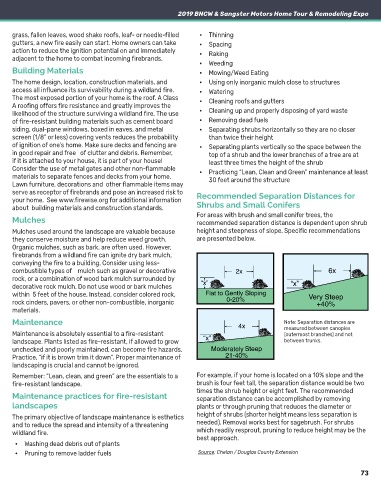
Recommended Separation Distances
your home. See www.firewise.org for additional information Recommended Separation Distances
Wildfire Fuel Ecology
Wildfire Types Wildfire Types Home Ignition Zone and Wildfire Fuel Ecology ignition potential on and immediately adjacent to the home to combat incoming Recommended Separation Distances
Wildfire Fuel Species
TYPES OF DEAD VEGETATION AND RECOMMENDED PRACTICE
ignition potential on and immediately adjacent to the home to combat incoming
serve as receptor of firebrands and pose an increased risk to
Home Ignition Zone and
firebrands.
Home Ignition Zone and
Recommended Separation Distances for
Wildfire Fuel Species
Wildfire Types
TYPES OF DEAD VEGETATION AND RECOMMENDED PRACTICE
TYPES OF DEAD VEGETATION AND RECOMMENDED PRACTICE
Wildfire Fuel Ecology
Wildfire Fuel Species
firebrands.
RECOMMENDED PRACTICE
Shrubs and Small Conifers
This guide is designed to provide northeastern Minnesota Two types of wildfires can threaten your property. The flammability of individual trees and fuels varies depending on what The most important thing you can do is create firebrands. DEAD FUEL TYPE for Shrubs and Small Conifers
for Shrubs and Small Conifers
RECOMMENDED PRACTICE
DEAD FUEL TYPE
Landscape Zones
Recommended Separation
DEAD FUEL TYPE
RECOMMENDED PRACTICE
The most important thing you can do is create
Two types of wildfires can threaten your property.
The flammability of individual trees and fuels varies depending on what
type they are. In general, trees with evergreen needles are more flammable
This guide is designed to provide northeastern Minnesota
These are surface fires and crown fires.
property owners in wildfire-prone areas with practical tips for This guide is designed to provide northeastern Minnesota Two types of wildfires can threaten your property. The flammability of individual trees and fuels varies depending on what The most important thing you can do is create about building materials and construction standards. for Shrubs and Small Conifers
defensible space, or a safety zone, immediately
Recommended Separation
Recommended Separation
Building Materials
For areas with brush and small conifer trees, the
Distances for Shrubs and
type they are. In general, trees with evergreen needles are more flammable
These are surface fires and crown fires.
defensible space, or a safety zone, immediately
than broadleaved deciduous trees. This is because most needle-leaved
property owners in wildfire-prone areas with practical tips for
type they are. In general, trees with evergreen needles are more flammable
protecting their homes and businesses from wildfires through property owners in wildfire-prone areas with practical tips for These are surface fires and crown fires. Landscape Zones defensible space, or a safety zone, immediately STANDING DEAD TREE Remove all standing dead trees from within the defensible
Building Materials
Distances for Shrubs and
surrounding your home. Wildfire experts
Mulches
STANDING DEAD TREE
Surface fires move along the ground and burn dry materials lying on
Distances for Shrubs and
Remove all standing dead trees from within the defensible
than broadleaved deciduous trees. This is because most needle-leaved
protecting their homes and businesses from wildfires through
space area.
protecting their homes and businesses from wildfires through
Small Conifers
evergreens typically (1) have leaves with lower moisture content, especially
For areas with brush and small conifer trees, the recommended separation
recommended separation distance is dependent upon shrub
the use of appropriate landscaping techniques, including the the use of appropriate landscaping techniques, including the Surface fires move along the ground and burn dry materials lying on than broadleaved deciduous trees. This is because most needle-leaved surrounding your home. Wildfire experts Building Materials STANDING DEAD TREE Remove all standing dead trees from within the defensible
Surface fires move along the ground and burn dry materials lying on
Landscape Zones surrounding your home. Wildfire experts
Small Conifers
space area.
divide defensible space into two zones:
or immediately above it including tree limbs, grass, stumps, shrubs, leaves,
For areas with brush and small conifer trees, the recommended separation
evergreens typically (1) have leaves with lower moisture content, especially
Small Conifers
divide defensible space into two zones:
For areas with brush and small conifer trees, the recommended separation
the use of appropriate landscaping techniques, including the
or immediately above it including tree limbs, grass, stumps, shrubs, leaves,
use of wildfire-resistant plants. This type of landscape design to use of wildfire-resistant plants. This type of landscape design to or immediately above it including tree limbs, grass, stumps, shrubs, leaves, evergreens typically (1) have leaves with lower moisture content, especially divide defensible space into two zones: Mulches used around the landscape are valuable because space area. height and steepness of slope. Specifi
during drought, and (2) have sap containing flammable resins.
The Home Ignition Zone begins at the home and extends out as far as 100 to 200
For areas with dense brush and small conifer trees,
during drought, and (2) have sap containing flammable resins.
pine needles and pine cones. Similar to crown fires, surface fires can
The Home Ignition Zone begins at the home and extends out as far as 100 to 200
For areas with dense brush and small conifer trees,
during drought, and (2) have sap containing flammable resins.
Remove all down dead trees within the defensible space
pine needles and pine cones. Similar to crown fires, surface fires can
use of wildfire-resistant plants. This type of landscape design to
DOWN DEAD TREE
prevent wildfire damage is referred to as Firewise Landscaping. prevent wildfire damage is referred to as Firewise Landscaping. pine needles and pine cones. Similar to crown fires, surface fires can The Home Ignition Zone begins at the home and extends out as far as 100 to 200 DOWN DEAD TREE DOWN DEAD TREE distance is dependent upon shrub height and steepness of slope. Specific
For areas with dense brush and small conifer trees,
Remove all down dead trees within the defensible space
distance is dependent upon shrub height and steepness of slope. Specific
1. The Intensive Zone, 0-30 ft around buildings.
the recommended separation distance is dependant
they conserve moisture and help reduce weed growth. distance is dependent upon shrub height and steepness of slope. Specific
Remove all down dead trees within the defensible space
throw burning embers, although not nearly as far. Surface fires can
the recommended separation distance is dependant
In northeastern Minnesota, the two most flammable tree species
1. The Intensive Zone, 0-30 ft around buildings.
The home design, location, construction materials, and access all influence its
feet depending on the characteristics of adjacent lands. Maintaining the Home
In northeastern Minnesota, the two most flammable tree species
throw burning embers, although not nearly as far. Surface fires can
prevent wildfire damage is referred to as Firewise Landscaping. throw burning embers, although not nearly as far. Surface fires can In northeastern Minnesota, the two most flammable tree species 1. The Intensive Zone, 0-30 ft around buildings. The home design, location, construction materials, and access all influence its area if they have recently fallen and are not yet embedded
feet depending on the characteristics of adjacent lands. Maintaining the Home
the recommended separation distance
are presented below. is dependant
area if they have recently fallen and are not yet embedded
upon shrub height and steepness of slope. Specific
recommendations are presented below.
upon shrub height and steepness of slope. Specific
area if they have recently fallen and are not yet embedded
recommendations are presented below.
are balsam fir and black spruce (see table below). Jack pine and
quickly surround a property and accelerate in vulnerable areas where
are balsam fir and black spruce (see table below). Jack pine and
quickly surround a property and accelerate in vulnerable areas where
upon shrub height and steepness of slope. Specific
2. The Extensive Zone, 30-100 ft around buildings.
into the ground. Downed trees that are embedded into
The goal is to encourage local solutions for living more safely The goal is to encourage local solutions for living more safely quickly surround a property and accelerate in vulnerable areas where feet depending on the characteristics of adjacent lands. Maintaining the Home The home design, location, construction materials, and access all influence its into the ground. Downed trees that are embedded into
recommendations are presented below.
survivability during a wildland fire. The most exposed portion of your home
2. The Extensive Zone, 30-100 ft around buildings.
survivability during a wildland fire. The most exposed portion of your home
into the ground. Downed trees that are embedded into
are balsam fir and black spruce (see table below). Jack pine and
recommendations are presented below.
Ignition Zone lean, clean and green reduces ignition risk and the fire spread
recommendations are presented below.
Ignition Zone lean, clean and green reduces ignition risk and the fire spread
2. The Extensive Zone, 30-100 ft around buildings.
The goal is to encourage local solutions for living more safely
white spruce are also quite flammable, while white pine, red pine,
brush is piled or where ladder fuels allow fire to reach tree canopies.
brush is piled or where ladder fuels allow fire to reach tree canopies.
Organic mulches, such as bark, are often used. However, soil and which cannot be removed without soil disturbance
white spruce are also quite flammable, while white pine, red pine,
recommendations are presented below.
with wildfire threats by involving homeowners in taking
with wildfire threats by involving homeowners in taking with wildfire threats by involving homeowners in taking brush is piled or where ladder fuels allow fire to reach tree canopies. Ignition Zone lean, clean and green reduces ignition risk and the fire spread survivability during a wildland fire. The most exposed portion of your home soil and which cannot be removed without soil disturbance
soil and which cannot be removed without soil disturbance
white spruce are also quite flammable, while white pine, red pine,
Most Firewise work should be concentrated in the intensive zone,
Most Firewise work should be concentrated in the intensive zone,
is the roof. A Class A roofing offers fire resistance and greatly improves the
is the roof. A Class A roofing offers fire resistance and greatly improves the
should be left in place. Remove all exposed branches
and white cedar (arbor vitae) are somewhat less flammable.
They also can move quickly and cause great damage and injury when
and white cedar (arbor vitae) are somewhat less flammable.
They also can move quickly and cause great damage and injury when
potential. Within the Home Ignition Zone, a fire-resistant landscape can be
Most Firewise work should be concentrated in the intensive zone,
potential. Within the Home Ignition Zone, a fire-resistant landscape can be
individual responsibility for preparing their properties to better individual responsibility for preparing their properties to better They also can move quickly and cause great damage and injury when potential. Within the Home Ignition Zone, a fire-resistant landscape can be is the roof. A Class A roofing offers fire resistance and greatly improves the should be left in place. Remove all exposed branches
firebrands from a wildland fire can ignite dry bark mulch, should be left in place. Remove all exposed branches
and white cedar (arbor vitae) are somewhat less flammable.
with work proceeding outwards into the larger extensive zone. There
from an embedded downed dead tree.
individual responsibility for preparing their properties to better
with work proceeding outwards into the larger extensive zone. There
there is wind or steep terrain. After winters with little snow, spring
with work proceeding outwards into the larger extensive zone. There
likelihood of the structure surviving a wildland fire. The use of fire-resistant
from an embedded downed dead tree.
survive wildfires.
conveying the fire to a building. Consider using less-
survive wildfires. survive wildfires. there is wind or steep terrain. After winters with little snow, spring wildfires in tall, un-compacted grasses are a common form of surface are six basic steps to creating a well- managed defensible space: likelihood of the structure surviving a wildland fire. The use of fire-resistant from an embedded downed dead tree.
created by reducing flammable fuels. These Landscape Zones within the Home
there is wind or steep terrain. After winters with little snow, spring
are six basic steps to creating a well- managed defensible space:
created by reducing flammable fuels. These Landscape Zones within the Home
are six basic steps to creating a well- managed defensible space:
wildfires in tall, un-compacted grasses are a common form of surface fire in northeastern Minnesota. created by reducing flammable fuels. These Landscape Zones within the Home likelihood of the structure surviving a wildland fire. The use of fire-resistant Remove all dead shrubs from within the defensible space
DEAD SHRUBS
wildfires in tall, un-compacted grasses are a common form of surface
Defensible Space Zones
building materials such as cement board siding, dual-pane windows, boxed in Remove all dead shrubs from within the defensible space
DEAD SHRUBS
Ignition Zone can be used when selecting fire-resistant vegetation in fire-prone
DEAD SHRUBS
1. Thin, Prune up to 10 ft (but not more than 1/3 of live
building materials such as cement board siding, dual-pane windows, boxed in
combustible types of mulch such as gravel or decorative Remove all dead shrubs from within the defensible space
fire in northeastern Minnesota.
Defensible Space Zones
Defensible Space Zones
area.
fire in northeastern Minnesota.
1. Thin, Prune up to 10 ft (but not more than 1/3 of live
Ignition Zone can be used when selecting fire-resistant vegetation in fire-prone
1. Thin, Prune up to 10 ft (but not more than 1/3 of live
Understanding Wildfire
Understanding Wildfire Understanding Wildfire Crown fires burn through the canopy of forested areas either Ignition Zone can be used when selecting fire-resistant vegetation in fire-prone building materials such as cement board siding, dual-pane windows, boxed in area. area.
crown) or remove conifer trees. Make sure crowns are at
rock, or a combination of wood bark mulch surrounded by
eaves, and metal screen (1/8” or less) covering vents reduces the probability of
Crown fires burn through the canopy of forested areas either
environments.
crown) or remove conifer trees. Make sure crowns are at
crown) or remove conifer trees. Make sure crowns are at
eaves, and metal screen (1/8” or less) covering vents reduces the probability of
eaves, and metal screen (1/8” or less) covering vents reduces the probability of
Crown fires burn through the canopy of forested areas either
least 10 feet apart (intensive zone suggestion is at least 20
environments.
environments.
DRIED GRASSES AND
independent from surface fuels or in addition to the surface fuels.
Once grasses and wildflowers have dried out or “cured,”
Fuels & Behavior
least 10 feet apart (intensive zone suggestion is at least 20
ignition of one’s home. Make sure decks and fencing are in good repair and free
least 10 feet apart (intensive zone suggestion is at least 20
DRIED GRASSES AND
DRIED GRASSES AND
decorative rock mulch. Do not use wood or bark mulches Once grasses and wildflowers have dried out or “cured,”
feet between crowns or 30 feet between clusters of trees)
independent from surface fuels or in addition to the surface fuels.
WILDFLOWERS
cut down and remove from the defensible space area.
Crown fires need a lot of heat energy from the surface fire, ladder fuels,
Fuels & Behavior Fuels & Behavior independent from surface fuels or in addition to the surface fuels. feet between crowns or 30 feet between clusters of trees) ignition of one’s home. Make sure decks and fencing are in good repair and free Once grasses and wildflowers have dried out or “cured,”
feet between crowns or 30 feet between clusters of trees)
WILDFLOWERS
WILDFLOWERS
cut down and remove from the defensible space area.
within 5 feet of the house. Instead, consider colored rock,
ignition of one’s home. Make sure decks and fencing are in good repair and free cut down and remove from the defensible space area.
Crown fires need a lot of heat energy from the surface fire, ladder fuels,
Crown fires need a lot of heat energy from the surface fire, ladder fuels,
of clutter and debris. Remember, if it is attached to your house, it is part of your
and wind to get going. Individual trees often “torch”—called passive
Landscape Zone 1: 0-5 feet if the structure has one-hour flame-resistant siding
Protection of property from wildfire,
2. Remove all understory ladder fuels (small balsam)
TYPES OF DEAD VEGETATION AND RECOMMENDED PRACTICE
3. Remove and minimize surface fuels of clutter and debris. Remember, if it is attached to your house, it is part of your
and wind to get going. Individual trees often “torch”—called passive
2. Remove all understory ladder fuels (small balsam)
crown fire - but typically, this type of burning cannot be sustained for
Landscape Zone 1: 0-5 feet if the structure has one-hour flame-resistant siding
Protection of property from wildfire, Protection of property from wildfire, and wind to get going. Individual trees often “torch”—called passive Landscape Zone 1: 0-5 feet if the structure has one-hour flame-resistant siding of clutter and debris. Remember, if it is attached to your house, it is part of your Reduce thick layers of pine needles to a depth of two
2. Remove all understory ladder fuels (small balsam)
TYPES OF DEAD VEGETATION AND RECOMMENDED PRACTICE
TYPES OF DEAD VEGETATION AND RECOMMENDED PRACTICE
requires a basic understanding of
rock cinders, pavers, or other non-combustible, inorganic Reduce thick layers of pine needles to a depth of two
inches. Do not remove all needles. Take care not to
DEAD NEEDLES, LEAVES,
OR 0-10 feet if the structure has non-flame-resistant siding. In this zone, the
crown fire - but typically, this type of burning cannot be sustained for
house! Consider the use of metal gates and other non-flammable materials to Reduce thick layers of pine needles to a depth of two
long. Active and independent crown fires create the most heat, the
crown fire - but typically, this type of burning cannot be sustained for
DEAD NEEDLES, LEAVES
house! Consider the use of metal gates and other non-flammable materials to
RECOMMENDED PRACTICE ,
DEAD FUEL TYPE
3. Remove and minimize surface fuels
requires a basic understanding of requires a basic understanding of long. Active and independent crown fires create the most heat, the OR 0-10 feet if the structure has non-flame-resistant siding. In this zone, the house! Consider the use of metal gates and other non-flammable materials to inches. Do not remove all needles. Take care not to Note: Separation distances are measured between
materials.
DEAD NEEDLES, LEAVES,
(thick pine needles, dead branches)
disturb the “duff” layer (dark area at the ground surface
wildfire fuels and behavior.
BRANCHES, CONES inches. Do not remove all needles. Take care not to
3. Remove and minimize surface fuels
OR 0-10 feet if the structure has non-flame-resistant siding. In this zone, the
separate fences and decks from your home. Lawn furniture, decorations and
most smoke, and typically move quite rapidly. Because active and
goal is to prevent ignitions on or near a structure.
long. Active and independent crown fires create the most heat, the
RECOMMENDED PRACTICE
DEAD FUEL TYPE
BRANCHES, CONES
(thick pine needles, dead branches)
where needles are decomposing) if present. Remove dead
BRANCHES, CONES
RECOMMENDED PRACTICE
canopies (outermost branches) and not between trunks.
Note: Separation distances are measured between
DEAD FUEL TYPE
(ON THE GROUND) disturb the “duff” layer (dark area at the ground surface
(thick pine needles, dead branches)
wildfire fuels and behavior. wildfire fuels and behavior. most smoke, and typically move quite rapidly. Because active and goal is to prevent ignitions on or near a structure. 4. Create non-combustible borders around the separate fences and decks from your home. Lawn furniture, decorations and disturb the “duff” layer (dark area at the ground surface Note: Separation distances are measured between
independent crown fires require wind to get started, the potential
separate fences and decks from your home. Lawn furniture, decorations and
(ON THE GROUND)
most smoke, and typically move quite rapidly. Because active and
goal is to prevent ignitions on or near a structure.
other flammable items may serve as receptor of firebrands and pose an increased
where needles are decomposing) if present. Remove dead
canopies (outermost branches) and not between trunks.
Maintenance
leaves, twigs, cones, and branches.
STANDING DEAD TREE (ON THE GROUND)
Remove all standing dead trees from within the defensible
Note: Separation distances are
where needles are decomposing) if present. Remove dead
independent crown fires require wind to get started, the potential
base of your buildings. (3 to 5 ft from building)
independent crown fires require wind to get started, the potential exists for wind transport of embers over long distances, u Plant no trees or shrubs. 4. Create non-combustible borders around the other flammable items may serve as receptor of firebrands and pose an increased leaves, twigs, cones, and branches. canopies (outermost branches) and not between trunks.
For example, if your home is located on a 10% slope
4. Create non-combustible borders around the
STANDING DEAD TREE
Remove all standing dead trees from within the defensible
space area.
other flammable items may serve as receptor of firebrands and pose an increased
leaves, twigs, cones, and branches.
Wildfire Fuel Types exists for wind transport of embers over long distances, u Plant no trees or shrubs. 70 ft. base of your buildings. (3 to 5 ft from building) risk to your home. See www.firewise.org for additional information about , LEAVES, Remove all dead leaves, branches, twigs, and needles still measured between canopies
STANDING DEAD TREE
For example, if your home is located on a 10% slope and the brush is four feet tall,
threatening homes or igniting new “spot” fires.
Remove all standing dead trees from within the defensible
and the brush is four feet tall, the separation distance
For example, if your home is located on a 10% slope
DEAD NEEDLES
u Plant no trees or shrubs.
exists for wind transport of embers over long distances,
space area.
5. Water and keep grass mowed short (1-2”)
u Use only inorganic mulch. (Rubber mulch is not acceptable for use.)
base of your buildings. (3 to 5 ft from building)
Maintenance is absolutely essential to a fire-resistant
For example, if your home is located on a 10% slope and the brush is four feet tall,
For example, if your home is located on a 10% slope
threatening homes or igniting new “spot” fires.
the separation distance would be two times the shrub height or eight feet. The
BRANCHES, AND TWIGS ,
and the brush is four feet tall, the separation distance
would be two times the shrub height or eight feet.
space area.
DEAD NEEDLES
attached to living trees and shrubs to height of 15 feet
70 ft.
DOWN DEAD TREE
risk to your home. See www.firewise.org for additional information about
Wildfire Fuel Types Wildfire Fuel Types u Use only inorganic mulch. (Rubber mulch is not acceptable for use.) risk to your home. See www.firewise.org for additional information about , LEAVES Remove all dead leaves, branches, twigs, and needles still (outermost branches) and not
Remove all down dead trees within the defensible space
5. Water and keep grass mowed short (1-2”)
For example, if your home is located on a 10% slope and the brush is four feet tall,
threatening homes or igniting new “spot” fires.
building materials and construction standards. DEAD NEEDLES, LEAVES,
the separation distance would be two times the shrub height or eight feet. The
recommended separation distance can be accomplished by removing plants or
and the brush is four feet tall, the separation distance
The recommended separation distance can be accom-
Remove all dead leaves, branches, twigs, and needles still
BRANCHES, AND TWIGS
Intensive Zone
70 ft.
would be two times the shrub height or eight feet.
above ground. Remove all debris that accumulates on the between trunks.
6. Maintain your defensible space every year
(OTHER THAN ON THE GROUND) attached to living trees and shrubs to height of 15 feet
landscape. Plants listed as fire-resistant, if allowed to grow
u Plant fire-resistant plants with high moisture content.
5. Water and keep grass mowed short (1-2”)
Ground fuels include all combustible materials found
30 ft.
area if they have recently fallen and are not yet embedded
DOWN DEAD TREE
Remove all down dead trees within the defensible space
recommended separation distance can be accomplished by removing plants or
through pruning that reduces the diameter or height of shrubs (shorter height
building materials and construction standards. BRANCHES, AND TWIGS
The recommended separation distance can be accom-
plished by removing plants or through pruning that
would be two times the shrub height or eight feet.
30 ft.
(OTHER THAN ON THE GROUND)
Intensive Zone
u Plant fire-resistant plants with high moisture content.
above ground. Remove all debris that accumulates on the
DOWN DEAD TREE
roof and in rain gutters on a routine basis (at least once
6. Maintain your defensible space every year
beneath the surface. Examples are deep duff, roots, and buried
Ground fuels include all combustible materials found u Use only inorganic mulch. (Rubber mulch is not acceptable for use.) building materials and construction standards. Remove all down dead trees within the defensible space attached to living trees and shrubs to height of 15 feet the separation distance would be two times the shrub height or eight feet. The
into the ground. Downed trees that are embedded into
30 ft.
recommended separation distance can be accomplished by removing plants or
area if they have recently fallen and are not yet embedded
means less separation is needed). Removal works best for sagebrush. For shrubs
reduces the diameter or height of shrubs (shorter
through pruning that reduces the diameter or height of shrubs (shorter height
plished by removing plants or through pruning that
unchecked and poorly maintained, can become fire hazards.
The recommended separation distance can be accom-
(OTHER THAN ON THE GROUND)
Intensive Zone
30 ft. 6. Maintain your defensible space every year
Ground fuels include all combustible materials found beneath the surface. Examples are deep duff, roots, and buried u Plant fire-resistant plants with high moisture content. area if they have recently fallen and are not yet embedded above ground. Remove all debris that accumulates on the through pruning that reduces the diameter or height of shrubs (shorter height
annually).
roof and in rain gutters on a routine basis (at least once
30 ft.
into the ground. Downed trees that are embedded into
Extensive Zone
soil and which cannot be removed without soil disturbance
logs. Duff is the top surface layer of partly decayed leaves
height means less separation is needed). Removal
which readily resprout, pruning to reduce height may be the best approach.
means less separation is needed). Removal works best for sagebrush. For shrubs
plished by removing plants or through pruning that
100 ft.
reduces the diameter or height of shrubs (shorter
annually).
beneath the surface. Examples are deep duff, roots, and buried logs. Duff is the top surface layer of partly decayed leaves 30 ft. 100 ft. Extensive Zone 100 ft. into the ground. Downed trees that are embedded into roof and in rain gutters on a routine basis (at least once means less separation is needed). Removal works best for sagebrush. For shrubs
Practice, “if it is brown trim it down”. Proper maintenance of
works best for sagebrush. For shrubs which readily
and needles that accumulates under dense stands of large
should be left in place. Remove all exposed branches
soil and which cannot be removed without soil disturbance
height means less separation is needed). Removal
which readily resprout, pruning to reduce height may be the best approach.
reduces the diameter or height of shrubs (shorter
FIREWOOD AND OTHER
resprout, pruning to reduce height may be the best
from an embedded downed dead tree.annually).
works best for sagebrush. For shrubs which readily
100 ft.
should be left in place. Remove all exposed branches
brush or trees. Although slow to ignite, ground fuels can burn
logs. Duff is the top surface layer of partly decayed leaves and needles that accumulates under dense stands of large 100 ft. Extensive Zone General Management Zone soil and which cannot be removed without soil disturbance Locate firewood and other combustible debris (wood height means less separation is needed). Removal
which readily resprout, pruning to reduce height may be the best approach.
landscaping is crucial and cannot be ignored.
COMBUSTIBLE DEBRIS
scraps, grass clippings, leaf piles, etc.) at least 30 feet
FIREWOOD AND OTHER
approach.
resprout, pruning to reduce height may be the best
from an embedded downed dead tree.
below the surface and be very hard to find and extinguish.
and needles that accumulates under dense stands of large brush or trees. Although slow to ignite, ground fuels can burn 100 ft. General Management Zone should be left in place. Remove all exposed branches Locate firewood and other combustible debris (wood works best for sagebrush. For shrubs which readily
uphill from the house.
FIREWOOD AND OTHER
approach.
Remove all dead shrubs from within the defensible space
Locate firewood and other combustible debris (wood
For example, if your home is located on a 10% slope and the
brush or trees. Although slow to ignite, ground fuels can burn below the surface and be very hard to find and extinguish. General Management Zone Tree Species Flammability Tree Species Flammability DEAD SHRUBS from an embedded downed dead tree. COMBUSTIBLE DEBRIS scraps, grass clippings, leaf piles, etc.) at least 30 feet resprout, pruning to reduce height may be the best
Remember: “Lean, clean, and green” are the essentials to a
Surface fuels include all materials resting on the surface
uphill from the house.
area.
COMBUSTIBLE DEBRIS
Remove all dead shrubs from within the defensible space
below the surface and be very hard to find and extinguish. Surface fuels include all materials resting on the surface Tree Species Flammability Tree Species Flammability DEAD SHRUBS fire-resistant landscape. scraps, grass clippings, leaf piles, etc.) at least 30 feet approach.
or immediately above the ground. Examples are pine
brush is four feet tall, the separation distance would be two
area.
uphill from the house.
Remove all dead shrubs from within the defensible space
needles, leaves, grass, and downed woody materials.
or immediately above the ground. Examples are pine Neighbors participated in an educational Firewise Demonstration Day in Ely, MN DEAD SHRUBS DRIED GRASSES AND Once grasses and wildflowers have dried out or “cured,”
Tree Species
Aspen
Very Low
Eastern White Cedar
Surface fuels include all materials resting on the surface Neighbors participated in an educational Firewise Demonstration Day in Ely, MN Flammability Tree Species Flammability Medium times the shrub height or eight feet. The recommended
area.
needles, leaves, grass, and downed woody materials. WILDFLOWERS cut down and remove from the defensible space area.
Maintenance practices for fire-resistant
Balsam Fir
or immediately above the ground. Examples are pine Ladder fuels are material near the surface that can spread Aspen Birch Very Low Low Eastern White Cedar Medium Very High DRIED GRASSES AND Once grasses and wildflowers have dried out or “cured,” separation distance can be accomplished by removing
cut down and remove from the defensible space area.
Neighbors participated in an educational Firewise Demonstration Day in Ely, MN
fire into the crown of a tree. The most common ladder fuels in
needles, leaves, grass, and downed woody materials. Ladder fuels are material near the surface that can spread Aspen Very Low Birch Maple Eastern White Cedar Medium Tamarack (Larch) Very High Low DRIED GRASSES AND WILDFLOWERS Once grasses and wildflowers have dried out or “cured,”
Reduce thick layers of pine needles to a depth of two
Low
Balsam Fir
Very Low
northeastern Minnesota are balsam fir and spruce trees with live
fire into the crown of a tree. The most common ladder fuels in WILDFLOWERS DEAD NEEDLES, LEAVES, plants or through pruning that reduces the diameter or
landscapes inches. Do not remove all needles. Take care not to
cut down and remove from the defensible space area.
Very Low
Bur Oak
Ladder fuels are material near the surface that can spread or dead lower branches near the ground. Other examples include Birch Maple Poplar Balsam Fir Very Low Tamarack (Larch) Low Very Low Reduce thick layers of pine needles to a depth of two
northeastern Minnesota are balsam fir and spruce trees with live Low Very High BRANCHES, CONES disturb the “duff” layer (dark area at the ground surface Note: Separation distances are measured between
height of shrubs (shorter height means less separation is
The primary objective of landscape maintenance is esthetics
(ON THE GROUND)
thick patches of blown-down trees or flammable shrubs.
fire into the crown of a tree. The most common ladder fuels in or dead lower branches near the ground. Other examples include Maple Very Low Poplar Elm Tamarack (Larch) Very Low Low Bur Oak Green Ash Very Low Very Low DEAD NEEDLES, LEAVES, inches. Do not remove all needles. Take care not to canopies (outermost branches) and not between trunks.
where needles are decomposing) if present. Remove dead
Very Low
Reduce thick layers of pine needles to a depth of two
disturb the “duff” layer (dark area at the ground surface
BRANCHES, CONES
needed). Removal works best for sagebrush. For shrubs
leaves, twigs, cones, and branches.
northeastern Minnesota are balsam fir and spruce trees with live thick patches of blown-down trees or flammable shrubs. Elm Black Spruce Very Low Very High Green Ash Basswood Very Low Very Low DEAD NEEDLES, LEAVES, inches. Do not remove all needles. Take care not to Note: Separation distances are measured between
and to reduce the spread and intensity of a threatening
(ON THE GROUND)
where needles are decomposing) if present. Remove dead
Canopy fuels include all the green and dead vegetation in
canopies (outermost branches) and not between trunks.
or dead lower branches near the ground. Other examples include the forest canopy. The elevated position increases airflow to Poplar Very Low Bur Oak Very Low BRANCHES, CONES disturb the “duff” layer (dark area at the ground surface For example, if your home is located on a 10% slope
which readily resprout, pruning to reduce height may be the
leaves, twigs, cones, and branches.
wildland fire.
Note:
and the brush is four feet tall, the separation distance
Very High
Basswood
thick patches of blown-down trees or flammable shrubs. Canopy fuels include all the green and dead vegetation in Elm Very Low Black Spruce White Spruce Green Ash High Very Low Eastern Cottonwood Very Low Very Low (ON THE GROUND) DEAD NEEDLES, LEAVES, Remove all dead leaves, branches, twigs, and needles still Separation distances are measured between
For example, if your home is located on a 10% slope
where needles are decomposing) if present. Remove dead
canopies (outermost branches) and not between trunks.
the flame and increases wind exposure. When trees are densely
BRANCHES, AND TWIGS
best approach.
would be two times the shrub height or eight feet.
attached to living trees and shrubs to height of 15 feet
the forest canopy. The elevated position increases airflow to White Spruce Jack Pine High High Eastern Cottonwood Very Low Low DEAD NEEDLES, LEAVES, Remove all dead leaves, branches, twigs, and needles still and the brush is four feet tall, the separation distance
Peachleaf Willow
leaves, twigs, cones, and branches.
The recommended separation distance can be accom-
spaced or when there are many understory trees or shrubs, the
• Washing dead debris out of plants
(OTHER THAN ON THE GROUND)
above ground. Remove all debris that accumulates on the
Canopy fuels include all the green and dead vegetation in the flame and increases wind exposure. When trees are densely Black Spruce Very High White Pine Basswood Medium Very Low Largetooth Aspen Low BRANCHES, AND TWIGS attached to living trees and shrubs to height of 15 feet would be two times the shrub height or eight feet.
plished by removing plants or through pruning that
fuel density can be high enough to sustain a crown fire.
roof and in rain gutters on a routine basis (at least once
High
Peachleaf Willow
The recommended separation distance can be accom-
the forest canopy. The elevated position increases airflow to spaced or when there are many understory trees or shrubs, the White Spruce High Jack Pine Eastern Cottonwood Very Low Low DEAD NEEDLES, LEAVES, • Pruning to remove ladder fuels For example, if your home is located on a 10% slope
reduces the diameter or height of shrubs (shorter
(OTHER THAN ON THE GROUND)
above ground. Remove all debris that accumulates on the
and the brush is four feet tall, the separation distance
Source: Chelan / Douglas County Extension
annually).
plished by removing plants or through pruning that
height means less separation is needed). Removal
roof and in rain gutters on a routine basis (at least once
the flame and increases wind exposure. When trees are densely fuel density can be high enough to sustain a crown fire. White Pine Red Pine Medium Medium Largetooth Aspen Low BRANCHES, AND TWIGS Remove all dead leaves, branches, twigs, and needles still would be two times the shrub height or eight feet.
reduces the diameter or height of shrubs (shorter
attached to living trees and shrubs to height of 15 feet
works best for sagebrush. For shrubs which readily
annually).
FIREWOOD AND OTHER
spaced or when there are many understory trees or shrubs, the Jack Pine High Red Pine Peachleaf Willow Low (OTHER THAN ON THE GROUND) above ground. Remove all debris that accumulates on the The recommended separation distance can be accom-
height means less separation is needed). Removal
Medium
Locate firewood and other combustible debris (wood
resprout, pruning to reduce height may be the best
plished by removing plants or through pruning that
fuel density can be high enough to sustain a crown fire. White Pine Medium Largetooth Aspen Low COMBUSTIBLE DEBRIS scraps, grass clippings, leaf piles, etc.) at least 30 feet works best for sagebrush. For shrubs which readily
approach.
roof and in rain gutters on a routine basis (at least once
FIREWOOD AND OTHER Locate firewood and other combustible debris (wood resprout, pruning to reduce height may be the best 73
reduces the diameter or height of shrubs (shorter
uphill from the house.
annually).
height means less separation is needed). Removal
Red Pine Medium COMBUSTIBLE DEBRIS scraps, grass clippings, leaf piles, etc.) at least 30 feet approach.
uphill from the house. works best for sagebrush. For shrubs which readily
FIREWOOD AND OTHER Locate firewood and other combustible debris (wood resprout, pruning to reduce height may be the best
COMBUSTIBLE DEBRIS scraps, grass clippings, leaf piles, etc.) at least 30 feet approach.
uphill from the house.

