


Page 121 - leadership-experience-2008
P. 121
CikguOnline
      CikguOnline
            102                                                                  PART 3: THE PERSONAL SIDE OF LEADERSHIP

                                   (as determined by historians), openness to experience produced the highest cor-
                                   relation with  historians’  ratings of greatness. The study noted that presidents
                                   such as Abraham Lincoln and Thomas Jefferson were high on this personal-
                                   ity dimension. Other  personality dimensions the team found to be associated
                                   with great presidents were extraversion and conscientiousness, including traits
                                   such as aggressiveness, setting ambitious goals, and striving for achievement.
                                   Although agreeableness did not correlate with greatness, the ability to empathize
                                   with  others and being concerned for others, which could be considered elements
                                   of emotional stability, did. 11
                                       It is important to note that few leaders have consistently high scores across all
                                   of the Big Five dimensions, yet there are many successful leaders. Higher scores on
                                   the Big Five dimensions are not necessarily predictive of leadership effectiveness,
                                   and persons who score toward the lower end of the scale can also be good leaders.
                                   The value of the Big Five for leaders is primarily to help them understand their
                                   own basic personality dimensions, and then learn to emphasize the positive and
                                   mitigate the negative aspects of their own natural style.
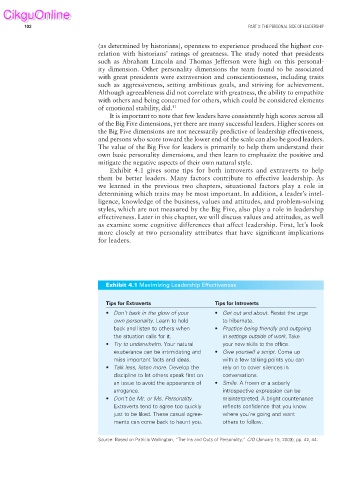
                                       Exhibit 4.1 gives some tips for both introverts and extraverts to help
                                   them be better leaders. Many factors contribute to effective leadership. As
                                   we learned in the previous two chapters, situational factors play a role in
                                   determining which traits may be most important. In addition, a leader’s intel-
                                   ligence, knowledge of the business, values and attitudes, and problem-solving
                                   styles, which are not measured by the Big Five, also play a role in leadership
                                   effectiveness. Later in this chapter, we will discuss values and attitudes, as well
                                   as examine some cognitive differences that affect leadership. First, let’s look
                                   more closely at two personality attributes that have signifi cant implications
                                   for leaders.


                                     Exhibit 4.1 Maximizing Leadership Effectiveness


                                     Tips for Extraverts               Tips for Introverts
                                     •  Don’t bask in the glow of your  • Get out and about. Resist the urge
                                        own personality. Learn to hold      to hibernate.
                                        back and listen to others when    •  Practice being friendly and outgoing
                                        the situation calls for it.       in settings outside of work. Take
                                     •  Try to underwhelm. Your natural      your new skills to the office.
                                        exuberance can be intimidating and    •  Give yourself a script. Come up
                                        miss important facts and ideas.      with a few talking points you can
                                     •  Talk less, listen more. Develop the      rely on to cover silences in
                                        discipline to let others speak first on       conversations.
                                        an issue to avoid the appearance of   •  Smile. A frown or a soberly
                                        arrogance.                        introspective expression can be
                                     •  Don’t be Mr. or Ms. Personality.       misinterpreted. A bright countenance
                                        Extraverts tend to agree too quickly      reflects confidence that you know
                                        just to be liked. These casual agree-      where you’re going and want
                                        ments can come back to haunt you.      others to follow.

                                   Source: Based on Patricia Wallington, “The Ins and Outs of Personality,” CIO (January 15, 2003), pp. 42, 44.

