


Page 100 - Basic Course
P. 100
KNX BASIC COURSE
Example of a power supply unit Features
Earth connection prevents static
230 V charging
100 ms buffer time bridges brief
interruptions of the mains
L N DIN‐Rail
Mains
Optional LEDs for displaying
Technical information Power Supply Unit
230 V 30 V DC Overload Overload
50...60 Hz Mains Mains
0...45 °C Overvoltage Overvoltage
Additional output for supplying other
Ancillary voltage KNX voltage
line (needs extra choke !)
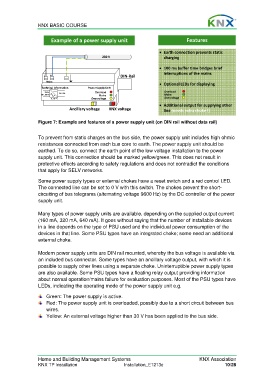
Figure 7: Example and features of a power supply unit (on DIN rail without data rail)
To prevent from static charges on the bus side, the power supply unit includes high ohmic
resistances connected from each bus core to earth. The power supply unit should be
earthed. To do so, connect the earth point of the low voltage installation to the power
supply unit. This connection should be marked yellow/green. This does not result in
protective effects according to safety regulations and does not contradict the conditions
that apply for SELV networks.
Some power supply types or external chokes have a reset switch and a red control LED.
The connected line can be set to 0 V with this switch. The chokes prevent the short-
circuiting of bus telegrams (alternating voltage 9600 Hz) by the DC controller of the power
supply unit.
Many types of power supply units are available, depending on the supplied output current
(160 mA, 320 mA, 640 mA). It goes without saying that the number of installable devices
in a line depends on the type of PSU used and the individual power consumption of the
devices in that line. Some PSU types have an integrated choke; some need an additional
external choke.
Modern power supply units are DIN rail mounted, whereby the bus voltage is available via
an included bus connector. Some types have an ancillary voltage output, with which it is
possible to supply other lines using a separate choke. Uninterruptible power supply types
are also available. Some PSU types have a floating relay output providing information
about normal operation/mains failure for evaluation purposes. Most of the PSU types have
LEDs, indicating the operating mode of the power supply unit e.g.
Green: The power supply is active.
Red: The power supply unit is overloaded, possibly due to a short circuit between bus
wires.
Yellow: An external voltage higher than 30 V has been applied to the bus side.
Home and Building Management Systems KNX Association
KNX TP Installation Installation_E1213c 10/28

