


Page 88 - Basic Course
P. 88
KNX BASIC COURSE

                  5.4 Application function: drive control sensor

                                                               Start operation of rocker  Release rocker
                              PEI
                                                              Brief operation of   t1
                                                              rocker
                                              Up      Down
                                                              Telegram              Slats 1. level Open/Close
                                                              Long operation of   t2
                                                              rocker


                                                              Telegram                   Blinds
                                                                                        Up/Down
                                                                       Operation of rocker > Parameterized time
                                                                                                  t


                      BCU                                AM

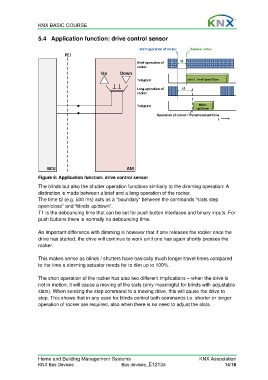
                  Figure 8: Application function: drive control sensor

                  The blinds but also the shutter operation functions similarly to the dimming operation: A
                  distinction is made between a brief and a long operation of the rocker.
                  The time t2 (e.g. 500 ms) acts as a "boundary" between the commands “slats step
                  open/close” and “blinds up/down”.
                  T1 is the debouncing time that can be set for push button interfaces and binary inputs. For
                  push buttons there is normally no debouncing time.

                  An important difference with dimming is however that if one releases the rocker once the
                  drive has started, the drive will continue to work until one has again shortly presses the
                  rocker.

                  This makes sense as blinds / shutters have basically much longer travel times compared
                  to the time a dimming actuator needs for to dim up to 100%.

                  The short operation of the rocker has also two different implications – when the drive is
                  not in motion, it will cause a moving of the slats (only meaningful for blinds with adjustable
                  slats). When sending the step command to a moving drive, this will cause the drive to
                  stop. This shows that in any case for blinds control both commands i.e. shorter or longer
                  operation of rocker are required, also when there is no need to adjust the slats.


                  Home and Building Management Systems                                    KNX Association
                  KNX Bus Devices                      Bus devices_E1213a                            14/16

