


Page 89 - DINOSOUR ATLAS
P. 89
dinosaur facts
        Excavation and Display


         When a dinosaur fossil is discovered, it is usually a confusing mess of bones
         that have been pulled apart by scavengers or swept into a heap by the
         elements. Once the bones are exposed, the first job is to record their exact
         positions and any details of the site, since this may provide valuable clues
         about the animal’s anatomy or life. Only then can excavators carefully remove
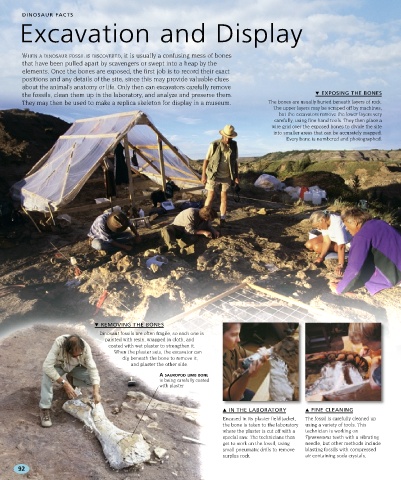
         the fossils, clean them up in the laboratory, and analyze and preserve them.                            d exposing the bones
         They may then be used to make a replica skeleton for display in a museum.               The bones are usually buried beneath layers of rock.
                                                                                                   The upper layers may be scraped off by machines,
                                                                                                    but the excavators remove the lower layers very
                                                                                                   carefully, using fine hand tools. They then place a
                                                                                                  wire grid over the exposed bones to divide the site
                                                                                                  into smaller areas that can be accurately mapped.
                                                                                                       Every bone is numbered and photographed.


                                   d removing the bones
                                    Dinosaur fossils are often fragile, so each one is
                                      painted with resin, wrapped in cloth, and
                                        coated with wet plaster to strengthen it.
                                          When the plaster sets, the excavator can
                                             dig beneath the bone to remove it,
                                                and plaster the other side.

                                                          A sAuropod limb bone
                                                          is being carefully coated
                                                          with plaster


                                                                                u in the laboratory           u fine cleaning
                                                                                Encased in its plaster field jacket,   The fossil is carefully cleaned up
                                                                                the bone is taken to the laboratory   using a variety of tools. This
                                                                                where the plaster is cut off with a   technician is working on
                                                                                special saw. The technicians then   Tyrannosurus teeth with a vibrating
                                                                                get to work on the fossil, using   needle, but other methods include
                                                                                small pneumatic drills to remove   blasting fossils with compressed
                                                                                surplus rock.                 air containing soda crystals.
       92

