


Page 62 - ...........
P. 62
encourage them to drink more liquids such as water, fruit juice, and
            soup. We should keep them indoors during the daytime.

            F.    Altitude Sickness

            The respiratory problem that is  caused by low oxygen levels in the
            air at high altitudes is called altitude sickness. Mountain climbers
            are at high risk. Headache, tiredness, dizziness, vomiting, loss of ap-
            petite, difficulty in walking, and shortness of breath are symptoms
            of altitude sickness. The skin and nails become blue due to a lack of
            oxygen. We should descend immediately from the place. We should
            provide them with more liquids. In severe conditions, we should see
            a doctor for treatment. We should pack all necessary first aid items
            before going to high altitude.

            G.    Snow Bite

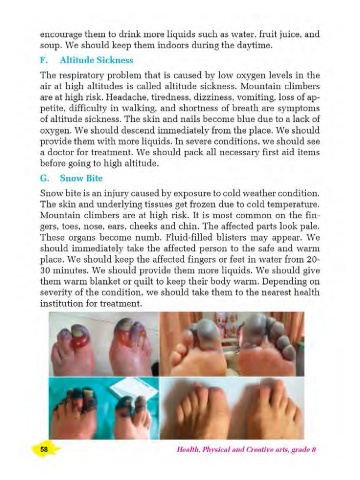
            Snow bite is an injury caused by exposure to cold weather condition.
            The skin and underlying tissues get frozen due to cold temperature.
            Mountain climbers are at high risk. It is most common on the fin-
            gers, toes, nose, ears, cheeks and chin. The affected parts look pale.
            These organs become numb.  Fluid-filled blisters  may  appear.  We
            should immediately take the affected person to the safe and warm
            place. We should keep the affected fingers or feet in water from 20-
            30 minutes. We should provide them more liquids. We should give
            them warm blanket or quilt to keep their body warm. Depending on
            severity of the condition, we should take them to the nearest health
            institution for treatment.


            58                                     Health, Physical ai1d Creillive arts, grade 8

