


Page 318 - (DK Eyewitness) Travel Guide - Morocco
P. 318
316 TR A VELLERS ’ NEEDS
The Flavours of Morocco
From the indigenous, rural Berber people come the basics of Moroccan
cuisine, such as couscous, but Moroccan food owes much to influences
from neighbouring lands. In the 1600s the Arabs introduced bread,
pulses and spices, notably chickpeas (garbanzos), cinnamon, ginger,
saffron and turmeric, from their empire in the East. In the 11th century
Bedouin tribes brought dates and milk from their wandering flocks.
The Arabs returned from Andalusia with produce such as olives
and lemons, and, later, tomatoes and peppers from the Americas. Dried couscous
Fish & Seafood
will also find beef on the menu,
usually served as kebabs, as Morocco has long coasts on the
well as rabbit, served as a Atlantic and the Medi terranean,
couscous or tagine. Chicken which provide a wide variety
and turkey are also readily of seafood. Fish such as bream
available. Pigeon is more rarely and bass are typically marinated
on the menu these days, but is in a garlicky, spicy mixture called
still a feature of b’stilla. This chermoula, and are usually
extravagant pie, a speciality cooked whole. They may also
of Fès, is made with tissue-thin be served stuffed, with an
warkha pastry. Offal, such as almond crust, as steaks or
brains, heart, liver and tripe, brochettes, or as fishcakes,
are also popular. known as boulettes, with a
Ginger Saffron Coriander seeds
Cloves Ras el hanout
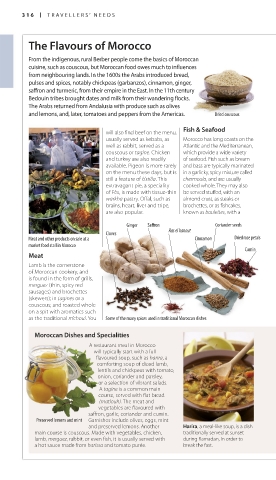
Meat and other products on sale at a Cinnamon Dried rose petals
market food stall in Morocco
Cumin
Meat
Lamb is the cornerstone
of Moroccan cookery, and
is found in the form of grills,
merguez (thin, spicy red
sausages) and brochettes
(skewers); in tagines or a
couscous; and roasted whole
on a spit with aromatics such
as the traditional m’choui. You Some of the many spices used in traditional Moroccan dishes
Moroccan Dishes and Specialities
A restaurant meal in Morocco
will typically start with a full-
flavoured soup, such as harira, a
comforting soup of diced lamb,
lentils and chickpeas with tomato,
onion, coriander and parsley,
or a selection of vibrant salads.
A tagine is a common main
course, served with flat bread
(matlouh). The meat and
vegetables are flavoured with
saffron, garlic, coriander and cumin.
Preserved lemons and mint Garnishes include olives, eggs, mint
and preserved lemons. Another Harira, a meal-like soup, is a dish
main course is couscous. Made with vegetables, chicken, traditionally served at sunset
lamb, merguez, rabbit, or even fish, it is usually served with during Ramadan, in order to
a hot sauce made from harissa and tomato purée. break the fast.
316-317_EW_Morocco.indd 316 09/08/16 11:20 am
Eyewitness Travel LAYERS PRINTED:
Feature template “UK” LAYER
(SourceReport v1.5)
Date 8th November 2013
Size 125mm x 217mm

