


Page 92 - Homes & Antiques (February 2020)
P. 92
STRING THEORY


                           Nils Strinning was in his late twenties when his wife,
                           Kajsa, asked him to dry the dishes. ‘He thought towels
                           were unclean,’ says String Furniture CEO, Peter
                           Erlandsson, ‘so he made a metal dish rack dipped in
                           rust-preventing plastic.’ Three years later, Bonnier’s
                           competition launched and Nils remembered his dish
                           rack. Turned vertically, its steel wires became ladders,
                           perfect for holding shelving or cabinets, ripe for near-
                           in!nite con!guration.
                             Manufacture began in 1950. Global success
                           germinated in 1954, with gold at the Triennale di
                           Milano, then "owered a year later at Sweden’s H55
                           exhibition – which, says Peter, was the event that
                           made the rest of the world sit up and take notice of
                           Scandinavian design. A global rise in sales followed.
                           Production ceased in 1974, before Peter led a 2005
                           resurrection. From £80,000 in the !rst year, turnover
                           today is £26m. ‘We’ve evolved cautiously, not wanting to
                           destroy the iconic system. Functional, strong design,
                           that’s the key.’


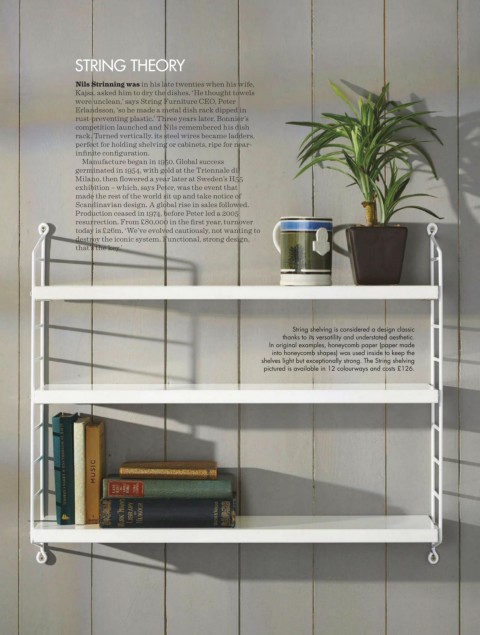
                                                                                                       String shelving is considered a design classic
                                                                                                   thanks to its versatility and understated aesthetic.
                                                                                               In original examples, honeycomb paper (paper made
                                                                                                into honeycomb shapes) was used inside to keep the
                                                                                            shelves light but exceptionally strong. The String shelving
                                                                                             pictured is available in 12 colourways and costs £126.

