


Page 13 - DK Eyewitness Travel - Guides Ultimate Food Journeys
P. 13
THE FLAVORS OF EUROPE        11


            Munich, and the patatnik pie of Bulgaria’s Rhodope mountains.   smorgasbord buffet and its dishes of herring, eel, meatballs, potato
            Seville’s refreshing cold salad soup, gazpacho, was born with the   casseroles, sliced meats, and fat sausages.
            landing of New World peppers and sweet tomatoes. Few New World   Traditionally, Europeans are the world’s great meat-eaters.
            plants had the transformative impact of the tomato, so perfectly   Feasts can be as rustic as a Toulouse cassoulet of pork, sausages,
            matched to mozzarella cheese, fragrant basil, and fulsome olive    and beans or Burgundy’s braised beef stew, or as ceremonial as the
            oil in Capri’s insalata caprese. Mount the same ingredients on a   roast haunch of beef with all the trimmings that’s key to the
            thin bread crust – but with the tomato strained and lightly   identity of the English. Similarly, few Greeks would give up their
            cooked – and the combination becomes Naples’ pizza Margherita,   roast Easter lamb – nor the Madrileños their mixed cocido hotpot,
            a dish that now graces tables across the globe.         the Berliners their hearty braised pork knuckle, or the Alsatians
                                                                    the tangy pickled vegetables and rich sausages of their choucroute
            Changing Traditions                                     garnie. No German worth his or her salt would pass up the
            Many culinary traditions of Europe embrace the same informality   spicy pot roast known as sauerbraten,
                                                                                                      The master chefs of
            as pizza. Spanish tapas are often eaten with the fingers or skewered   while any Scot worth a tartan feasts
            with a toothpick. The bite-sized meze of Istanbul reprise the old   on haggis every Burns Night.   Spain’s San Sebastián
            Ottoman empire, from the stuffed vine leaves called dolmades   But Europeans also love to turn   married inventive genius
            (shared with the cuisine of Greece) to the eggplant salads, little   tradition on its head. English pub cooks
                                                                                                      with Basque traditions.
            meatballs, white cheese, and sliced melons of the far reaches of    have transformed the leaden repasts of
            Asia Minor. The twin themes of bounty and hospitality underpin   yesteryear into the bright, fresh-ingredient cooking of the
            such a feast – concepts echoed far to the north with the Swedish   gastropubs. The master chefs of Spain’s San Sebastián married
                                                                    inventive genius with Basque traditions to revolutionize fine dining
                                                                    in Spain – and, by example, across Europe and the Americas.
                                                                       Creative genius applies to European sweets as well, from
                                                                    pistachio and honey confections like Anatolian baklava to the
                                                                    elaborate torten of Salzburg, from the simple cream-filled pasteis
                                                                    de nata of Lisbon to the textural perfection and simple grace of
                                                                    a Parisian macaron delicately filled with a chocolate ganache.
                                                                    In Europe, the French say it best: Bon appétit!


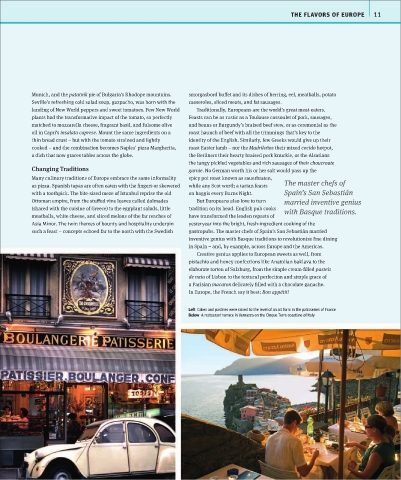
                                                                    Left  Cakes and pastries were raised to the level of an art form in the patisseries of France
                                                                    Below  A restaurant terrace in Vernazza on the Cinque Terre coastline of Italy

