


Page 223 - DK Eyewitness Travel - Guides Ultimate Food Journeys
P. 223
BEIJING CHINA 221
The Best Places to
Eat Peking Duck
BEIJING
Quanjude moderate
Quanjude has been serving up some of the
tastiest roast duck in Beijing since first opening
its doors during the 1860s. It was one of the
BEIJING CHINA
capital’s first big restaurants to get back on its
feet after China’s stagnation during the Cultural
Peking Duck in Old Beijing Revolution, and by the 1980s getting a table
here was a mix of luck and hand-to-hand
combat, with the restaurant bursting beyond
capacity every night and diners being hauled out
Beijing may be the capital of China, but it was founded by the Mongols under Kublai Khan. So it’s of their chairs by waiting customers the moment
it looked as though they’d finished eating.
hardly surprising that the city’s signature dish is a marriage of foreign and native cuisine, in the
Nowadays things are far more relaxed, but make
same way that Beijing’s palaces and maze of antique lanes reflect a Chinese refinement reservations or get here early if you don’t want a
long stint in the lobby. The decor is restaurant
overlaying four centuries of alien rule, which ended with the last of the emperors in 1911.
red-and-gold, service is flawless and efficient,
and the duck – skillfully carved for you at the
On the surface, Beijing is the stores or street markets and, especially, eating – table – is certainly worth waiting for. Duck is
a surprisingly modern in which case, you’ll want to join them in sampling the what everyone orders, but the rest of the menu
of northern Chinese specialties is extensive, and
metropolis, a somewhat one dish intimately linked to this city: Peking duck.
visiting dignitaries and tour groups are served a
soulless place in which Preparation of this classic dish begins with the
multi-course banquet.
individuals are dwarfed by a grid of plucked, cleaned duck – a straw is inserted into the
14 Qianmen Xi Lu, Beijing; open 10:30 AM–8 PM
enormously wide boulevards lined with glassy office neck and the skin is gently blown away from the body. daily; +86 10 6304 8987
blocks. But a far more traditional side lingers away from The ducks are then painted with malt extract and hung
the main thoroughfares: the Forbidden City’s mighty on a hook to wind-dry, then roasted in batches over a Also in Beijing
russet walls and endless puzzle of interlocking palaces, wood fire, the chefs shifting the birds constantly so that Bianyifang (+86 10 6711 6465; moderate)
courtyards, and gardens, where the imperial families they color and cook evenly. can trace its history back to 1416, though the
once lived among eunuchs and intrigue; the former Eating Peking duck is a similarly staged process: a present business is contemporary with
homes of Manchu princes and officials, hidden among three-course study in taste and texture. First comes the Quanjude. Unlike its rival, which cooks its birds
over an open flame, Bianyifang slow-roasts its
the intricate web of neighborhood alleys (hutong); and skin, roasted to a translucent toffee color, crispy and
ducks in a closed oven which, according to
the peerless symmetry of the Temple of Heaven’s succulent. The moist duck meat is then carved from the
partisans of this establishment, seals in a richer,
rotunda, where the emperors used to pray for good frame, to be seasoned with salty bean sauce and
juicier flavor. The restaurant lacks Quanjude’s
harvests. For their part, modern Beijingers are best wrapped in elastic, paper-thin pancakes, with slivers splendor, but it is comfortable enough.
observed still doing what they enjoy most, shopping in of green onion and cucumber to add bite. Finally, a Delivering a crisper, leaner duck than the
palate-cleansing bowl of velvety duck soup arrives, average calorie-packed offering, Da Dong
signaling the end of the meal. (+86 10 8522 1234; expensive) is emerging
Peking duck’s origins are obscure, but as roasting as one of Beijing’s most talked-about
contemporary restaurants. The menu is huge,
only crops up in Chinese cooking where there’s been
the portions artistically small (except for the
outside influence, it’s possibly a distant echo of
duck), and the cost somewhere in between.
Mongolian barbecues, where guests would be invited
to carve their own portions off whole roasted animals. Also in China
Only the Chinese taste for refinement could take such a Hong Kong’s Dong Lai Shun at the Royal
crude cooking method and from it create a work of art. Garden Hotel, Kowloon (+852 2733 2020;
expensive) is the local representative of a
famous Beijing restaurant chain specializing in
Mongolian hotpot – a do-it-yourself meal
What Else to Eat
featuring finely sliced raw lamb, a pot of boiling
Another classic northern Chinese dish, now enjoyed country- stock, and a host of vegetables and dipping
wide, jiaozi are China’s answer to ravioli. Nobody knows where
sauces. Their Peking duck is excellent too,
they originated, but they’ve been around for a long time –
cooked to crisp-skinned perfection and served
a mummified bowlful was found at a Tang dynasty tomb on
as the traditional three-course meal.
China’s fabled Silk Road. Wheat dough wrappers stuffed with
meat and cabbage and folded into a crescent shape, jiaozi are
Around the World
boiled, steamed, or fried before being tumbled into a bowl and
served with a dipping sauce of your choice – try a mix of soy Outside China, you’ll want to head to Australia’s
sauce, black vinegar, and crushed garlic. Jiaozi are not delicate: finest Chinese restaurant, the Flower Drum in
you order them by weight and northerners boast of how many Melbourne (+61 3 9662 3655; expensive). This
they can put away at a single sitting. But as a hearty fuel, they bills itself as a Cantonese (southern Chinese)
are the ideal defense against Beijing’s ferociously icy winters. institution, but you wouldn’t know it from their
immaculate Peking duck – though don’t expect
to be able to fill up on the rather dainty portions.
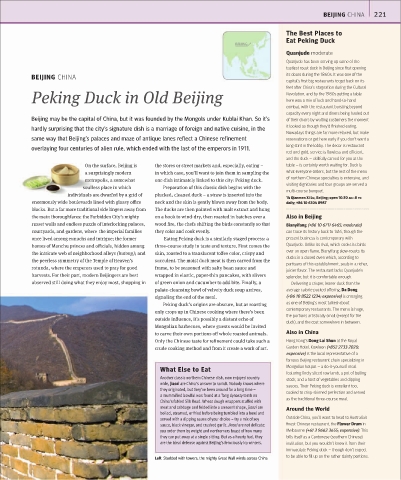
Left Studded with towers, the mighty Great Wall winds across China

