


Page 18 - History of War - Issue 18-15
P. 18
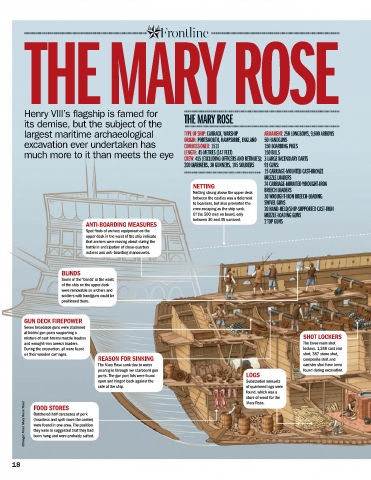
THEMARYROSE
                                                         Frontline


          Henry VIII’s fl agship is famed for                     THEMARYROSE
          its demise, but the subject of the
          largest maritime archaeological                         TYPE OF SHIP: CARRACK, WARSHIP  ARMAMENT: 250 LONGBOWS, 9,600 ARROWS

          excavation ever undertaken has                          ORIGIN: PORTSMOUTH, HAMPSHIRE, ENGLAND  50 HANDGUNS
                                                                                              150 BOARDING PIKES
                                                                  COMMISSIONED: 1511
          much more to it than meets the eye                      LENGTH: 45 METRES (147 FEET)  150 BILLS
                                                                  CREW: 415 (EXCLUDING OFFICERS AND RETINUES):  3 LARGE INCENDIARY DARTS
                                                                  200 MARINERS, 30 GUNNERS, 185 SOLDIERS  91 GUNS:
                                                                                              15 CARRIAGE-MOUNTED CAST-BRONZE
                                                                                              MUZZLELOADERS
                                                                                              24CARRIAGE-MOUNTEDWROUGHT-IRON
                                                                     NETTING                  BREECHLOADERS
                                                                     Netting strung above the upper deck
                                                                     between the castles was a deterrent   30WROUGHT-IRONBREECH-LOADING
                                                                     to boarders, but also prevented the   SWIVELGUNS
                                                                     crew escaping as the ship sank.   20HAND-HELD/SHIP-SUPPORTEDCAST-IRON
                                                                     Of the 500 men on board, only   MUZZLE-LOADINGGUNS
                                                                     between 30 and 35 survived.  2TOPGUNS
                               ANTI-BOARDING MEASURES
                               Spot fi nds of archery equipment on the
                               upper deck in the waist of the ship indicate
                               that archers were moving about during the
                               battle in anticipation of close-quarters
                               actions and anti-boarding manoeuvres.


                       BLINDS
                       Someofthe‘blinds’inthewaist
                       of the ship on the upper deck
                       were removable so archers and
                       soldiers with handguns could be
                       positioned there.


          GUN DECK FIREPOWER
          Seven broadside guns were stationed
          at lidded gun ports supporting a
          mixture of cast-bronze muzzle loaders                                                             SHOT LOCKERS
          and wrought-iron breech loaders.                                                                  The three main shot
          During the excavation, all were found                                                             lockers. 1,248 cast iron
          on their wooden carriages.                                                                        shot, 387 stone shot,
                                   REASON FOR SINKING                                                       composite shot and
                                   The Mary Rose sank due to water                                          canister shot have been
                                   pouring in through her starboard gun                                     found during excavation.
                                   ports. The gun port lids were found                  LOGS
                                   open and hinged back against the                     Substantial amounts
                                   side of the ship.                                    of quartered logs were
                                                                                        found, which was a
                                                                                        store of wood for the
                                                                                        Mary Rose.
             FOOD STORES
             Butchered half carcasses of pork
             (headless and split down the centre)
             were found in one area. The position
             they were in suggested that they had
             been hung and were probably salted.

