


Page 143 - (DK Eyewitness) Travel Guide - Argentina
P. 143
AR gentin A R egion b y R egion 141
the pampas
Solitary ombú trees, stunning birdlife, and grand estancias are the
most visible sights on the rolling grasslands that extend from the
Atlantic coast and Río de la Plata in all directions. Settled in the
18th century, the Pampas is the economic heartland of this cattle-
raising, farming nation, and the iconic gaucho who oversees this
domain remains a heroic archetype for many Argentinians.
The original inhabitants of the Pampas Atlantic coast became a place of rest
were the Querandí, who lived a and recreation for wealthy porteños,
semi-sedentary lifestyle on the fer tile leading to the rapid growth of coastal
plains. During the 18th century, the towns. These beach resorts, now popular
Spanish colo nial autho rities estab lished with locals and visitors alike, generate
a fron tier across the region. As the a large amount of revenue for the
natives were forced out, ranches were tou rism sector, although the Pampas
estab lished and, by the mid-19th century, is the most produc tive in terms of
wealthy families had divi ded up most of agricul ture and indus try. In summer,
the land. In the chain of towns around back packers and adven turous souls
the capital – San Miguel del Monte, head for the ancient mountain ranges
Mercedes, and San Antonio de Areco – to the south of the province, whose
are some of the most famous estancias slopes provide an oppor tu nity for many
in the country. The introduc tion of new out door activi ties such as moun tain
cattle breeds and, later, refri geration and biking, rock climbing, and trekking. An
fencing led to eco nomic booms in the array of gaucho activi ties await visi tors
late 19th cen tury and in the 1930s and who opt to stay at one of the many
40s. The fencing did, however, spell an working estancias scattered in the
end for the free-roaming habits of Pampas, while exclusive tourist ranches
the gauchos. In the 20th century, the offer luxu ry accommo dation.
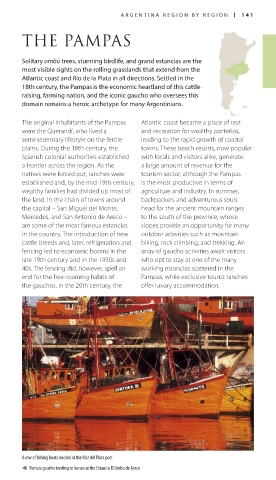
A row of fishing boats docked at the Mar del Plata port
Female gaucho tending to horses at the Estancia El Ombu de Areco
AR_140_Ad321_1131_IntPamp.indd 141 15/08/2014 11:07

