


Page 269 - (DK Eyewitness) Travel Guide - Australia
P. 269
INTRODUCING THE NOR THERN TERRIT OR Y 267
Aboriginal Tourism
Most visitors who come to the Northern Territory
are keen to learn more about the region’s unique
Aboriginal culture. There are now many Aboriginal
organizations which take tourists into Aboriginal
areas that would otherwise be inaccessible, and
explain the Aboriginal view of the land. Excursions
available include boat trips in Kakadu National
Park (see pp280–81)rk (see pp280–81)rk
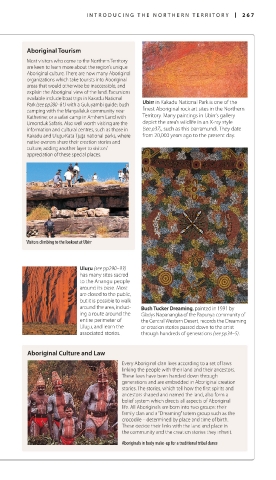
Pa Pa with a Guluyambi guide; bush Ubirr in Kakadu National Park is one of the
camping with the Manyallaluk community near finest Aboriginal rock art sites in the Northern
Katherine; or a safari camp in Arnhem Land with Territory. Many paintings in Ubirr’s gallery
Umorrduk Safaris. Also well worth visiting are the depict the area’s wildlife in an Xray style
information and cultural centres, such as those in (see p37), such as this barramundi. They date
Kakadu and UluruKata Tjuta national parks, where from 20,000 years ago to the present day.
native owners share their creation stories and
culture, adding another layer to visitors’
appreciation of these special places.
Visitors climbing to the lookout at Ubirr
Uluru (see pp290–93)
has many sites sacred
to the Anangu people
around its base. Most
are closed to the public,
but it is possible to walk
around the area, includ Bush Tucker Dreaming, painted in 1991 by
ing a route around the Gladys Napanangka of the Papunya community of
entire perimeter of the Central Western Desert, records the Dreaming
Uluru, and learn the or creation stories passed down to the artist
associated stories. through hundreds of generations (see pp34–5).
Aboriginal Culture and Law
Every Aboriginal clan lives according to a set of laws
linking the people with their land and their ancestors.
These laws have been handed down through
generations and are embedded in Aboriginal creation
stories. The stories, which tell how the first spirits and
ancestors shaped and named the land, also form a
belief system which directs all aspects of Aboriginal
life. All Aboriginals are born into two groups: their
family clan and a “Dreaming” totem group such as the
crocodile – determined by place and time of birth.
These decide their links with the land and place in
the community and the creation stories they inherit.
Aboriginals in body make-up for a traditional tribal dance

