


Page 123 - Atlas Of The World's Strangest Animals
P. 123
SOUTHERN FLYING SQUIRREL                 123


              Comparisons

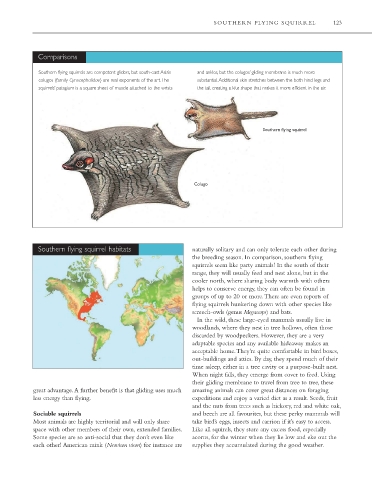
              Southern flying squirrels are competent gliders, but south-east Asia’s  and ankles, but the colugos’ gliding membrane is much more
              colugos (family Cynocephalidae) are real exponents of the art.The  substantial.Additional skin stretches between the both hind legs and
              squirrels’ patagium is a square sheet of muscle attached to the wrists  the tail, creating a kite shape that makes it more efficient in the air.


                                                                                            Southern flying squirrel


                                                                    Colugo


              Southern flying squirrel habitats                     naturally solitary and can only tolerate each other during
                                                                    the breeding season. In comparison, southern flying
                                                                    squirrels seem like party animals! In the south of their
                                                                    range, they will usually feed and nest alone, but in the
                                                                    cooler north, where sharing body warmth with others
                                                                    helps to conserve energy, they can often be found in
                                                                    groups of up to 20 or more.There are even reports of
                                                                    flying squirrels hunkering down with other species like
                                                                    screech-owls (genus Megascops) and bats.
                                                                     In the wild, these large-eyed mammals usually live in
                                                                    woodlands, where they nest in tree hollows, often those
                                                                    discarded by woodpeckers. However, they are a very
                                                                    adaptable species and any available hideaway makes an
                                                                    acceptable home.They’re quite comfortable in bird boxes,
                                                                    out-buildings and attics. By day, they spend much of their
                                                                    time asleep, either in a tree cavity or a purpose-built nest.
                                                                    When night falls, they emerge from cover to feed. Using
                                                                    their gliding membrane to travel from tree to tree, these
             great advantage.A further benefit is that gliding uses much  amazing animals can cover great distances on foraging
             less energy than flying.                               expeditions and enjoy a varied diet as a result. Seeds, fruit
                                                                    and the nuts from trees such as hickory, red and white oak,
             Sociable squirrels                                     and beech are all favourites, but these perky mammals will
             Most animals are highly territorial and will only share  take bird’s eggs, insects and carrion if it’s easy to access.
             space with other members of their own, extended families.  Like all squirels, they store any excess food, especially
             Some species are so anti-social that they don’t even like  acorns, for the winter when they lie low and eke out the
             each other! American mink (Neovison vison) for instance are  supplies they accumulated during the good weather.


                                             (c) 2011 Marshall Cavendish. All Rights Reserved.

