


Page 28 - Atlas Of The World's Strangest Animals
P. 28
28       ATLAS  OF THE WORLD’S  STRANGEST ANIMALS


           Chameleons are perhaps the most well-known of all
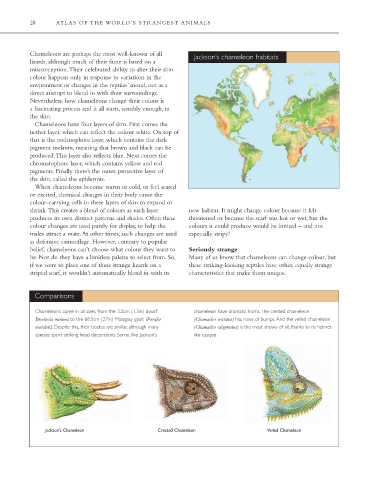
                                                                    Jackson’s chameleon habitats
           lizards, although much of their fame is based on a
           misconception.Their celebrated ability to alter their skin
           colour happens only in response to variations in the
           environment or changes in the reptiles’ mood, not as a
           direct attempt to blend in with their surroundings.
           Nevertheless, how chameleons change their colour is
           a fascinating process and it all starts, sensibly enough, in
           the skin.
             Chameleons have four layers of skin. First comes the
           nether layer, which can reflect the colour white. On top of
           that is the melanophore layer, which contains the dark
           pigment melanin, meaning that brown and black can be
           produced.This layer also reflects blue. Next comes the
           chromatophore layer, which contains yellow and red
           pigments. Finally there’s the outer, protective layer of
           the skin, called the epidermis.
             When chameleons become warm or cold, or feel scared
           or excited, chemical changes in their body cause the
           colour-carrying cells in these layers of skin to expand or
           shrink.This creates a blend of colours as each layer   new habitat. It might change colour because it felt
           produces its own distinct patterns and shades. Often these  threatened or because the scarf was hot or wet, but the
           colour changes are used purely for display, to help the  colours it could produce would be limited – and not
           males attract a mate.At other times, such changes are used  especially stripy!
           as defensive camouflage. However, contrary to popular
           belief, chameleons can’t choose what colour they want to  Seriously strange
           be. Nor do they have a limitless palette to select from. So,  Many of us know that chameleons can change colour, but
           if we were to place one of these strange lizards on a  these striking-looking reptiles have other, equally strange
           striped scarf, it wouldn’t automatically blend in with its  characteristics that make them unique.


             Comparisons


             Chameleons come in all sizes, from the 3.3cm (1.3in) dwarf  chameleon have dramatic horns.The crested chameleon
             Brookesia minima to the 68.5cm (27in) Malagasy giant (Furcifer  (Chamaeleo cristatus) has rows of bumps. And the veiled chameleon
             oustaleti). Despite this, their bodies are similar, although many  (Chamaeleo calyptratus) is the most showy of all, thanks to its helmet-
             species sport striking head decorations. Some, like Jackson’s  like casque.


                 Jackson’s Chameleon                    Crested Chameleon                    Veiled Chameleon


                                             (c) 2011 Marshall Cavendish. All Rights Reserved.

