


Page 99 - Atlas Of The World's Strangest Animals
P. 99
AMERICAN BULLFROG               99


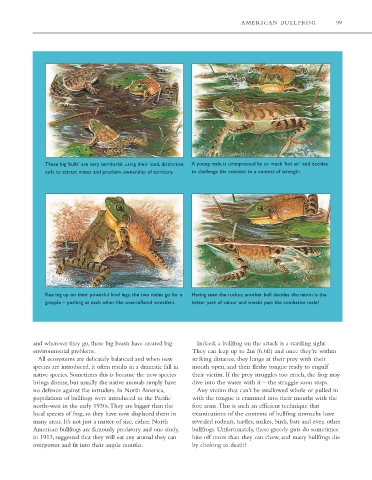
                 These big ‘bulls’ are very territorial, using their loud, distinctive  A young male is unimpressed by so much ‘hot air’ and decides
                 calls to attract mates and proclaim ownership of territory.  to challenge the resident to a contest of strength.


                 Rearing up on their powerful hind legs, the two males go for a  Having seen the ruckus, another bull decides discretion is the
                 grapple – pushing at each other like over-inflated wrestlers.  better part of valour and sneaks past the combative male!


             and wherever they go, these big beasts have created big  Indeed, a bullfrog on the attack is a startling sight.
             environmental problems.                                They can leap up to 2m (6.6ft) and once they’re within
              All ecosystems are delicately balanced and when new   striking distance, they lunge at their prey with their
             species are introduced, it often results in a dramatic fall in  mouth open, and their fleshy tongue ready to engulf
             native species. Sometimes this is because the new species  their victim. If the prey struggles too much, the frog may
             brings disease, but usually the native animals simply have  dive into the water with it – the struggle soon stops.
             no defence against the intruders. In North America,     Any victim that can’t be swallowed whole or pulled in
             populations of bullfrogs were introduced to the Pacific  with the tongue is crammed into their mouths with the
             north-west in the early 1930s.They are bigger than the  fore arms.This is such an efficient technique that
             local species of frog, so they have now displaced them in  examinations of the contents of bullfrog stomachs have
             many areas. It’s not just a matter of size, either. North  revealed rodents, turtles, snakes, birds, bats and even other
             American bullfrogs are famously predatory and one study,  bullfrogs. Unfortunately, these greedy guts do sometimes
             in 1913, suggested that they will eat any animal they can  bite off more than they can chew, and many bullfrogs die
             overpower and fit into their ample mouths.             by choking to death!


                                             (c) 2011 Marshall Cavendish. All Rights Reserved.

