


Page 137 - (DK Eyewitness) Travel Guide - New York City
P. 137
CHELSEA AND THE GARMENT DISTRIC T 135
Row, running from 406–418
West 20th Street, and built from
1839–40 for Don Alonzo
Cushman, a merchant who
also founded the Greenwich
Savings Bank. Cushman joined
Moore and James N. Wells in
the development of Chelsea.
A 15th-century music manuscript in the Rich in detail and intricate
General Theological Seminary ironwork, Cushman Row is
ranked with Washington Square
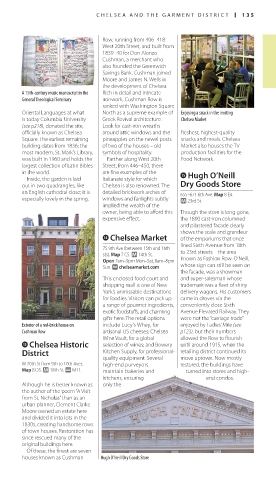
Oriental Languages at what North as a supreme example of Enjoying a snack in the inviting
is today Columbia University Greek Revival architecture. Chelsea Market
(see p218), donated the site, Look for cast-iron wreaths
officially known as Chelsea around attic windows and the freshest, highest-quality
Square. The earliest remaining pineapples on the newel posts snacks and meals. Chelsea
building dates from 1836; the of two of the houses – old Market also houses the TV
most modern, St. Mark’s Library, symbols of hospitality. production facilities for the
was built in 1960 and holds the Farther along West 20th Food Network.
largest collection of Latin Bibles Street, from 446–450, there
in the world. are fine examples of the t Hugh O’Neill
Inside, the garden is laid Italianate style for which
out in two quadrangles, like Chelsea is also renowned. The Dry Goods Store
an English cathedral close; it is detailed brickwork arches of 655–671 6th Ave. Map 8 E4.
especially lovely in the spring. windows and fanlights subtly q 23rd St.
implied the wealth of the
owner, being able to afford this Though the store is long gone,
expensive effect. the 1890 cast-iron columned
and pilastered facade clearly
shows the scale and grandeur
r Chelsea Market of the emporiums that once
lined Sixth Avenue from 18th
75 9th Ave (between 15th and 16th
sts). Map 7 C5. q 14th St. to 23rd streets – the area
Open 7am–9pm Mon–Sat, 8am–8pm known as Fashion Row. O’Neill,
Sun. ∑ chelseamarket.com whose sign can still be seen on
the facade, was a showman
This enclosed food court and and super-salesman whose
shopping mall is one of New trade mark was a fleet of shiny
York’s unmissable destinations delivery wagons. His customers
for foodies. Visitors can pick up came in droves via the
a range of gourmet ingredients, conveniently close Sixth
exotic foodstuffs, and charming Avenue Elevated Railway. They
gifts here. The retail options were not the “carriage trade”
Exterior of a red-brick house on include Lucy’s Whey, for enjoyed by Ladies’ Mile (see
Cushman Row artisanal US cheeses; Chelsea p123), but their numbers
Wine Vault, for a global allowed the Row to flourish
e Chelsea Historic selection of wines; and Bowery until around 1915, when the
District Kitchen Supply, for professional- retailing district continued its
quality equipment. Several move uptown. Now mostly
W 20th St from 9th to 10th Aves. high-end purveyors restored, the buildings have
Map 8 D5. q 18th St. @ M11. maintain bakeries and turned into stores and high-
kitchens, ensuring end condos.
Although he is better known as only the
the author of the poem “A Visit
from St. Nicholas” than as an
urban planner, Clement Clarke
Moore owned an estate here
and divided it into lots in the
1830s, creating handsome rows
of town houses. Restoration has
since rescued many of the
original buildings here.
Of these, the finest are seven
houses known as Cushman Hugh O’Neill Dry Goods Store
134-135_EW_New_York_City.indd 135 4/3/17 11:40 AM

