


Page 384 - (DK Eyewitness) Travel Guide - New York City
P. 384
382 SUR VIV AL GUIDE
Traveling by Subway or numbers than local ones; both
types of stops are distinguished
The subway is the quickest and most reliable way to travel on every subway map.
in the city. The vast system extends over 233 route miles
(375 km) and has 469 stations. Most routes operate 24 hours Subway Stations
a day throughout the year. The trains are air conditioned, Many subway entrances are
well lit, safe, and (unless you are riding at rush hour) marked by illuminated spheres:
comfortable. Since the 1980s, a portion of all station- green where the station booth
improvement funds has gone to the Arts for Transit project, is manned around the clock, red
with some notable results. Keep an eye out for the mosaics, where there is restrict ed entry.
sculptures, and artworks that decorate many subway and Others are marked simply by a
sign bearing the name of the
commuter rail stations.
station and the numbers or
letters of the routes passing
through it. Although the
Using the Subway subway system runs 24 hours
Enter the subway by swiping a day, not all routes operate at
your MetroCard at the turn stiles; all times, though each station is
the card is not needed to exit. still served. The basic service is
Look for signs for uptown between 6am and midnight.
(northbound) and The most crowded
downtown (southbound) periods are the
trains. Note that there are week day rush hours
two types of trains: local (6–8:30am and
trains stop at all stations, 4:30–6:30pm); it
while faster express trains is best to avoid
make fewer stops. Express these times if
lines have different letters New York subway logo you can. If not,
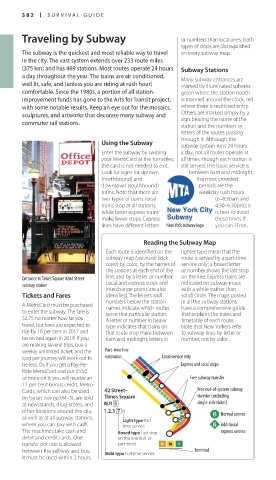
Reading the Subway Map
Each route is identified on the lighter type mean that the
subway map (see inside back route is served by a part-time
cover) by color, by the names of service only; a boxed letter
the stations at each end of the or number shows the last stop
Entrance to Times Square 42nd Street line, and by a letter or number. on the line. Express trains are
subway station Local and express stops and indicated on subway maps
interchange points are also with a white (rather than
Tickets and Fares identified. The letters and solid) circle. The maps posted
numbers below the station in all the subway stations
A MetroCard must be pur chased names indicate which routes have a compre hensive guide
to enter the subway. The fare is serve that particular station. that explains the trains and
$2.75 no matter how far you A letter or number in heavy timetable of each route.
travel, but fares are expected to type indicates that trains on Note that New Yorkers refer
rise by 10 per cent in 2017 and that route stop there between to subway lines by letter or
be revised again in 2019. If you 6am and midnight; letters in number, not by color.
are making several trips, buy a
weekly unlimited ticket, and the Part-time line
cost per journey will work out to extension Local service only
be less. Or, if you get a Pay-Per- Express and local stops
Ride MetroCard and put $5.50
or more on it, you will receive an Free subway transfer
11 per cent bonus credit. Metro-
Cards, which can also be used 42 Street– Free out-of-system subway
on buses (see pp384–5), are sold Times Square transfer (excluding
at news stands, drug-stores, and N.R S single-ride ticket)
other locations around the city, 1.2.3 7 6 Normal service
as well as at all subway stations, Light type Part-
where you can pay with cash. time service Additional
The machines take cash and Boxed type Last stop express service
debit and credit cards. One on this line (full- or
transfer per ride is allowed part-time)
between the subway and bus; Bold type Full-time service Terminal
it must be used within 2 hours.
382-383_EW_New_York_City.indd 382 4/3/17 11:42 AM

