


Page 184 - (DK Eyewitness) Travel Guide - Sardinia
P. 184
182 TR A VELLERS ’ NEEDS
The Flavours of Sardinia
There is a huge contrast between the extravagant lifestyle of
Costa Smeralda and the hard lives of Sardinia’s farmers and
shepherds that inspired the cucina povera – a “poor cooking”
style of food. But even the most fashionable restaurants serve
versions of these simple tasty dishes, the most famous of
which is porceddu, traditional spit-roasted suckling pig.
Remote from the mainland, rugged and dry, the island has
a distinctive cuisine, taking its flavours from the herbs that
grow on the hill sides. Other popular ingredients include honey,
wild-boar ham and salami, goat’s and ewe’s cheeses and seafood. Sardinian herbs
was usually available. Offal is are also made from pork. The
still used, and local specialities meat of the young goats that
include pigs’ trotters, cooked in climb the mountains is cooked
a piquant sauce, and lambs’ with herbs and wine; capretto al
feet, which are braised in finocchietto is kid cooked with
tomato sauce while their fennel. Lamb and kid were also
intestines are spit-roasted roasted by hunters in pits dug
(cordula). Porceddu (suckling in the ground – a technique
pig) is spit-roasted over a fire now reserved for celebrations.
of myrtle and juniper wood Wheat was intro duced by the
and basted until the skin is crisp Romans, and bread-making is
and the herb-scented meat a local art. Among the many
is tender. Sausages and salami types is the crisp, circular
Market vendor offering a wide range of
local cheeses
Inland Influences
Centuries of seaborne invasion
required Sardinians to make
the most of available inland
ingredients. Vines and olive
trees grow everywhere so
families made their own wine
and oil. Wild herbs flavoured
anything that could go into the
pot. Rabbit, hare, game birds
and even thrushes were easily
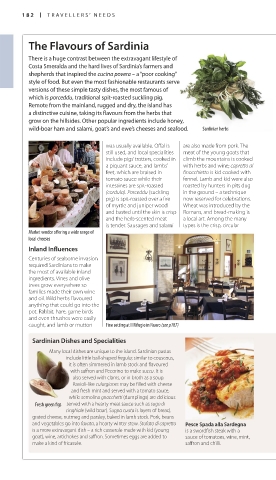
caught, and lamb or mutton Fine setting at Il Rifugio in Nuoro (see p187)
Sardinian Dishes and Specialities
Many local dishes are unique to the island. Sardinian pastas
include little ball-shaped fregula; similar to couscous,
it is often simmered in lamb stock and flavoured
with saffron and Pecorino to make succu. It is
also served with clams, or in broth as a soup.
Ravioli-like culurgiones may be filled with cheese
and fresh mint and served with a tomato sauce,
while semolina gnocchetti (dumplings) are delicious
Fresh green figs served with a hearty meat sauce such as sugo di
cinghiale (wild boar). Suppa cuata is layers of bread,
grated cheese, nutmeg and parsley, baked in lamb stock. Pork, beans
and vegetables go into favata, a hearty winter stew. Stufato di capretto Pesce Spada alla Sardegna
is a more extravagant dish – a rich casserole made with kid (young is a swordfish steak with a
goat), wine, artichokes and saffron. Sometimes eggs are added to sauce of tomatoes, wine, mint,
make a kind of fricassée. saffron and chilli.
182-183_EW_Sardinia.indd 182 11/2/16 2:13 PM

