


Page 186 - (DK Eyewitness) Travel Guide - Sicily
P. 186
184 SICIL Y AREA B Y AREA
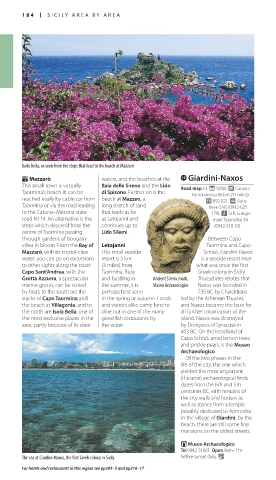
Isola Bella, as seen from the steps that lead to the beach at Mazzarò
} Mazzarò waters, and the beaches at the o Giardini-Naxos
This small town is virtually Baia delle Sirene and the Lido Road map F3. * 9,000. k Catania
Taormina’s beach. It can be di Spisone. Further on is the Fontana rossa 66 km (41 miles).
reached easily by cable car from beach at Mazzeo, a V 892 021. @ Auto
Taormina or via the road leading long stretch of sand linee SAIS (0942625
to the Catania–Messina state that leads as far 179). n STR, Lungo
road N114. An alternative is the as Letojanni and mare Tysandros 54
steps which descend from the continues up to (0942510 10).
centre of Taormina passing Lido Silemi.
through gardens of bougain Between Capo
villea in bloom. From the Bay of Letojanni Taormina and Capo
Mazzarò, with its crystalclear This small seaside Schisò, GiardiniNaxos
water, you can go on excursions resort is 5 km is a seaside resort near
to other sights along the coast: (3 miles) from what was once the first
Capo Sant’Andrea, with the Taormina. Busy Greek colony in Sicily.
Grotta Azzurra, a spectacular and bustling in Ancient Silenic mask, Thucydides relates that
marine grotto, can be visited the summer, it is Museo Archaeologico Naxos was founded in
by boat; to the south are the perhaps best seen 735 BC by Chalcidians
stacks of Capo Taormina and in the spring or autumn. Locals led by the Athenian Thucles,
the beach at Villagonia; and to and visitors alike come here to and Naxos became the base for
the north are Isola Bella, one of dine out in one of the many all further colonization of the
the most exclusive places in the good fish restaurants by island. Naxos was destroyed
area, partly because of its clear the water. by Dionysius of Syracuse in
403 BC. On the headland of
Capo Schisò, amid lemon trees
and prickly pears, is the Museo
Archaeologico.
Of the two phases in the
life of the city, the one which
yielded the most important
(if scarce) archaeological finds
dates from the 6th and 5th
centuries BC, with remains of
the city walls and houses as
well as stones from a temple
possibly dedicated to Aphrodite.
In the village of Giardini, by the
beach, there are still some fine
mansions on the oldest streets.
T Museo Archaeologico
Tel 094251001. Open 9am–1 hr
The sea at Giardini-Naxos, the first Greek colony in Sicily before sunset daily. &
For hotels and restaurants in this region see pp204–5 and pp216–17
184-185_EW_Sicily.indd 184 07/12/2016 14:35

