


Page 192 - The Complete Cat Breed Book (DK)
P. 192
190      C A T AL OG OF BREED S


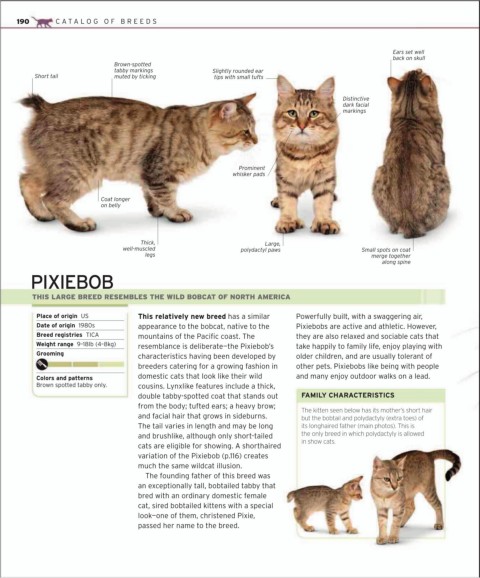
                                                                                            Ears set well
                                                                                            back on skull
                           Brown-spotted
                           tabby markings         Slightly rounded ear
         Short tail        muted by ticking       tips with small tufts

                                                                                Distinctive
                                                                                dark facial
                                                                                markings


                                                        Prominent
                                                       whisker pads

                        Coat longer
                        on belly


                                 Thick,                       Large,
                             well-muscled               polydactyl paws             Small spots on coat
                                  legs                                                 merge together
                                                                                         along spine
        PIXIEBOB

        THIS LARGE BREED RESEMBLES THE WILD BOBCAT OF NORTH AMERICA

         Place of origin  US     This relatively new breed has a similar   Powerfully built, with a swaggering air,
         Date of origin  1980s   appearance to the bobcat, native to the   Pixiebobs are active and athletic. However,
         Breed registries  TICA  mountains of the Pacific coast. The   they are also relaxed and sociable cats that
         Weight range  9–18lb (4–8kg)  resemblance is deliberate—the Pixiebob’s   take happily to family life, enjoy playing with
         Grooming                characteristics having been developed by   older children, and are usually tolerant of
                                 breeders catering for a growing fashion in   other pets. Pixiebobs like being with people
         Colors and patterns     domestic cats that look like their wild   and many enjoy outdoor walks on a lead.
         Brown spotted tabby only.  cousins. Lynxlike features include a thick,
                                 double tabby-spotted coat that stands out   FAMILY CHARACTERISTICS
                                 from the body; tufted ears; a heavy brow;
                                                                      The kitten seen below has its mother’s short hair
                                 and facial hair that grows in sideburns.    but the bobtail and polydactyly (extra toes) of
                                 The tail varies in length and may be long   its longhaired father (main photos). This is
                                 and brushlike, although only short-tailed   the only breed in which polydactyly is allowed
                                                                      in show cats.
                                 cats are eligible for showing. A shorthaired
                                 variation of the Pixiebob (p.116) creates
                                 much the same wildcat illusion.
                                  The founding father of this breed was
                                 an exceptionally tall, bobtailed tabby that
                                 bred with an ordinary domestic female
                                 cat, sired bobtailed kittens with a special
                                 look—one of them, christened Pixie,
                                 passed her name to the breed.

