


Page 87 - All About History - Issue 54-17
P. 87
Last Orders at the Bar


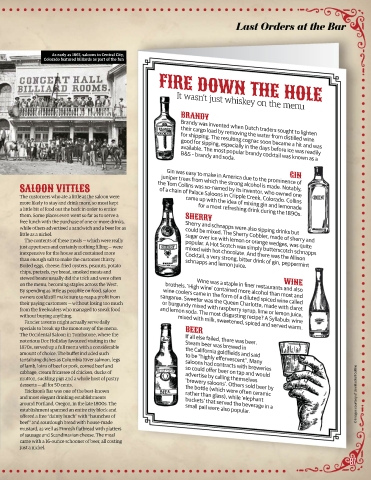
                   As early as 1865, saloons in Central City,
                Colorado featured billiards as part of the fun


                                                         FIRE DOWN THE HOLE
                                                               It wasn’t just whiskey on the menu
                                                                 BRANDY


                                                                 Brandy was invented when Dutch traders sought to lighten
                                                                 their cargo load by removing the water from distilled wine

                                                                 good for sipping, especially in the days before ice was readily
                                                                 B&S – brandy and soda.
                                                                 available. The most popular brandy cocktail was known as a
                                                                    for shipping. The resulting cognac soon became a hit and was
                                                                                                       GIN

                                                            Gin was easy to make in America due to the prominence of
        SALOON VITTLES                                   the Tom Collins was so-named by its inventor, who owned one
                                                          juniper trees from which the strong alcohol is made. Notably,
        The customers who ate a little at the saloon were   of a chain of Palace Saloons in Cripple Creek, Colorado. Collins
        more likely to stay and drink more, so most kept          came up with the idea of mixing gin and lemonade
        a little bit of food out the back in order to entice           for a most refreshing drink during the 1890s.
        them. Some places even went so far as to serve a          SHERRY
        free lunch with the purchase of one or more drinks,
        while others advertised a sandwich and a beer for as      Sherry and schnapps were also sipping drinks but
        little as a nickel.                                       could be mixed. The Sherry Cobbler, made of sherry and
          The contents of these meals — which were really         sugar over ice with lemon or orange wedges, was quite
        just appetisers and certainly nothing filling — were      popular. A Hot Scotch was simply butterscotch schnapps
        inexpensive for the house and contained more              mixed with hot chocolate. And there was the Allison
        than enough salt to make the customer thirsty.            Cocktail, a very strong, bitter drink of gin, peppermint
        Boiled eggs, cheese, fried oysters, peanuts, potato       schnapps and lemon juice.

        chips, pretzels, rye bread, smoked meats and
        stewed beans usually did the trick and were often                                            WINE
        on the menu, becoming staples across the West.                Wine was a staple in finer restaurants and also
        By spending as little as possible on food, saloon   brothels. ‘High wine’ contained more alcohol than most and
        owners could still make sure to reap a profit from   wine coolers came in the form of a diluted spiced wine called
        their paying customers — without losing too much   sangaree. Sweeter was the Queen Charlotte, made with claret
        from the freeloaders who managed to sneak food    or burgundy mixed with raspberry syrup, lime or lemon juice,
        without buying anything.                         and lemon soda. The most disgusting recipe? A Syllabub: wine
          Fancier taverns might actually serve daily            mixed with milk, sweetened, spiced and served warm.
        specials to break up the monotony of the menu.            BEER
        The Occidental Saloon in Tombstone, where the
        notorious Doc Holliday favoured visiting in the           If all else failed, there was beer.
        1870s, served up a full menu with a considerable          Steam beer was brewed in
        amount of choice. The buffet included such                the California goldfields and said
        tantalising dishes as Columbia River salmon, legs         to be “highly effervescent”. Many
        of lamb, loins of beef or pork, corned beef and           saloons had contracts with breweries
        cabbage, cream fricassee of chicken, ducks of             so could offer beer on tap and would
        mutton, suckling pigs and a whole host of pastry          advertise by calling themselves
        desserts — all for 50 cents.                              ‘brewery saloons’. Others sold beer by
          Erickson’s Bar was one of the best-known                the bottle (which were often ceramic                        © Images courtesy of Jan MacKell Collins
        and most elegant drinking establishments                  rather than glass), while ‘elephant
        around Portland, Oregon, in the late 1800s. The           buckets’ that served the beverage in a
        establishment spanned an entire city block and            small pail were also popular.
        offered a free “dainty lunch” with “haunches of
        beef” and sourdough bread with house-made
        mustard, as well as Finnish flatbread with platters
        of sausage and Scandinavian cheese. The meal
        came with a 16-ounce schooner of beer, all costing
        just a nickel.
                                                                                                                            87

