


Page 112 - (DK Eyewitness) Travel Guide - Tokyo
P. 112
110 TR A VELERS ’ NEEDS
Traditional Accommodations Typical Rooms
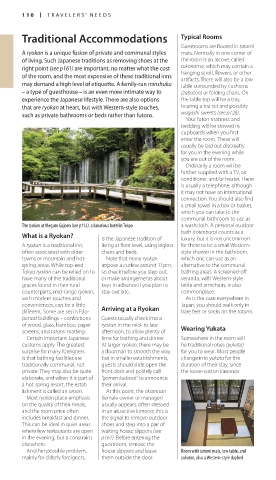
Guestrooms are floored in tatami
A ryokan is a unique fusion of private and communal styles mats. Normally in one corner of
of living. Such Japanese traditions as removing shoes at the the room is an alcove, called
right point (see p161) are important, no matter what the cost tokonoma, which may contain a
of the room, and the most expensive of these traditional inns hanging scroll, flowers, or other
artifacts. There will also be a low
may demand a high level of etiquette. A family-run minshuku table surrounded by cushions
– a type of guesthouse – is an even more intimate way to (zabuton) or folding chairs. On
experience the Japanese lifestyle. There are also options the table top will be a tray,
that are ryokan at heart, but with Western-style touches, bearing a tea set and possibly
such as private bathrooms or beds rather than futons. wagashi sweets (see p128).
Your futon mattress and
bedding will be stowed in
cupboards when you first
enter the room. These will
usually be laid out discreetly
for you in the evening while
you are out of the room.
Ordinarily a room will be
further supplied with a TV, air
conditioner, and/or heater. There
is usually a telephone, although
it may not have an international
connection. You should also find
a small towel in a box or basket,
which you can take to the
communal bathroom to use as
The ryokan at Meguro Gajoen (see p115), a luxurious hotel in Tokyo a wash cloth. A personal out door
bath (rotenburo) counts as a
What is a Ryokan? is the Japanese tradition of luxury, but it is not uncommon
A ryokan is a traditional inn, living at floor level, using legless for there to be a small Western-
often associated with older chairs and beds. style shower in the bathroom,
towns or mountain and hot- Note that many ryokan which one can use as an
spring areas. While top-end impose a curfew around 11pm, alternative to the communal
Tokyo ryokan can be relied on to so check before you step out, bathing areas. A screened-off
have many of the traditional or make arrangements about veranda, with Western-style
graces found in their rural keys in advance if you plan to table and armchairs, is also
counterparts, mid-range ryokan, stay out late. common place.
with modern touches and As is the case everywhere in
conveniences, can be a little Japan, you should walk only in
different. Some are set in Edo- Arriving at a Ryokan bare feet or socks on the tatami.
period buildings – confections Guests usually check into a
of wood, glass, bamboo, paper ryokan in the mid- to late Wearing Yukata
screens, and tatami matting. afternoon, to allow plenty of
Certain important Japanese time for bathing and dinner. Somewhere in the room will
customs apply. The greatest At larger ryokan, there may be be traditional robes (yukata)
surprise for many foreigners a doorman to smooth the way, for you to wear. Most people
is that bathing facilities are but in smaller establishments, change into yukata for the
traditionally communal, not guests should slide open the duration of their stay, since
private. They may also be quite front door and politely call the loose-cotton kimonos
elaborate, and when it is part of “gomen kudasai” to announce
a hot-spring resort, the estab- their arrival.
lishment is called an onsen. At this point, the okamisan
Most ryokan place emphasis (female owner or manager)
on the quality of their meals, usually appears, often dressed
and the room price often in an attractive kimono; this is
includes breakfast and dinner. the signal to remove outdoor
This can be ideal in quiet areas shoes and step into a pair of
where few restaurants are open waiting house slippers (see
in the evening, but a constraint p161). Before entering the
elsewhere. guestroom, remove the
Another possible problem, house slippers and leave Room with tatami mats, low table, and
mainly for elderly foreigners, them outside the door. zabuton, plus a Western-style daybed
110-111_EW_Tokyo.indd 110 12/09/16 11:24 am

