


Page 113 - (DK) Home Doctor: Providing practical advice on home treatments
P. 113
COMMON CONDITIONS: CHEST AND ABDOMINAL PROBLEMS  111

         Irritable bowel syndrome


              Symptoms of irritable bowel syndrome (IBS) vary. The most common are bloating, abdominal pain, and
              cramps, which ease after you pass gas or a bowel motion. You may have loose stools or constipation, or
              alternate between the two; notice mucus in your stools; and have the feeling that your bowel has not emptied
              after a bowel movement. You may feel full more quickly than normal during meals. Other symptoms include
              nausea, back pain, frequent urination, and headaches. Although symptoms are intermittent, IBS may last for
              years. The cause is not known, but sensitivity to certain foods, bowel infection, and stress can trigger attacks.
              See also Stress, pp.20–21; Bloating and flatulence, p.108; Constipation, p.115; Diarrhea, p.116.


              See your doctor first
                                                                  NATURAL REMEDIES
              Make an appointment to see your doctor if you
              think you have IBS. Other causes need to be   Peppermint oil (see p.188) works by
              ruled out, because symptoms of IBS are similar  relaxing the bowel muscle, helping to relieve
              to those of more serious bowel conditions.    abdominal pain and bloating.


         What you can do yourself                                   DRUG REMEDIES

              Try the following changes to your diet and lifestyle  Fiber supplements (see LAXATIVES, p.185)
              to see what works best for you.
                                                            contain fiber derived from plants. They can help if you
              ● Keep a food diary for 2 or 3 weeks to identify  are prone to constipation and are finding it difficult
              any triggers. Common triggers for IBS include dairy         to include extra fiber in your diet.
              products, wheat, citrus fruits, alcohol, and coffee.        Consult your doctor before
                                                                          taking fiber supplements.
              ● Eat and drink slowly, and chew food thoroughly.
                                                                          Antidiarrheal drugs
              It may help to eat several small meals a day.
                                                                          (see p.178) containing
              ● If constipation is a problem, gradually add more          loperamide can be used to help
              fiber to your diet, such as cereals, whole-grain bread,      control diarrhea for a limited
              brown rice, beans, fruit, and vegetables. Avoid               time, such as during a long
                                                                            car trip. Take the lowest
              unprocessed bran since it can make symptoms worse.
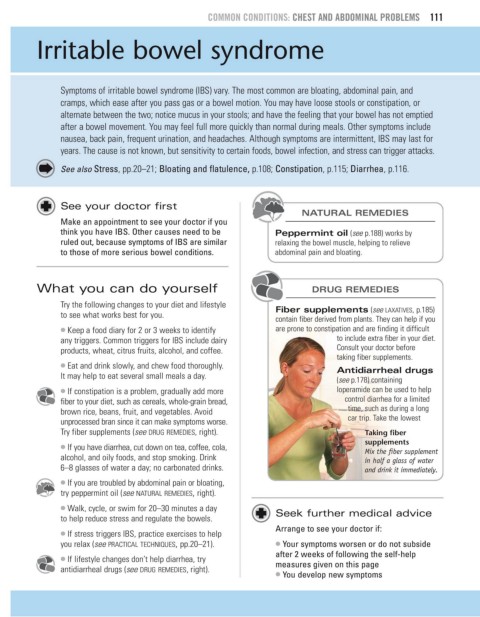
              Try fiber supplements (see DRUG REMEDIES, right).                 Taking fiber
                                                                                supplements
              ● If you have diarrhea, cut down on tea, coffee, cola,
                                                                                Mix the fiber supplement
              alcohol, and oily foods, and stop smoking. Drink                  in half a glass of water
              6–8 glasses of water a day; no carbonated drinks.                 and drink it immediately.
              ● If you are troubled by abdominal pain or bloating,
              try peppermint oil (see NATURAL REMEDIES, right).
              ● Walk, cycle, or swim for 20–30 minutes a day   Seek further medical advice
              to help reduce stress and regulate the bowels.
                                                            Arrange to see your doctor if:
              ● If stress triggers IBS, practice exercises to help
              you relax (see PRACTICAL TECHNIQUES, pp.20–21).  ● Your symptoms worsen or do not subside
                                                            after 2 weeks of following the self-help
              ● If lifestyle changes don’t help diarrhea, try
                                                            measures given on this page
              antidiarrheal drugs (see DRUG REMEDIES, right).
                                                            ● You develop new symptoms

