


Page 314 - (DK) The Dog Encyclopedia
P. 314
CARE AND TRAINING  |  CHANGING DIETS


          Changing diets


          Dogs at different stages of life have particular nutritional needs—whether
          growing puppies, nursing mothers, sports dogs, or older pets. It is important
          that your dog has the right nutrients for his age to optimize his well-being.


          PUPPIES                                                                              Growing up
          Once puppies are weaned, they need to                                                Always provide your puppy with a balanced diet to
                                                                                               build a strong body. Be sure to choose food that is
          be fed little and often—four times a day                                             specially formulated for puppies, and change to an
          at first, reducing to three times a day from                                          adult formula as your puppy matures.
          about six months. Puppies grow fast,
          so they need high-energy food; ask your                                              CONVALESCENT DOGS
          vet if you are unsure of the right quantity                                          A sick dog needs easily digestible, extra-
          to feed your puppy based on his size.                                                nutritious food such as boiled chicken and
          Increase the amount slowly as he grows but                                           rice or special commercial foods; your vet
          avoid overfeeding. It may be best to feed                                            can give you guidance. Feed your dog little
          commercial puppy food to make sure he                                                and often and make sure that the food is at
          gets the right balance of nutrients.                                                 body temperature so it will be more tempting.
           If you bought your puppy from a breeder,                                            Keep a note of how much he is eating, and
          he may supply a sample of the food that the                                          report any loss of appetite to the vet.
          puppy has been eating. Stick to this food in
          the beginning, introducing changes gradually.  needs will increase by 25–50 percent. She   OLDER DOGS
                                                    may lose her appetite as birth approaches,    From about age seven onward, dogs start to
          ADULT PETS                                but it will soon return after the puppies are   need more nutrients but fewer calories. Many
          Two meals a day (morning and evening) is   born. A bitch producing milk will need two    do well on a normal adult diet, slightly
          often enough. Neutered dogs need fewer    or three times as many calories as normal    reduced in quantity and with vitamin and
          calories than un-neutered ones; otherwise,   in the first four weeks when the puppies’    mineral supplements. You can buy “senior”
          feed according to your dog’s size and activity   milk needs are at their highest. Feed her   formulas that are softer, with higher protein,
          level, and monitor his weight (see pp.314–15).  energy-dense food specially formulated    lower fat, and extra vitamins and minerals.
                                                    for lactating bitches, and feed little and    You may need to adjust feeding to three
          WORKING DOGS                              often. When the puppies begin weaning (six   times a day. A slower metabolic rate makes
          Working or sports dogs should have high-   to eight weeks), the mother will still need   older dogs more prone to obesity. Keeping
          protein, energy-dense, easily digestible foods  extra calories. Only when she stops producing   a healthy weight can improve the quality
          to maximize their strength and stamina.   milk should her diet be changed.           and length of your dog’s life.
          However, the volume of food given to a
          working dog should be no more than for a
          normal adult dog. Dogs engaged in short,
          sharp bursts of work, such as racing or
          agility shows, need a moderately increased
          fat intake. For endurance work such as
          sledding, hunting, or herding animals, high
          fat foods with extra protein are required.


          NURSING MOTHERS
          A pregnant bitch can stay on her usual diet
          until the last two to three weeks of pregnancy;
          from this point until whelping, her energy


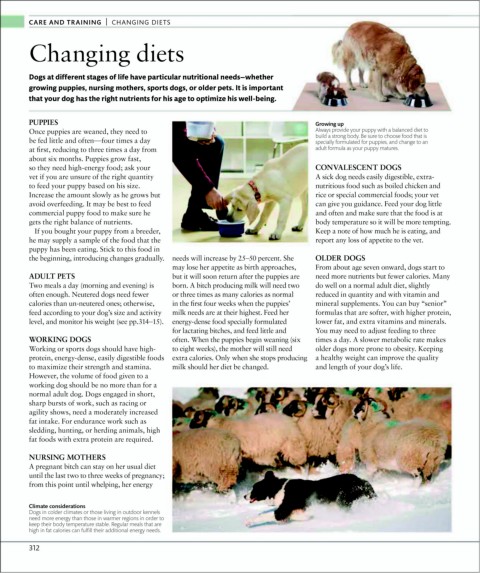
          Climate considerations
          Dogs in colder climates or those living in outdoor kennels
          need more energy than those in warmer regions in order to
          keep their body temperature stable. Regular meals that are
          high in fat calories can fulfill their additional energy needs.


          312

