


Page 322 - (DK Eyewitness) Travel Guide - South Africa
P. 322
320 GA UTENG , LIMPOPO AND MPUM ALANGA
The Spirit of Sophiatown
Sophiatown – 10 km (6 miles) from Johannesburg’s city centre in the 1950s – was a
rather seedy shanty town, yet it was also the cradle of urban black culture and became
part of South Africa’s mythology. Much of the creative black African talent of
Johannes burg lived in this over crowded slum. Artists, journalists from Drum (the first
“black” magazine in the country) and musicians would meet in the vibrant dance halls
and debate politics in the shebeens (illegal bars). In the 1950s, the government ordered
the forcible removal of the community to Meadowlands (now Soweto) – a characterless
settlement on the far edge of the city – and the white suburb of Triomf replaced
Sophia town. The old name Sophiatown was reinstated for the suburb in 1997.
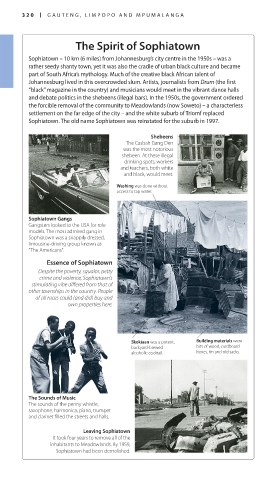
Shebeens
The Casbah Gang Den
was the most notorious
shebeen. At these illegal
drinking spots, workers
and teachers, both white
and black, would meet.
Washing was done without
access to tap water.
Sophiatown Gangs
Gangsters looked to the USA for role
models. The most admired gang in
Sophiatown was a snappily dressed,
limousine-driving group known as
“The Americans”.
Essence of Sophiatown
Despite the poverty, squalor, petty
crime and violence, Sophiatown’s
stimulating vibe differed from that of
other townships in the country. People
of all races could (and did) buy and
own properties here.
Skokiaan was a potent, Building materials were
backyard-brewed bits of wood, cardboard
alcoholic cocktail. boxes, tin and old sacks.
The Sounds of Music
The sounds of the penny whistle,
sax ophone, harmonica, piano, trumpet
and clarinet filled the streets and halls.
Leaving Sophiatown
It took four years to remove all of the
inhabitants to Meadowlands. By 1959,
Sophiatown had been demolished.
320-321_EW_South_Africa.indd 320 25/05/17 12:00 pm

